
Filters
Level
Grade
Subject
Subject Area
Subject Topic
Standard(s)
Audience
Keyword
DurationMinutes
Elementary School Lesson Plans

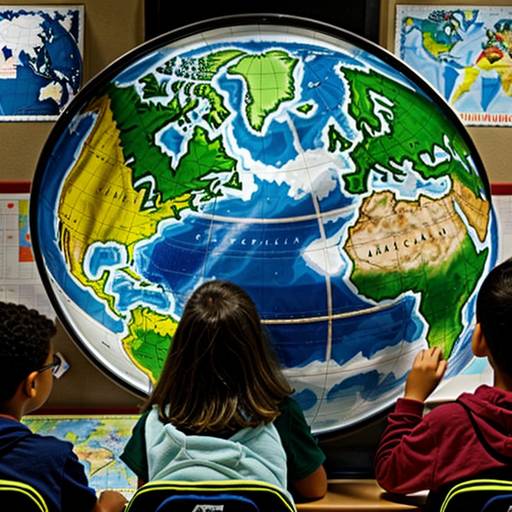
In this 5th-grade social studies lesson, students will explore the fundamental concepts of geography and map features. The lesson begins with a discussion where students share their prior knowledge about maps, followed by an introduction to key map elements such as titles, legends, scales, and compass roses. Students will engage in guided practice by identifying continents, oceans, and major countries on a world map, using color-coding for visual differentiation.
Next, students will apply their understanding by creating their own fictional maps, incorporating essential features like a title, compass rose, and a legend for significant landmarks. This creative activity encourages individuality and artistic expression. The lesson concludes with a sharing session, allowing students to present their maps and explain the choices they made.
Assessment will be conducted informally through observation and evaluation of the finished maps, focusing on the inclusion of required elements and creativity. Extensions could involve researching a specific country or creating a collaborative class map. Overall, the lesson aims to build students' geographic skills and foster a deeper appreciation for maps and their practical applications in everyday life.
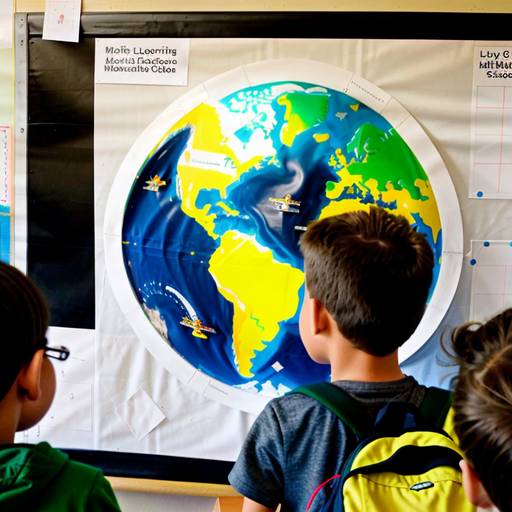
In this 5th-grade social studies lesson, students will explore various landforms and their significance to both the environment and human activities. The lesson begins with a visual introduction featuring different landforms, followed by a class discussion to activate prior knowledge. The teacher will present key terms and characteristics of each landform while guiding students in locating them on a world map.
Students will then engage in group work, conducting research on assigned landforms and creating mini-posters that include essential information about their features and importance. This will be complemented by an independent activity where each student creates a personalized map showcasing at least three different landforms, complete with labels and descriptions.
The lesson concludes with group presentations and a class discussion, encouraging students to share their thoughts on which landforms interested them the most. Assessment will focus on student participation, the accuracy of worksheets and projects, and the creativity displayed in their individual mappings. Differentiation strategies will be utilized to support learners at varying levels, with extensions available for those interested in further exploration of the subject. Overall, this lesson aims to deepen students' understanding of geography and the impact of landforms on life and the environment.
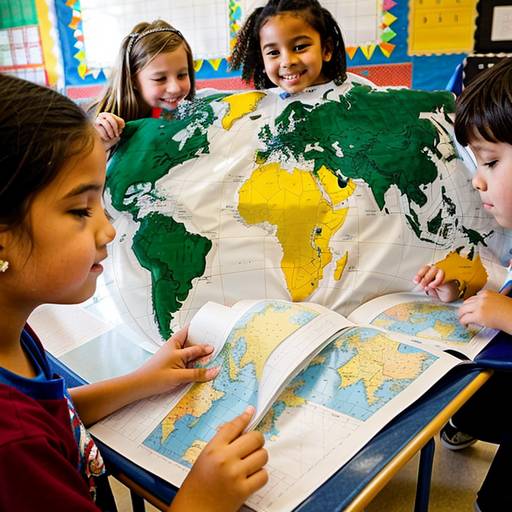
In this engaging social studies lesson for 2nd-grade students, learners will explore geography and different countries around the world. The session begins with an introduction to countries and continents using a world map, fostering an understanding of global diversity. Students will discuss various countries, discovering interesting cultural elements such as languages, foods, and traditions.
During a guided activity, students will locate and label selected countries on the map while participating in group discussions about personal connections to these places. For the independent activity, each student will research a specific country, creating a poster that highlights the country’s name, flag, and a unique cultural fact or element, thus encouraging creativity and personal expression.
The lesson concludes with students sharing their posters with the class, reinforcing their understanding of geography and cultural appreciation. Evaluation will focus on participation and the content of their posters, while extension activities may include a “Cultural Day” featuring food, games, or items from the represented countries. Overall, this lesson promotes awareness of the world’s diversity and the importance of understanding different cultures.
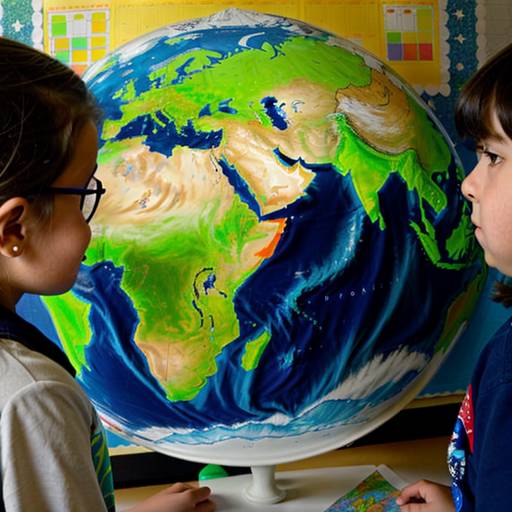
In this 2nd-grade social studies lesson, students will explore different types of landforms, including mountains, valleys, plains, hills, plateaus, rivers, and lakes. The lesson begins with an engaging introduction where students share their favorite outdoor places, leading to a discussion about the various shapes that make up our world. Using images, the teacher will guide students in describing the characteristics of each landform.
During the guided practice, students will collaborate with partners to share their thoughts on which landform they find most interesting. The main activity involves creating a colorful map where students can draw or paste images of landforms, allowing them to apply what they've learned creatively.
The lesson concludes with a gallery walk where students showcase their maps and participate in a reflective discussion to reinforce their understanding. Assessment will occur through observation during activities and the collection of maps to evaluate their identification and representation of landforms. Extension activities encourage further exploration and creativity, such as illustrating a landform book or virtual field trips to national parks.
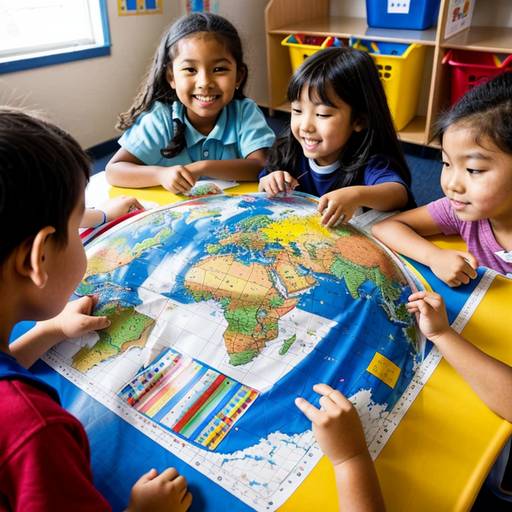
In this Kindergarten social studies lesson, students will explore basic geography concepts and map skills through engaging activities. The lesson begins with a lively discussion about maps, encouraging students to share their experiences and understanding. A read-aloud book introduces them to the idea of mapping personal and global spaces.
Direct instruction focuses on key map features such as the compass rose and different types of maps, including world and local maps. Students will then participate in a guided group activity where they create a simple map of their classroom or playground, demonstrating collaboration and creativity.
Following this, they will individually draw maps of their homes or favorite places, incorporating essential elements like landmarks and the compass rose. The lesson concludes with a class discussion where students have the opportunity to share and reflect on what they learned. Throughout the session, assessments will be made through observation and reviewing students' completed maps, ensuring all learners are supported and challenged accordingly. Extensions and differentiation strategies are also provided to enhance engagement and accommodate varying learning needs.

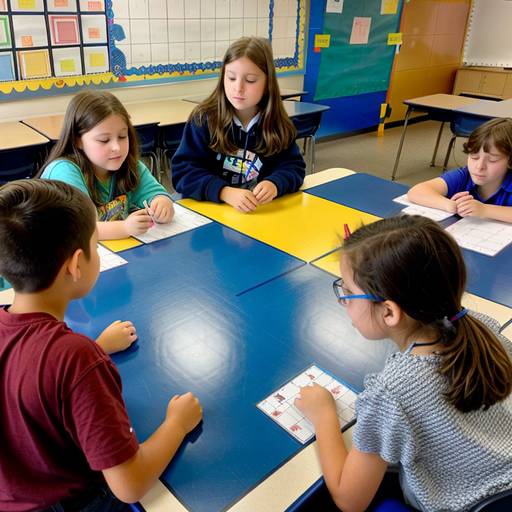
In this 60-minute math lesson designed for 4th graders, students will explore the concepts of measurement and area through hands-on activities involving objects in their classroom. The lesson begins with a discussion of area and its practical applications, followed by a demonstration of how to calculate area using the formula Area = Length x Width.
Students will then engage in guided group practice by measuring various classroom objects, recording their findings, and calculating their areas. After that, they will work independently to measure and draw another object of their choice, applying what they've learned to calculate its area on grid paper.
The lesson concludes with a class discussion where groups share their calculations and observations, reinforcing their understanding of area. Assessment will be informal, through observation and review of students’ completed work, ensuring they grasp the concept. Extensions and support strategies are included for diverse learners to enhance engagement and understanding.
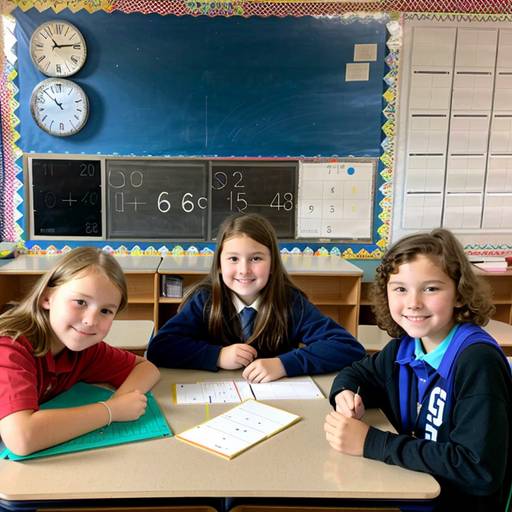
In this 5th-grade math lesson, students will learn about reading clocks, understanding time zones, and calculating time differences across the globe. The lesson begins with a discussion about the concept of time zones and their significance in daily life. Students will practice reading both analog and digital clocks, and they will learn to convert times between different time zones using a time zone chart.
In small groups, students will engage in a creative mapping activity where they will cut out and color different time zones on a world map, presenting their findings to the class. Additionally, they will complete worksheets with real-world math problems related to time zone calculations to deepen their comprehension. The lesson will conclude with a reflection on the practical implications of time zones in everyday situations, reinforced by an exit ticket activity that encourages individual thinking. Throughout the lesson, various assessment methods will be utilized to evaluate students' understanding, with adjustments made to accommodate different learning needs.

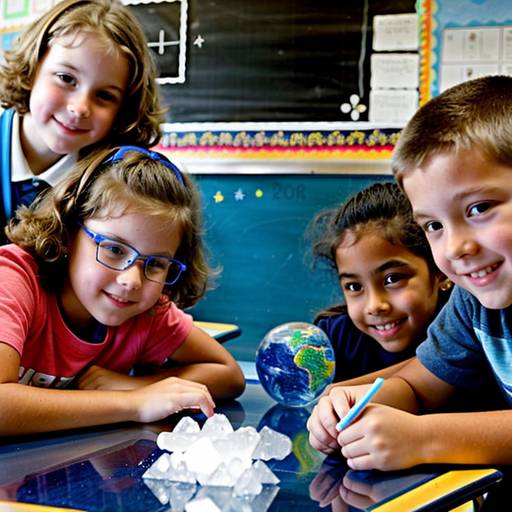
This 3rd-grade science lesson introduces students to the three primary states of matter: solid, liquid, and gas. The lesson begins with a class discussion to gauge prior knowledge and introduces the characteristics of each state using visual aids. Students participate in hands-on activities, exploring ice cubes, water, and balloons to observe and describe the properties of each state. They work in small groups to share their findings and complete drawings based on their observations. The lesson concludes with a recap of key concepts and a worksheet to reinforce learning through examples from everyday life. Informal assessments are conducted through group interactions and worksheet completion, while differentiation strategies ensure all students can engage with the material effectively. Extensions and additional explorations of matter changes provide opportunities for further investigation.
This 5th Grade Physical Science lesson focuses on understanding the concepts of forces and motion, specifically exploring push and pull through engaging activities. Students begin by discussing everyday examples of forces before learning about contact and non-contact forces, as well as the concepts of balanced and unbalanced forces. In small groups, they conduct hands-on experiments using various objects and a ramp to observe how distance traveled is influenced by factors like weight and the incline of the ramp. Each group records their findings and shares insights with the class, promoting collaborative learning and discussion. The lesson concludes with a summary of key concepts and encourages students to reflect on what they learned. Assessment includes monitoring participation and reviewing group presentations, with extensions available for further exploration through virtual simulations or individual projects. Modifications are provided to support diverse learners, ensuring an inclusive and interactive educational experience.
This 5th-grade life science lesson focuses on the major systems of the human body, including the circulatory, respiratory, digestive, and skeletal systems. Students will begin by engaging in a discussion about what they already know, followed by direct instruction using an interactive poster to introduce each system and its key functions. They will then work in small groups to create informative posters highlighting the organs and functions of their assigned body system, incorporating creativity and collaboration. Each group will present their findings to the class, fostering discussion and questions to enhance understanding. The lesson concludes with a reflection on the interconnectedness of the body systems and the opportunity for students to share new facts they learned. Assessment will include evaluating group participation and poster content, along with an exit ticket to gauge individual understanding. Accommodations will be made to support diverse learning needs, ensuring accessibility for all students while promoting curiosity and comprehension of the human body.