
Filters
Level
Grade
Subject
Subject Area
Subject Topic
Standard(s)
Audience
Keyword
DurationMinutes
5th Grade Music Theory Lesson Plans


In this engaging 5th-grade music lesson, students will explore the concept of dynamics in music, focusing on volume levels such as piano, mezzo piano, mezzo forte, and forte. The class will start with an introduction to these terms, accompanied by audio examples to illustrate each dynamic. Students will then participate in a movement activity, using physical expressions to embody each dynamic, fostering a deeper understanding of how dynamics can convey emotions.
Next, students will engage in a discussion about the impact of dynamics on music's mood and feeling, supported by a dynamic chart. In small groups, they will create and rehearse a short performance piece that incorporates at least three different dynamics, using body movements, clapping, or classroom instruments. The lesson will culminate in group performances, allowing students to showcase their work while reflecting on the emotional effect dynamics had on their presentations and their audience. Assessment will focus on participation, understanding of dynamics, and the ability to express how dynamics influence music's emotional impact. Modifications will be available for students needing additional support. Optional homework will encourage students to analyze a song at home for its dynamic elements.
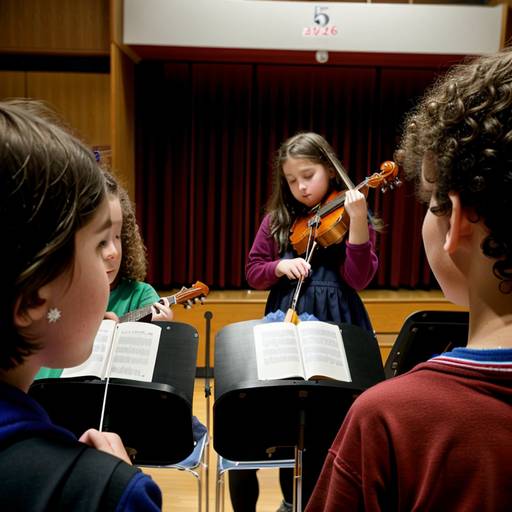
In this 5th-grade music theory lesson, students will explore the fundamental concepts of musical notes and their placements on the staff. The lesson begins with an engaging discussion about music and its relationship to everyday sounds, followed by introducing the musical staff, including the notes found on the lines and in the spaces, through acronyms to aid memorization. Students will also learn about different note values, including whole, half, quarter, and eighth notes.
During guided practice, students will work in small groups with flashcards to name notes and place them onto an illustrated staff on the board. They will also have a hands-on opportunity to play these notes on a keyboard or xylophone. For independent practice, students will create their own melodies on a blank staff worksheet, applying what they’ve learned.
The lesson concludes with a recap and a discussion about how notes create melodies, with opportunities for students to share their work. Assessment will include observation of participation and review of worksheet completion. Additional extensions are available for advanced learners, while support is offered to those who need it, ensuring an inclusive learning environment that fosters collaboration and creativity.