
Filters
Level
Grade
Subject
Subject Area
Subject Topic
Standard(s)
Audience
Keyword
DurationMinutes
5th Grade Music Theory Lesson Plans


In this fifth-grade music lesson, students will explore the concept of rhythm through engaging activities that enhance their understanding of musical notation and rhythmic patterns. The class begins with an introduction to basic note values, where students will learn to identify and clap different rhythms collaboratively.
Next, students will work in small groups to participate in a rhythm relay, using rhythm cards to create and perform rhythmic patterns for the class. Afterward, they will have hands-on practice with percussion instruments, learning a sequence of rhythmic patterns and participating in a call-and-response activity.
To develop their listening skills, students will engage in an activity where they identify and tap out rhythms from various music tracks. The lesson concludes with a reflective circle discussion, encouraging students to share their experience and insights gained about rhythm. Assessment will involve observing student participation and providing feedback on their group performances. Additionally, students will have the opportunity to extend their learning by creating longer rhythmic sequences or bringing in a favorite song to analyze in future classes.
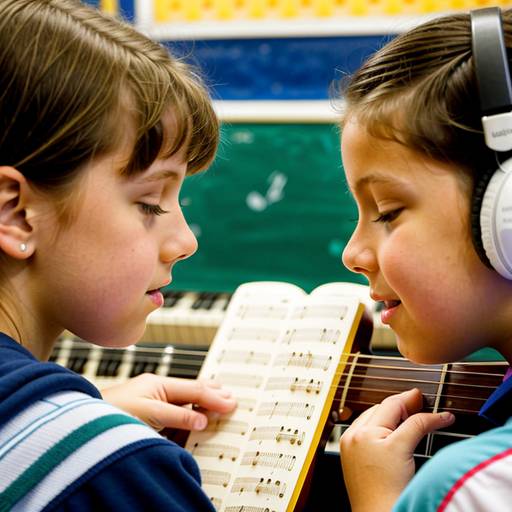
In this 5th-grade music lesson, students will explore the fundamentals of music theory by focusing on note names and their corresponding positions on the musical staff. The lesson begins with a discussion about the role of notes in music, followed by engaging activities that involve recognizing and identifying notes (A through G) on the staff. Students will learn about whole notes, half notes, and quarter notes through clapping exercises that highlight rhythmic concepts.
The hands-on portion of the lesson allows students to work in small groups, using keyboards or xylophones to practice playing or singing assigned notes. They will create short melodies while incorporating diverse rhythms. A fun assessment activity, “Note Name Challenge,” encourages students to demonstrate their knowledge by identifying notes and showcasing their sounds.
The lesson concludes with a reflection on what they learned about note names and their significance in music. Extensions and adaptations are included to enhance learning outcomes for all students, ensuring a comprehensive understanding of music theory fundamentals.
This lesson aims to foster an engaging and interactive learning environment that empowers students to develop a solid foundation in music theory.
In this engaging 5th-grade music lesson, students will explore the concept of music dynamics, focusing on terminology such as *piano* (soft), *forte* (loud), *mezzo piano* (moderately soft), *mezzo forte* (moderately loud), *crescendo*, and *decrescendo*. The lesson begins with an introduction to dynamics, featuring audio examples to illustrate each term. Students will then be divided into groups, where they will create and perform short musical pieces that highlight their assigned dynamic term, fostering teamwork and creativity. Following the performances, a dynamic movement activity will allow students to embody the different dynamics through physical movement in response to music. The lesson concludes with a discussion that encourages reflection on the emotional impact of dynamics in music. Students will receive handouts summarizing key terms, and homework will involve listening to a favorite song to identify dynamics, reinforcing their learning experience. Assessment will focus on group performances, participation, and understanding of the concepts shared during the lesson.
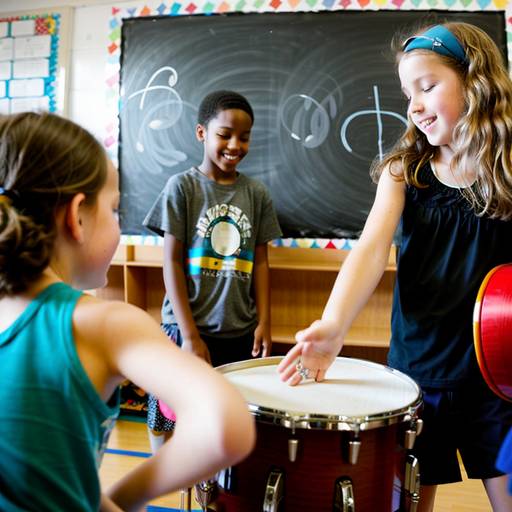
In this 5th-grade music lesson, students will explore the concept of rhythm through a combination of clapping, movement, and percussion instruments. The session will begin with a clapping exercise to warm up and introduce the idea of rhythm, followed by a discussion on its importance in music and daily life. Students will learn to read basic rhythmic notations including quarter notes, eighth notes, half notes, and rests through guided practice.
The lesson includes interactive stations where students engage in body percussion, play percussion instruments, create movement sequences, and compose their own rhythmic patterns in small groups. After rotating through the stations, students will have the opportunity to share their creations with the class, promoting collaboration and creativity.
The lesson concludes with a reflection on what they learned and how they can incorporate rhythm into their everyday lives. Assessment will be based on observation during activities and evaluation of group presentations. Additionally, there are suggestions for extensions to further develop students' understanding of rhythm, including more complex patterns.
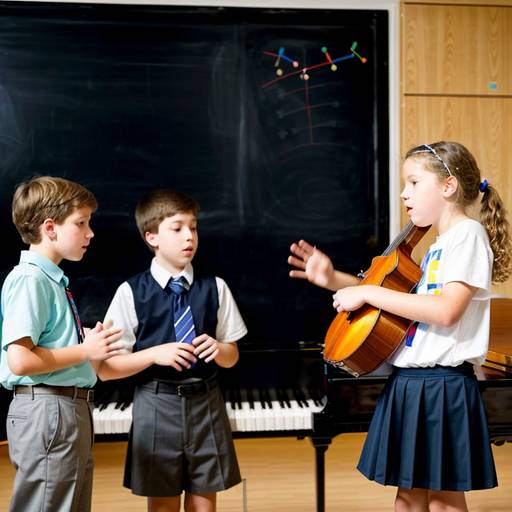
In this 5th-grade music lesson, students will explore the concept of dynamics in music theory by learning the definitions and uses of various dynamic markings such as pianissimo, piano, mezzo piano, mezzo forte, forte, and fortissimo. The lesson begins with a clapping exercise to illustrate different dynamic levels, followed by listening to musical excerpts that exemplify dynamic contrasts.
Students will participate in small group performances, where they will create rhythms or adapt familiar songs to include at least three dynamics. They will then compose a short 4-bar melody on staff paper, incorporating these dynamics. The class will conclude with a recap discussion on the emotional impact of dynamics in music, while students share their compositions. Assessment will be based on participation, understanding of dynamic terms, and the quality of their compositions. Extensions include a homework assignment that encourages students to analyze dynamics in their favorite songs and a project to create a "Dynamic Wall" for displaying their work.
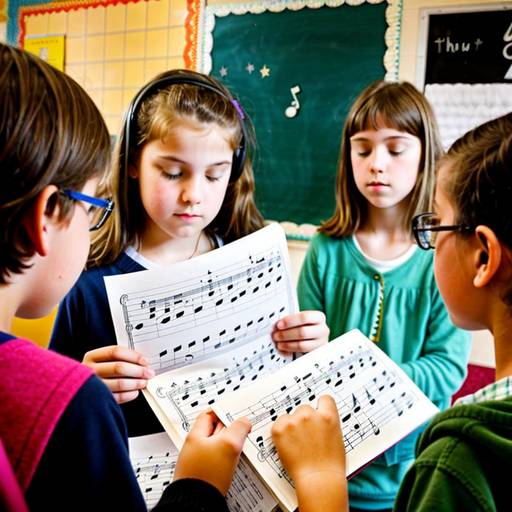
In this 5th-grade music theory lesson, students will learn to identify and name notes on the musical staff, focusing on both treble and bass clefs. The lesson begins with an engaging discussion about the importance of note names in music, followed by interactive instruction on reading notes, including memorable mnemonics for easy recall. Students will then participate in guided practice activities where they match note names to their positions on the staff and identify notes played on a keyboard.
To foster collaboration and creativity, students will be divided into small groups to create simple melodies using selected notes, which they will present to the class. The lesson concludes with a fun "Note Art" activity, where students illustrate their favorite note and write its name, allowing for artistic expression while reinforcing their learning. Throughout the lesson, teachers will assess understanding through observation and participation, ensuring students develop a strong foundation in music notation and theory.
In this 5th-grade music lesson, students will explore the fundamentals of music theory by learning to identify and name musical notes on the staff. The class begins with a discussion about the significance of music, followed by a mini-lecture introducing the staff, treble and bass clefs, and the names of line and space notes. To reinforce their understanding, students participate in an interactive game where they collaboratively identify notes on a staff. The lesson includes a brief overview of note values, demonstrated through clapping exercises. To assess their comprehension, students complete a worksheet with exercises related to note identification and values, which is reviewed as a class. Extension activities allow students to showcase their creativity through simple melody creation. The session aims to engage students in learning while fostering teamwork and a deeper understanding of musical concepts.

In this 5th-grade music lesson, students will delve into fundamental concepts of rhythm and music theory, focusing on rhythmic notation and time signatures. The session begins with a warm-up clapping exercise to establish a steady beat and to introduce various note values such as quarter notes, half notes, whole notes, and rests. Students will then work in small groups to practice and perform rhythmic patterns, which they will translate into playing on percussion instruments, fostering creativity and collaboration.
As a group, the class will combine their rhythms into a layered performance, using a metronome for synchronization. Following the rhythmic activities, students will listen to selected songs, identifying their rhythmic elements and time signatures, reinforcing their learning through real-world examples. The lesson concludes with a reflection and writing exercise where students summarize what they learned and pose any remaining questions. Assessment will be based on participation, group performances, and individual reflections. Extensions for the lesson include homework on identifying rhythmic elements in favorite songs, encouraging further exploration of rhythm in music.

This 5th-grade music lesson focuses on music theory and rhythm, engaging students through various activities designed to enhance their understanding of rhythmic patterns. The lesson begins with a clapping warm-up to introduce basic rhythmic concepts, followed by a discussion that involves students sharing their prior knowledge.
Students will learn about different rhythmic elements, including quarter notes and eighth notes, and practice clapping specific patterns. An interactive listening activity allows them to identify rhythms in music, while a rhythm echo game reinforces their skills in a fun and engaging manner.
In small groups, students will create their own rhythmic patterns using percussion instruments, fostering their collaborative skills and creativity. The lesson culminates in a performance where groups showcase their rhythmic creations, followed by a reflective discussion on the importance of rhythm in music. Assessment will be based on participation and student-generated rhythms, with adaptations available for diverse learning needs. Extensions for future lessons may explore rhythms from different cultures, broadening students' musical horizons.

In this 5th-grade music lesson, students will explore the concept of dynamics in music, focusing on volume variations through interactive activities. The lesson begins with a vocal warm-up where students experiment with soft and loud sounds. They will learn and identify dynamic markings such as piano, forte, mezzo piano, mezzo forte, crescendo, and decrescendo.
Students will then work in small groups to create and perform short pieces that incorporate at least three different dynamics, allowing them to practice their understanding creatively. Following their performances, the class will engage in a listening exercise featuring music that demonstrates varying dynamics, encouraging discussion on the emotional impact of these changes.
Next, students will participate in a movement activity where they physically express dynamics through assigned movements corresponding to each dynamic term. The lesson concludes with a recap of the concepts learned, followed by a group performance where students will sing a simple song together, alternating between soft and loud sections. Participation in discussions, group activities, and an optional homework assignment will help assess their understanding of dynamics in music.