
Filters
Level
Grade
Subject
Subject Area
Subject Topic
Standard(s)
Audience
Keyword
DurationMinutes
5th Grade Budgeting Lesson Plans

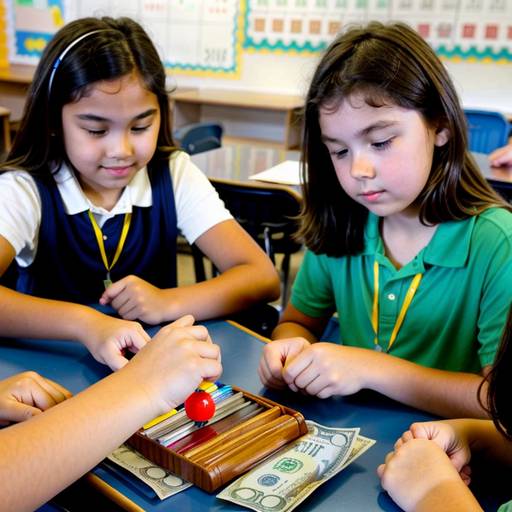
In this 5th-grade math lesson plan focused on money and budgeting, students will learn the significance of managing finances through hands-on activities. The lesson begins with a discussion about money management, followed by an interactive sorting activity where students identify and calculate the value of various coins and bills using play money.
Students will then work in small groups to create simple budgets based on given scenarios, discussing income and expenses while using their play money as a visual aid. They will fill out budgeting templates to outline their financial decisions.
The lesson wraps up with group presentations, allowing students to share their budgeting choices, and concludes with a reflective exit ticket where they identify personal savings goals. Throughout the lesson, students will develop essential skills in budgeting and financial literacy while actively engaging in collaborative learning. Assessment will focus on participation, completed worksheets, and individual reflections.

This lesson plan is designed for 5th-grade students to help them understand the concepts of money and budgeting. Throughout a 60-minute session, students explore different types of money, including coins and bills, and engage in discussions about income, expenses, and savings.
The lesson begins with an introduction to budgeting principles, followed by direct instruction where students learn to categorize expenses as needs or wants and how to create a simple budget based on a sample scenario. Students then work in small groups to analyze provided budgeting scenarios and collaboratively develop their own budgets.
As an independent exercise, each student creates a personal budget based on a chosen scenario, estimating income and expenses while determining potential savings. The class wraps up with students sharing their budgets and reflecting on the importance of financial planning.
Assessment includes observing participation and reviewing individual budgets to gauge understanding. Extensions are provided for those who finish early, allowing them to explore more complex budgeting situations. Overall, the lesson aims to instill practical money management skills and the value of making informed financial decisions.

In this engaging fifth-grade mathematics lesson, students explore the concepts of money, budgeting, and financial decision-making. The lesson begins with a discussion about the purpose of money and the importance of budgeting, introducing key terms such as income, expenses, and savings.
Students collaborate in small groups to analyze different scenarios that provide them with specific income amounts and a variety of expenses. They create budgets based on these scenarios, making choices about needs versus wants and identifying potential savings. Each group shares their budget with the class, fostering discussion about different financial decisions.
Afterward, students work independently to create a personalized budget using a worksheet that outlines their hypothetical income and expenses, ensuring to include a savings plan. They reflect on their learning by writing about the importance of budgeting in their lives.
The lesson wraps up with a recap of the key concepts and an emphasis on the benefits of budgeting for achieving financial health and goals. Assessment includes evaluating students’ worksheets and their participation in activities, while extensions such as guest speakers and classroom stores provide additional opportunities to reinforce these vital skills. Adaptations are available for diverse learners to support their understanding.

This 5th-grade math lesson focuses on teaching students the fundamentals of money management, specifically budgeting and smart spending practices. The lesson begins with a group discussion to define budgeting and its significance in financial decision-making. Students learn key concepts such as income, expenses, and savings, and follow a series of structured steps to create a simple budget.
Through guided practice, students work in small groups to tackle real-life scenarios that require them to allocate a set income across various expenses, reinforcing the distinction between needs and wants. They then engage in individual practice by completing a budgeting worksheet that encourages them to make thoughtful spending choices.
Throughout the lesson, students are encouraged to reflect on their budgeting decisions and share their experiences with peers. Assessment is based on their completed budgets and participation in discussions. Extensions are provided for both advanced and struggling students, ensuring that all learners can engage with the material effectively. Overall, the lesson equips students with valuable skills for managing their finances in the future.