
Filters
Level
Grade
Subject
Subject Area
Subject Topic
Standard(s)
Audience
Keyword
DurationMinutes
5th Grade Measurement Lesson Plans

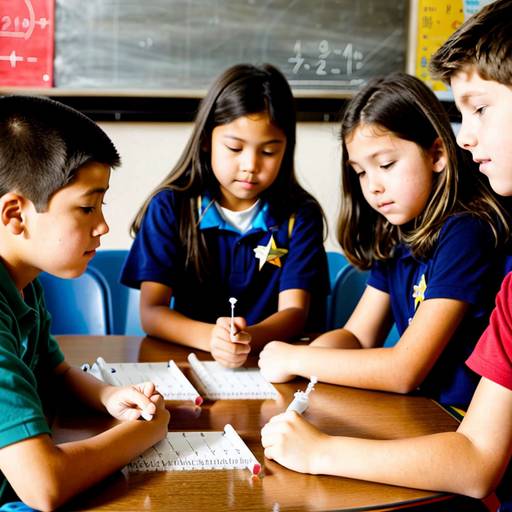
In this 5th-grade math lesson focused on measurement and temperature, students will learn how to measure temperature in both Celsius and Fahrenheit, as well as how to convert between the two units. The lesson begins with an interactive discussion about temperature and its importance in daily life, followed by direct instruction on reading thermometers and performing temperature conversions using established formulas.
Students will then engage in guided practice by working in pairs to complete a worksheet that reinforces their conversion skills. They will subsequently choose a city from around the world, research its current temperature in both measurement systems, and reflect on the differences in climate.
For a closing activity, students will create bar graphs to visually compare the temperatures of their chosen cities and discuss the broader applications of temperature measurement. Throughout the lesson, assessments will focus on students’ completion of the worksheet, participation in discussions, and the accuracy of their graphs. Extensions and adaptations are included to support diverse learners, ensuring that all students can engage meaningfully with the content.
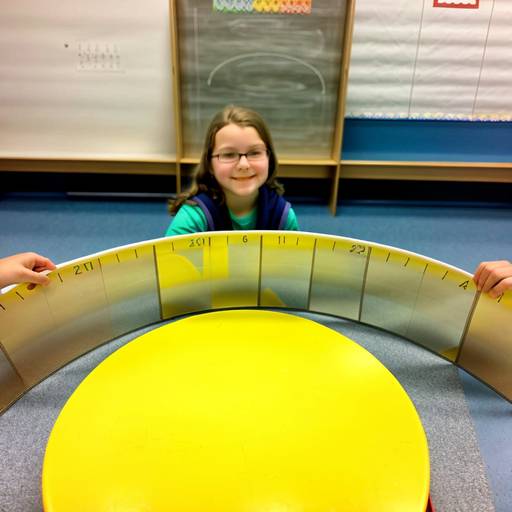
In this 5th-grade math lesson on measurement and weight, students will explore the concepts of length and weight using both standard and metric units. The class will begin by discussing the importance of measurement in everyday life, leading into direct instruction on how to accurately measure objects with rulers, measuring tapes, and digital scales.
Students will engage in guided practice by working in small groups to measure and weigh a variety of objects, recording their findings in both metric and standard units. Following this collaborative activity, they will complete a worksheet that includes conversion problems and word problems related to the measurements taken.
The lesson will conclude with a class discussion where groups share their findings, reinforcing the key concepts learned. Assessment will focus on group participation, individual worksheet completion, and engagement in discussions. Additionally, extension activities will provide opportunities for further exploration of measurement standards and creative presentations. This lesson emphasizes hands-on learning and real-world applications of measurement skills.
This 5th-grade math lesson focuses on measurement and volume, guiding students to understand how to calculate the volume of geometric solids such as cubes and rectangular prisms. The session begins with an engaging discussion about the importance of measuring volume in real-world contexts. Students learn the volume formula (Length × Width × Height) through direct instruction and hands-on demonstrations involving measuring dimensions and using water for practical volume measurement.
During guided practice, students work in small groups to measure geometric shapes, calculate their volumes, and document their findings in Volume Adventure Journals. Independent practice involves solving related problems on a worksheet. The lesson concludes with a class discussion where groups share their observations and reflections on the utility of knowing an object's volume. An exit ticket prompts students to express their thoughts on the importance of volume measurement. Assessment includes reviewing journals and worksheets for calculation accuracy, participation in discussions, and group activities, with opportunities for extension and accommodations to meet diverse learning needs.
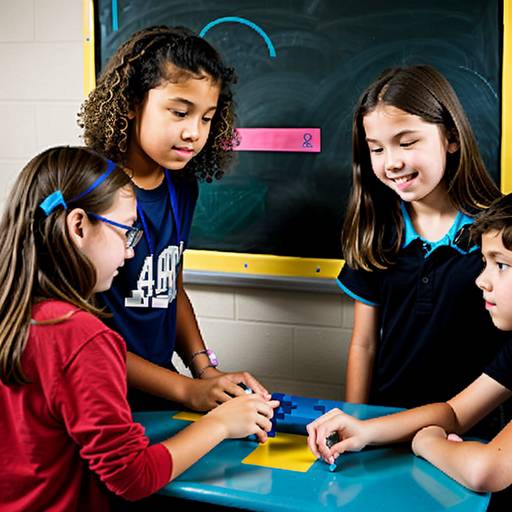
In this 5th-grade math lesson, students will explore the concept of perimeter through a hands-on and engaging approach. The lesson begins with an introduction to perimeter, highlighting its importance in real-world scenarios. Students will learn how to calculate the perimeter of shapes, specifically rectangles and squares, using established formulas.
After a demonstration and guided practice with worksheets, students will work in small groups to create their own shapes using string and graph paper. They will measure the length of the string to determine the perimeter of their unique creations. Each group will then present their shape and findings to the class, fostering discussion about their experiences and any challenges faced during the activity.
The lesson concludes with an assessment of student understanding through the collected worksheets and group presentations, along with a quick exit ticket to reflect on their key learnings. Extensions for advanced learners and support for those needing additional help are also provided. This interactive lesson encourages students to apply measurement concepts in practical situations and fosters collaboration and problem-solving skills.
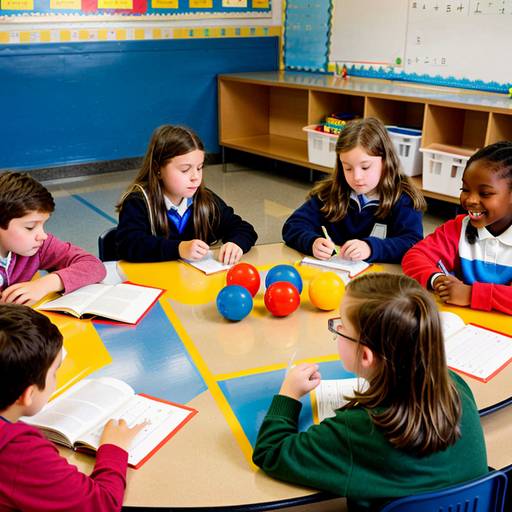
This lesson plan for 5th-grade mathematics focuses on the concepts of measurement and area through engaging, hands-on activities. Students begin with a discussion on the significance of measurement in everyday life, followed by an introduction to calculating the area of rectangles using the formula Area = Length × Width. They practice measuring and calculating areas with graph paper, visualizing their results with small squares.
In groups, students are tasked with redesigning a garden within a specified area, allowing them to apply their understanding of area in a practical context. The activity encourages collaboration, creativity, and real-world application of mathematical concepts. The lesson concludes with a class discussion about their designs and a reflective exit ticket to reinforce what they learned. Assessments are based on worksheet responses and observations during group work, with extensions provided for students who advance quickly through the material. Overall, the lesson aims to deepen students' comprehension of measurement and area while showing their relevance in real-life scenarios.
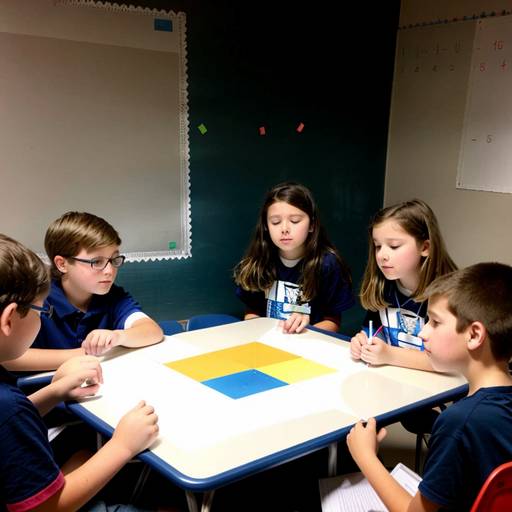
In this 5th-grade math lesson, students will explore the concept of volume by engaging in both theoretical and hands-on activities. They will begin with a discussion on the meaning and importance of volume, followed by an introduction to the formula for calculating the volume of rectangular prisms (V = length × width × height).
After practicing measurement techniques with rulers, students will work in pairs to measure the dimensions of rectangular boxes and calculate their volumes. They will then participate in a group activity where they fill the boxes with sand or water, comparing their predicted and actual volumes.
The lesson culminates with a regrouping session where students will share their findings and insights, reinforcing key concepts discussed. Assessments will include reviewing worksheets to gauge understanding and observing group dynamics during activities. Differentiation strategies will be employed to support varied learning needs, while an extension activity will encourage students to discover volume in everyday objects at home.
In this fifth-grade math lesson focused on measurement and volume, students will explore the concept of volume through hands-on activities and practical applications. The objectives include understanding how to calculate the volume of rectangular prisms using the formula \( V = l \times w \times h \), as well as developing measuring skills with rulers and measuring tapes.
The lesson begins with a brief discussion of volume and its real-world relevance. Students will then learn how to measure the dimensions of a box and calculate its volume through guided practice. After measuring, students will fill their boxes with water or rice, allowing them to visualize and compare their calculated volume with the actual capacity.
As the lesson concludes, groups will share their findings and reflect on their experience. Assessment will be based on observation of group work, completion of worksheets, and journal reflections on what they learned. Extension activities may include exploring volumes of more complex shapes, while adaptations will be made to accommodate diverse learning needs. Overall, the lesson aims to impart a comprehensive understanding of volume through engaging, hands-on experiences.
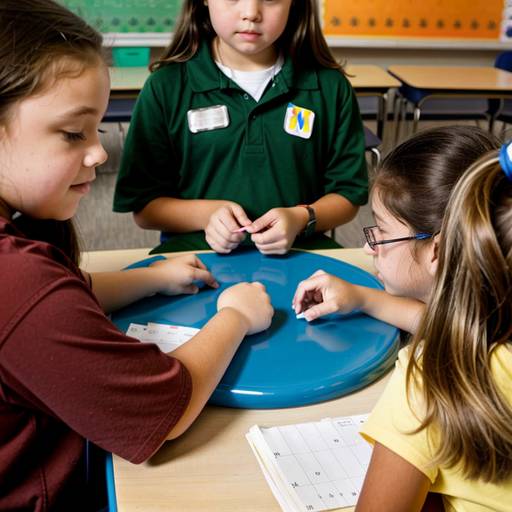
This lesson plan is designed for 5th-grade students to explore the concepts of measurement and weight. Students will learn to understand and use various units of measurement, including grams, kilograms, pounds, and ounces. The lesson begins with a discussion on the importance of weight and measurement, followed by direct instruction on reading scales and converting between different units.
Through guided practice, students will work in small groups to weigh various objects, record their measurements, and compare findings. Independent practices will reinforce their understanding through worksheets featuring conversion problems and practical measurement tasks. The lesson concludes with a recap of key concepts and an invitation for students to share their discoveries.
Assessment will be based on worksheets, group participation, and a quiz on measurement and weight concepts. The lesson also incorporates differentiation strategies to accommodate varying student needs. For homework, students will report on measurements of items found at home, emphasizing real-world applications of the skills learned.