
Filters
Level
Grade
Subject
Subject Area
Subject Topic
Standard(s)
Audience
Keyword
DurationMinutes
5th Grade Geometry Lesson Plans

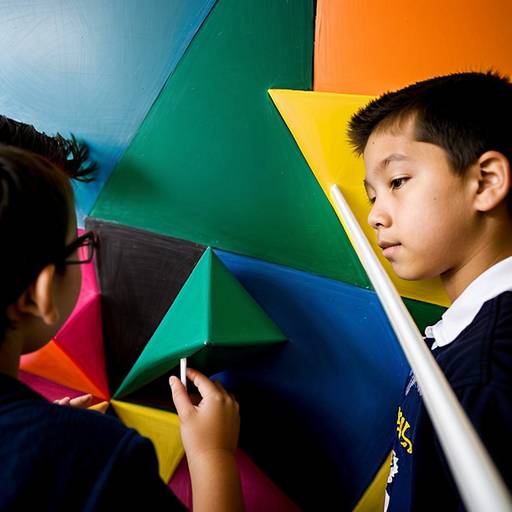
In this 5th-grade math lesson, students will explore geometric shapes and learn how to calculate their perimeters. The lesson begins with an introduction to geometry and the concept of perimeter, including simple definitions and formulas for various polygons such as squares, rectangles, triangles, and pentagons. Students will then engage in creating their own geometric shapes on graph paper and calculating the perimeter for each shape they create.
Following this hands-on activity, students will work independently on worksheets that feature a variety of shapes, applying the formulas learned to calculate perimeter. The lesson also encourages real-world application by having students measure the perimeter of objects within the classroom.
To conclude, the class will review the key concepts and formulas, while students complete an exit ticket to reflect on their learning and pose any lingering questions. Assessment will include evaluating worksheets and observing participation during activities, with extensions available for advanced learners and adaptations provided for those needing extra support.
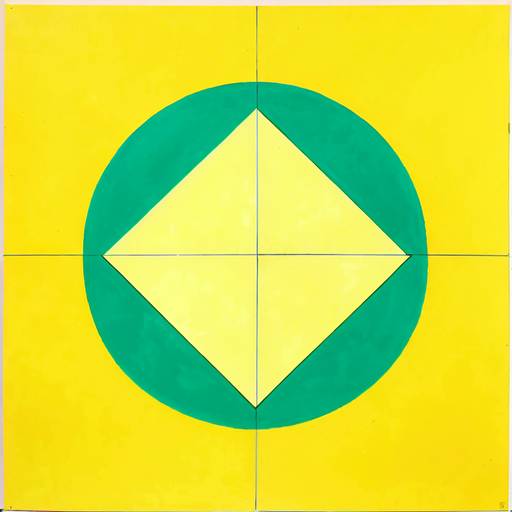
In this 5th-grade math lesson, students will explore the concept of angles and their classifications, focusing on acute, right, and obtuse angles. The lesson begins with an engaging discussion to activate prior knowledge, followed by direct instruction on identifying and measuring angles using a protractor.
During guided practice, students will work with worksheets to measure various angles, receiving support as needed. The interactive activity involves a scavenger hunt where students work in small groups to find and measure angles in their classroom environment, documenting their findings on chart paper. Each group will also create a poster displaying the shapes they discovered, labeling the angles accordingly.
The lesson concludes with group presentations, allowing students to share their discoveries and reinforce their understanding of angle types. Assessment will include observation during activities and a quiz to evaluate individual understanding. Modifications and extensions are provided to support diverse learning needs and explore additional geometric concepts. This lesson emphasizes hands-on learning and real-world application, fostering a comprehensive understanding of geometric angles.

This 5th-grade math lesson focuses on geometry and the concept of perimeter. Students will engage in identifying various geometric shapes and learn how to calculate the perimeter of squares, rectangles, and triangles using appropriate formulas. The lesson begins with a discussion about the relevance of geometry in everyday life, followed by direct instruction on key terms and calculations.
Students will participate in group activities, measuring pre-drawn shapes and using string to visualize perimeter. They will then complete a worksheet to reinforce their understanding and apply their knowledge to real-world scenarios, such as calculating the perimeter needed for a fence around a garden.
The lesson concludes with a review of the key concepts and an exit ticket to assess student comprehension. Differentiation strategies are included to support various learning levels, ensuring that all students can engage with the material effectively. Assessment will be based on group activities, worksheet accuracy, and exit tickets to gauge overall understanding.
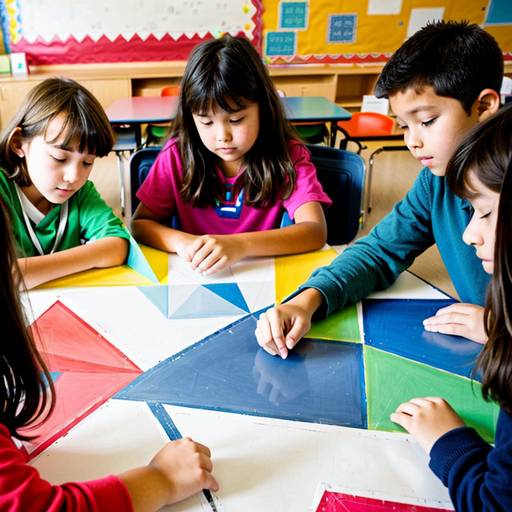
In this 5th-grade math lesson, students explore the concepts of geometry and area through the study of various polygons, including triangles, rectangles, parallelograms, and trapezoids. The lesson begins with a review of polygon types and the significance of area in real-life applications. Students learn and practice calculating the area of each polygon using the appropriate formulas, moving from direct instruction to guided and independent practice. Throughout the activities, they engage in drawing shapes on grid paper to reinforce their understanding and apply their knowledge to solve related word problems. The lesson concludes with a review and discussion of how area calculations are used in various fields, allowing students to connect mathematical concepts to everyday situations. Assessment is conducted through observation during paired activities and graded worksheets. Extension activities offer challenges for faster learners, while differentiation strategies support those needing additional help. Overall, the lesson encourages collaboration and hands-on engagement with geometry.
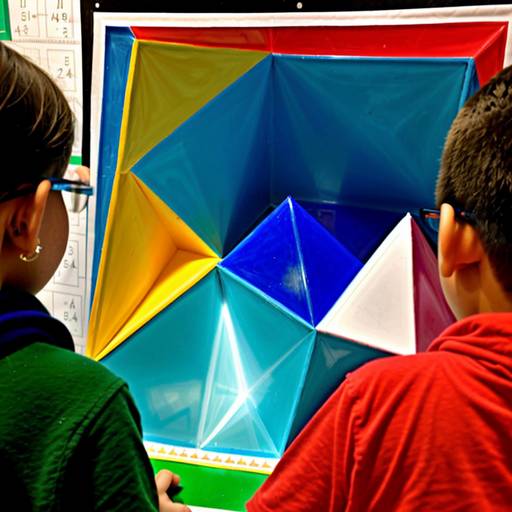
In this 5th-grade math lesson, students will explore essential concepts related to 3D geometry, focusing on identifying and describing common solid shapes, including cubes, spheres, cylinders, cones, and pyramids. The lesson begins with a discussion about geometry and its relevance in everyday life, followed by an introduction to the properties of these shapes. Through a shape hunt activity, students will find real-world objects that correspond to the identified 3D shapes and share their findings with classmates. They will then engage in a hands-on activity to create their own 3D models, labeling their properties. The lesson concludes with presentations of their creations, emphasizing the importance of recognizing shapes in their environment. Assessment will be based on participation, accuracy in labeling, and worksheet completion. Extension activities are suggested for students who excel, including lessons on volume and surface area, as well as research on notable structures. Overall, the lesson promotes active learning and fosters a deeper understanding of geometric concepts in a relatable manner.
In this 5th-grade mathematics lesson, students explore the concepts of geometry and perimeter through a series of engaging activities. The lesson begins with an introduction to shapes and the importance of understanding perimeter in real-world contexts. Students learn how to calculate the perimeter of various polygons using formulas and direct measurement, working in groups to identify and categorize different shapes.
During guided practice, students use rulers to measure the sides of their shapes and compute their perimeters. They then engage in independent practice, which includes a worksheet with perimeter calculations and real-life scenarios involving fencing a garden. To reinforce their understanding, students participate in a hands-on activity where they create their own polygons on graph paper, measure them, and find their perimeters using string.
The lesson concludes with a review of the concepts learned as students share their findings and discuss the interesting shapes they measured. The teacher assesses understanding through observations and collected worksheets, supplemented by a quick exit ticket to gauge individual comprehension. Optional extensions are provided for students seeking further challenge, allowing them to explore irregular shapes and compare perimeter with area. Overall, the lesson fosters teamwork and practical application of mathematics, promoting an engaging learning experience.