
Filters
Level
Grade
Subject
Subject Area
Subject Topic
Standard(s)
Audience
Keyword
DurationMinutes
5th Grade Writing Lesson Plans


This 5th-grade language arts lesson focuses on creative writing, where students will craft their own short stories featuring a hero and an adventure. The lesson begins with an engaging discussion on favorite story characters, highlighting the characteristics that define heroes. Students are introduced to key story elements—such as plot, setting, characters, conflict, and resolution—through a handout and a model reading.
They will collaboratively brainstorm a list of potential heroes and adventures, which they can use for their stories. Students will then create an outline based on their selected hero and adventure, incorporating feedback from peers to strengthen their ideas. After outlining, students will embark on the writing process, using descriptive language to develop their narratives and employing dialogue to enhance character development.
The lesson concludes with a few students sharing excerpts from their drafts with the class, promoting a sense of community and celebration of creativity. Ongoing assessment will occur through observation and evaluation of the stories, with differentiated support provided as needed. An optional extension allows students to illustrate their stories or write sequels, deepening their engagement with the writing process.

In this 60-minute lesson, 5th-grade students will explore the key elements of narrative writing, including characters, setting, plot, conflict, and resolution. The session begins with a discussion about what makes stories interesting, which will be recorded on a whiteboard. After introducing the key narrative elements with examples, students will engage in guided practice by working in small groups to create a story map based on a familiar tale. Each group will present their story map to the class, reinforcing their understanding of narrative structure.
Following this collaborative activity, students will brainstorm and outline their own narrative ideas using provided prompts, focusing on developing their main character, setting, conflict, and resolution. They will then draft their narratives, incorporating descriptive language and dialogue. The lesson concludes with students sharing portions of their stories with the class, helping to foster a sense of community and encouraging creativity.
Assessment will be carried out by collecting outlines and narrative drafts to evaluate students' comprehension of narrative structure and their writing skills. Extensions and differentiation strategies are included to cater to varied learning needs, ensuring all students can engage meaningfully with the writing process.

This lesson plan aims to teach 5th-grade students the fundamentals of persuasive writing. The objectives include understanding the purpose and key elements of persuasive writing, identifying persuasive techniques in sample texts, and creating their own persuasive pieces. The lesson begins with a discussion about advertisements to engage students' interest, followed by a detailed explanation of the elements of persuasive writing, such as hooks, opinion statements, supporting details, and calls to action.
Students work in small groups to analyze various persuasive texts, identifying techniques and elements within their samples. After this collaborative activity, they independently write a persuasive letter to the principal proposing a new school rule, utilizing a provided checklist for guidance. The lesson closes with students sharing their letters and reflecting on what they learned about persuasive writing, supplemented by an exit ticket that prompts them to express a key takeaway.
Assessment includes reviewing the persuasive letters to ensure understanding of the key concepts and participation in discussions. Extensions encourage visual expression through poster creation and oral presentation through classroom debates. Differentiation strategies are included to support diverse learners, ensuring that all students can engage and succeed in the persuasive writing process.

In this 5th-grade language arts lesson, students will learn about expository writing, a style focused on explaining and informing. The lesson begins with engaging students in a discussion about topics they enjoy, setting the stage for understanding how to communicate information effectively. Through a mini-lesson, students will explore the structure of an expository paragraph, which includes a topic sentence, supporting details, and a conclusion. They will analyze example paragraphs to identify these components.
During guided practice, students will fill out graphic organizers to brainstorm topics and supporting details, facilitated by a teacher-led demonstration. Following this, students will independently write their own expository paragraphs based on their chosen topics, applying the structure learned.
The lesson concludes with a peer review activity, where students share their paragraphs and provide constructive feedback to one another. Students will be assessed on their written work based on clarity, structure, and coherence. An extension activity is available for those who finish early to create a visual presentation related to their topic. Throughout the lesson, students will gain a solid understanding of how to write clear and informative expository texts.

In this 5th-grade language arts lesson plan, students will explore the elements of narrative writing, which include characters, setting, plot, conflict, and resolution. The lesson begins with a warm-up activity where students share memorable personal events with a partner, leading to a class discussion on what makes these moments impactful.
The teacher then introduces the key components of narrative writing by analyzing an example narrative, guiding students to identify its elements. Students will learn to plan their own narratives using a graphic organizer, where they outline their chosen event's details. After completing the organizer, students will share their ideas with a partner for feedback.
Next, students will draft a rough version of their personal narratives in their notebooks, focusing on incorporating sensory details and emotions to engage their readers. The lesson concludes with a wrap-up discussion, where students can share excerpts from their narratives. Assessment will involve monitoring participation, collecting graphic organizers and drafts, and providing feedback on their use of narrative structure and clarity. Extensions and adaptations will be offered to meet diverse learning needs.
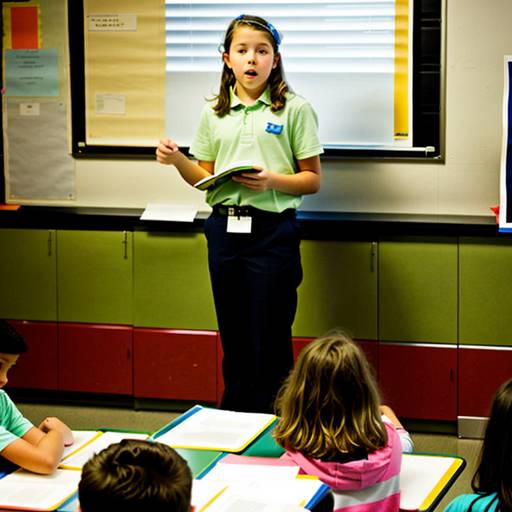
This lesson plan focuses on teaching 5th-grade students the principles and structure of expository writing. It begins with a discussion about the purpose of writing, followed by an introduction to expository writing, including its key components: an introduction, body paragraphs, and a conclusion. Students will participate in a guided practice session using a graphic organizer to outline their thoughts on a chosen topic.
After setting their outlines, they will independently draft an expository essay. The lesson concludes with students sharing their writing, fostering reflection on their writing process and organization. Assessment will be based on participation during activities, the completion of graphic organizers, and the quality of their rough drafts. Homework will involve finalizing their essays for a future peer review session, with extensions provided for advanced students and additional support for those needing it. Overall, this lesson promotes clarity and organization in student writing while enhancing their ability to inform and engage readers.
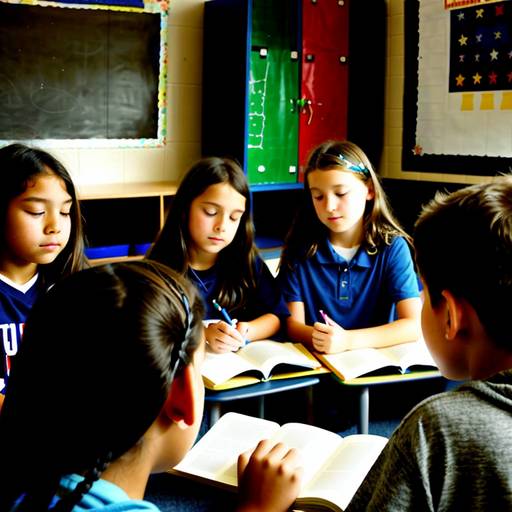
In this 5th-grade language arts lesson plan, students will engage in creative writing by crafting their own imaginative stories based on provided prompts. The lesson begins with a discussion about creativity in storytelling, highlighting memorable elements from their favorite books and movies. A mini-lesson focuses on the use of descriptive language and sensory details to enhance writing, along with the importance of character and setting development.
After the instruction, students will spend time writing a short story while incorporating their newfound knowledge about description and detail. To foster collaboration, students will then share their stories with a partner, providing feedback to one another. The lesson concludes with a group sharing session, where some students may read their stories aloud to the class, followed by a reflection on the writing process. Assessment will be based on participation, the creativity of the written work, and the effective use of descriptive language. Extensions include displaying student work and organizing a storytelling event to further celebrate their creativity.
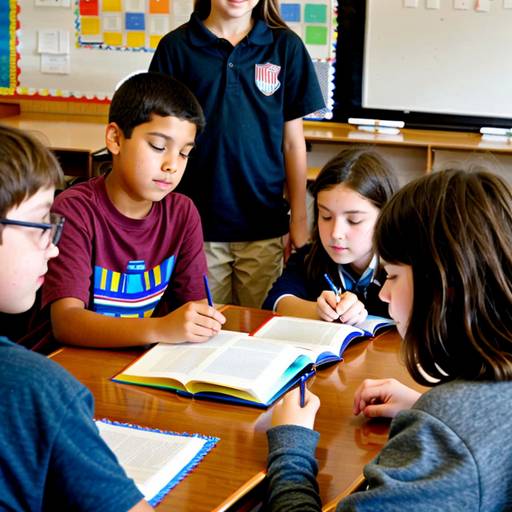
In this 5th-grade language arts lesson, students will explore narrative writing by creating their own imaginative stories. The lesson begins with a discussion about the elements of narratives, including characters, setting, plot, conflict, and resolution. Following this, a mini-lesson on descriptive language emphasizes its importance in enhancing storytelling by helping readers visualize and connect with the narrative.
Students will then brainstorm their story ideas using graphic organizers to outline key components. With ample writing time, they will compose their narratives, applying learned techniques, while utilizing a checklist to ensure they include all necessary elements. Afterward, students will share portions of their stories with peers for feedback, fostering a collaborative learning environment.
The lesson concludes with a reflection on what they learned about narrative writing and the significance of detail in storytelling. Assessments will focus on participation during discussions and the completeness and creativity of their narratives. Differentiation strategies will be employed to support diverse learners, with opportunities for extension activities, such as illustrating scenes from their stories.

In this 5th-grade Language Arts lesson, students will explore persuasive writing, focusing on how to craft a compelling argument. The lesson begins with a discussion on the purpose and elements of persuasive writing, including clear opinions, reasons, evidence, counterarguments, and calls to action. Students will work in small groups to brainstorm ideas on a given topic, filling out a graphic organizer to structure their thoughts. Following the group activity, each student will write a persuasive paragraph on a topic of their choice, incorporating the discussed elements. The lesson concludes with opportunities for students to share their writing with the class, allowing for feedback and discussion on the effectiveness of their arguments. Assessment will involve evaluating the written paragraphs based on a rubric focused on clarity, reasoning, evidence, organization, and grammatical conventions. Extensions and adaptations are provided to support diverse learning needs and interests.
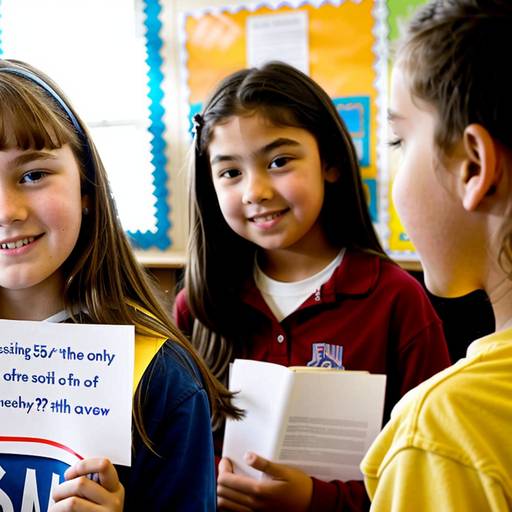
This 5th-grade language arts lesson focuses on introducing students to persuasive writing. The lesson begins with a discussion about personal experiences in trying to persuade others, leading to an exploration of persuasive writing techniques such as emotional appeal, logical reasoning, and credibility. Students engage in group work to brainstorm persuasive arguments around assigned topics and share their ideas with classmates. Following this collaboration, each student composes an individual persuasive paragraph, incorporating the techniques learned. The class concludes with selected students sharing their writing, fostering an understanding of effective persuasion and its importance. Assessment includes evaluating students' written paragraphs and monitoring group interactions to gauge understanding. The lesson includes differentiation strategies and an optional extension activity for those seeking further engagement.