
Filters
Level
Grade
Subject
Subject Area
Subject Topic
Standard(s)
Audience
Keyword
DurationMinutes
4th Grade Motion Lesson Plans

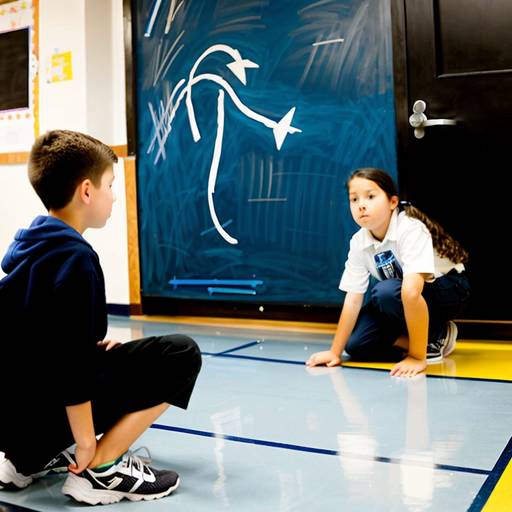
In this 4th-grade physical science lesson, students will explore the concepts of motion and the forces affecting it, such as push, pull, friction, and gravity. The lesson begins with a discussion to define motion and identify examples students encounter in their daily lives. Following an engaging demonstration using a toy car, students will be divided into small groups to conduct hands-on experiments using ramps of varying inclines and different surface textures. Each group will time their car's travel distance and record their observations, encouraging them to analyze how the angle and surface impact motion. The lesson concludes with a sharing session where students discuss their findings and reflect on the relevance of these concepts in everyday life. Assessment will involve reviewing the recorded data and observing group participation, with extensions available for those seeking additional challenges. Safety precautions will be emphasized throughout the activities to ensure a safe and productive learning environment.
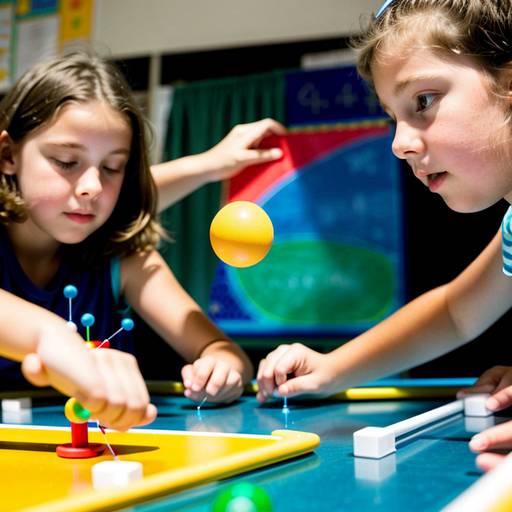
In this 4th-grade physical science lesson, students will explore the concepts of force, motion, pushes, and pulls through interactive activities. The lesson begins with a discussion to define motion and identify everyday examples of pushes and pulls. Students will then engage in a hands-on experiment using toy cars and ramps to investigate how different heights and strengths of pushes influence the distance an object travels. Working in small groups, they will measure their results and analyze the data, sharing their findings with the class. The lesson emphasizes critical thinking and collaboration while reinforcing the relationship between force and motion. Students will complete a worksheet summarizing their learning, ensuring a comprehensive understanding of the topics covered.
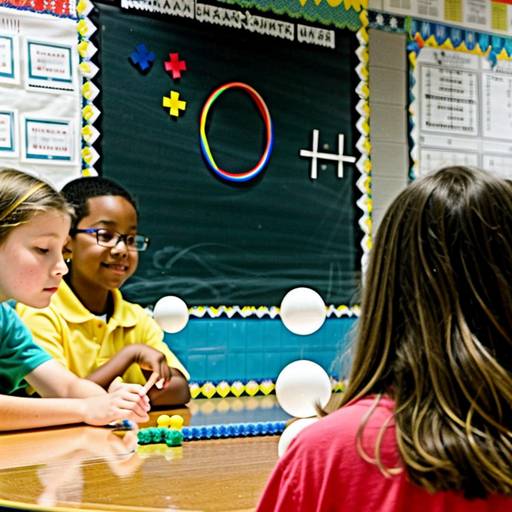
This 4th grade science lesson focuses on the concepts of motion and forces, helping students understand how these fundamental principles affect the movement of objects. Students will engage in hands-on activities by testing toy cars on ramps of varying heights and weights, observing and measuring the distances they travel. The lesson includes stations where students can experiment with pushing objects to discover the relationship between force and movement.
Throughout the lesson, students will record their observations and discuss their findings in small groups, fostering collaboration and critical thinking. This approach not only reinforces the scientific concepts of motion and forces but also encourages students to ask questions and make predictions. At the end of the lesson, students will summarize what they learned and reflect on their understanding through an exit ticket. This comprehensive plan supports interactive learning and lays a foundation for further exploration of physical science concepts.

This 4th-grade physical science lesson focuses on the concepts of motion, force, speed, and the effects of different surfaces on the movement of objects. The class begins with an engaging discussion about transportation and the factors that influence speed, followed by definitions of key terms. Students are then divided into small groups to conduct a hands-on experiment using toy cars and ramps set up on various surface materials. They will roll the cars down the ramps, measure the distances traveled, and time how long it takes for each car to reach the bottom. After conducting multiple trials and recording their data, groups will create bar graphs to analyze their findings and identify patterns in how different surfaces affect motion. The lesson concludes with group presentations and a reflective writing activity, allowing students to summarize their understanding of the relationship between forces and motion. Assessment includes observation of engagement, evaluation of data collection, and review of exit tickets. Extension activities may involve creating reports on real-life applications of motion and planning a field trip to a science museum.