
Filters
Level
Grade
Subject
Subject Area
Subject Topic
Standard(s)
Audience
Keyword
DurationMinutes
4th Grade Energy Lesson Plans

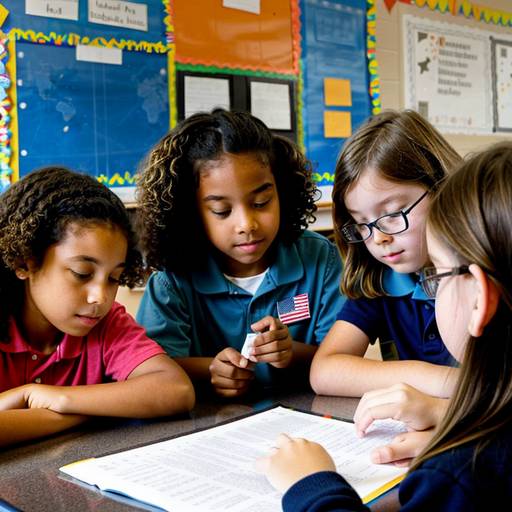
In this 4th-grade science lesson, students will explore the concepts of energy, focusing on kinetic and potential energy through hands-on activities. The lesson begins with a discussion about energy types, followed by a fun balloon rocket activity where students observe how air escaping transforms potential energy into kinetic energy. Next, students work in groups to set up ramps and test how the height of a ramp affects the motion of toy cars, recording distance traveled and time taken. This encourages them to analyze data and draw conclusions about energy transformation. The lesson concludes with a group sharing session, reinforcing the principles learned and introducing the idea of energy conservation. Students are assessed informally through participation and their science journals, with extensions provided for those looking to further their understanding. The lesson incorporates collaborative learning and critical thinking, helping students to grasp fundamental physical science concepts.

This lesson plan for 4th-grade students focuses on the concepts of potential and kinetic energy within the realm of physical science. The objective is for students to understand these two types of energy, identify real-life examples, and experience the transformation between them through a hands-on activity.
The lesson begins with an introduction to energy, including a discussion about what it is and where it can be observed in daily life. Students learn about potential energy (stored energy) and kinetic energy (energy of motion) through interactive questioning.
Following the discussion, students participate in a hands-on activity where they use rubber bands, toy cars, and ramps to explore energy transformations. They will stretch rubber bands to create potential energy and release them to observe the resulting kinetic energy as the car moves down the ramp. Students record their observations and discuss how different factors like height affect movement.
The lesson concludes with a class review and encourages students to reflect on energy transformations they observe outside of the classroom. Assessment is based on participation and understanding during activities, as well as reflections in their science journals. Extensions include a homework assignment inviting students to identify and illustrate examples of energy transformation in their own environments.
Overall, the plan aims to engage students actively in discovering energy concepts through interactive learning experiences.
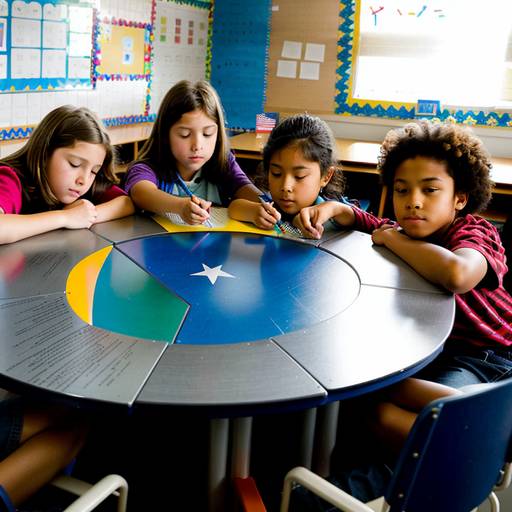
This 4th-grade science lesson focuses on helping students understand the fundamental concepts of forces and energy, specifically kinetic and potential energy, and their relation to motion. The lesson begins with an engaging discussion to elicit student ideas about how objects move. Through direct instruction, students learn about the definitions and real-life examples of kinetic and potential energy, as well as the role of forces like gravity.
Students participate in a hands-on experimentation activity in small groups, where they use toy cars, wooden ramps, and weights to explore how varying ramp heights and added weights affect motion and energy. They record their observations on worksheets to reinforce their understanding. The class reconvenes to share findings and discuss important concepts, solidifying their comprehension through collaborative learning.
The lesson concludes with a recap of the key concepts, encouraging students to identify examples of potential and kinetic energy in their everyday lives, as well as discussing the impact of forces on those energies. Assessment is based on worksheet completion and participation in discussions and activities, with extensions available for advanced learners to explore further connections to energy transformations and simple machines. This lesson aligns with Next Generation Science Standards and fosters an engaging and interactive learning environment.