
Filters
Level
Grade
Subject
Subject Area
Subject Topic
Standard(s)
Audience
Keyword
DurationMinutes
4th Grade Physical Education Lesson Plans

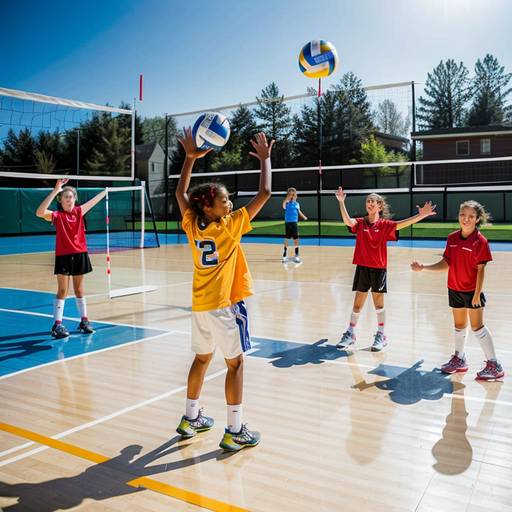
This 4th-grade physical education lesson focuses on introducing students to the fundamentals of volleyball. The session begins with a warm-up that includes dynamic stretches and volleyball movement drills to prepare students for physical activity. Following the warm-up, the instructor explains the basic rules and objectives of volleyball while demonstrating essential skills, such as serving, passing, and setting.
Students then rotate through skill practice stations, where they have the opportunity to refine their serving, passing, and setting techniques with peers. After practicing these skills, students are divided into small teams for a mini volleyball game, encouraging teamwork, communication, and application of the skills they've learned.
The lesson concludes with a cool-down period featuring a series of stretches, followed by a reflective discussion about the importance of teamwork and communication in sports. Throughout the lesson, the teacher assesses student participation and offers feedback to enhance their learning experience, ensuring a fun and inclusive environment for all participants.
In this 4th-grade physical education lesson, students will engage in a variety of activities designed to enhance their fitness and strength. The class will begin with a dynamic warm-up routine to prepare the students' muscles, followed by a discussion on the significance of physical fitness and the concept of strength.
The main portion of the lesson consists of five different fitness stations, each focusing on a specific strength-building exercise, including push-ups, bodyweight squats, resistance band workouts, plank holds, and jumping jacks, allowing students to learn proper form and technique. Following this, students will participate in a fitness relay race that incorporates the exercises practiced at the stations, fostering teamwork and friendly competition.
The session will conclude with a cool-down period that includes stretching and reflection, where students can share their experiences and thoughts on the exercises. Throughout the lesson, student participation, effort, and form will be observed for assessment. Adaptations will be provided for students needing additional support, ensuring an inclusive and positive learning environment that promotes the importance of staying active and healthy.
This physical education lesson plan for 4th graders focuses on the importance of fitness and flexibility. The session begins with an engaging discussion that introduces students to the concepts of fitness and flexibility, followed by a dynamic warm-up to prepare their bodies for exercise.
Students participate in stretching stations, where they learn various stretches designed to improve their flexibility, including the hamstring stretch, butterfly stretch, and quadriceps stretch. Each stretching activity is conducted in groups, allowing for collaboration and peer support.
Following the stretching stations, students engage in a fun relay activity that combines running and bodyweight exercises, reinforcing fitness concepts while promoting teamwork. The lesson concludes with a calm cool-down period where students reflect on their experiences and discuss what they learned.
The plan emphasizes proper technique, safe practices, and the importance of communication and feedback among peers, encouraging students to integrate fitness and flexibility into their daily routines.
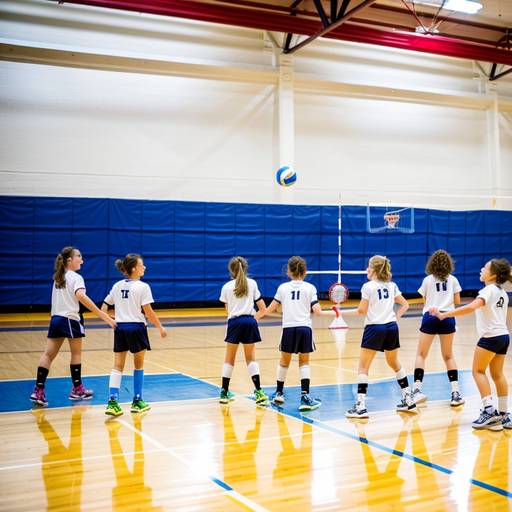
In this engaging physical education lesson for 4th graders, students are introduced to the foundational skills of volleyball, emphasizing teamwork and sportsmanship. The 60-minute session begins with a dynamic warm-up to prepare the students physically. Next, they rotate through three skill development stations focused on passing, setting, and serving techniques. Each station allows students to practice essential volleyball skills in pairs.
Following skill development, students are divided into small teams to participate in a modified game of volleyball, where they can apply the skills they've learned while promoting cooperation and communication. A team discussion encourages reflection on their experiences and reinforces the value of teamwork. The session concludes with a cool-down period that includes light stretching and further reflection on their performance and the importance of sportsmanship. Throughout the lesson, observation of participation and skill execution serves as assessment, while adaptations are made for varying skill levels to ensure inclusivity. The lesson sets the stage for future sessions that build on these foundational skills.
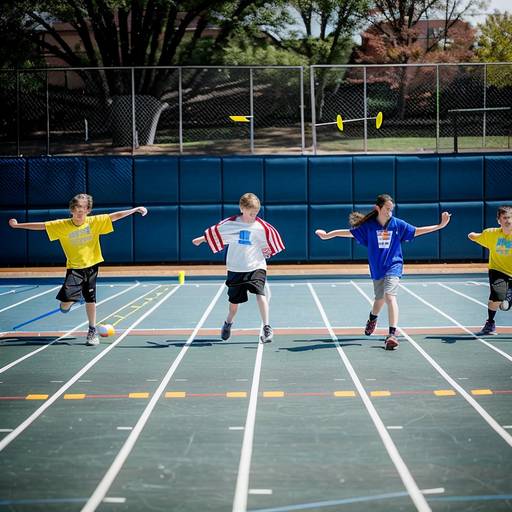
This physical education lesson plan is designed for 4th-grade students and focuses on improving coordination skills through teamwork and collaborative activities. The session lasts for 60 minutes and begins with a warm-up that includes stretches, jogging, and coordination exercises to prepare students for physical activity.
Following the warm-up, students participate in four different stations, each containing a unique challenge that encourages cooperation and communication. Activities include a hula hoop relay, a bean bag balancing exercise, a ball toss, and an obstacle course, with teams rotating through each station. Each activity is structured to promote teamwork and requires effective communication among team members.
To conclude the lesson, students engage in a cooldown period characterized by guided stretching, followed by a reflection and discussion where they share their experiences and insights on coordination and teamwork. The lesson incorporates assessments based on participation and teamwork dynamics and includes modifications to ensure all students can fully engage in the activities. Overall, the lesson emphasizes the importance of coordination and collaboration, providing students with valuable skills for both sports and daily interactions.
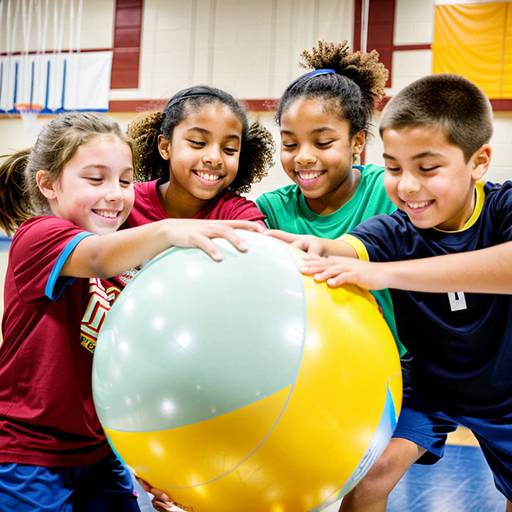
This 60-minute physical education lesson for 4th graders focuses on enhancing coordination and teamwork through a series of engaging activities. The class begins with a dynamic warm-up followed by discussions on the importance of collaboration in physical activities.
Students participate in three main activities: a hula hoop relay that encourages communication, a cone navigation challenge that tests their coordination, including a blindfold twist for added difficulty, and a ball pass exercise that fosters teamwork as they work together to keep the balls moving around a circle.
The lesson concludes with a cool-down session involving stretching and a reflective discussion about the strategies used during the activities and lessons learned about effective teamwork. Assessment is based on students’ participation and their ability to collaborate effectively. Adaptations are provided to ensure inclusivity for all students. Overall, the lesson provides a fun and educational experience that promotes physical activity and social skills among peers.