
Filters
Level
Grade
Subject
Subject Area
Subject Topic
Standard(s)
Audience
Keyword
DurationMinutes
4th Grade Geometry Lesson Plans

In this 4th-grade mathematics lesson, students will explore the concepts of geometry and symmetry through interactive activities. The lesson begins with a discussion to activate prior knowledge and introduce key vocabulary related to symmetry and geometric shapes. Students will learn to draw basic geometric shapes and identify lines of symmetry using mirrors to visualize reflective symmetry.
Following direct instruction, students will engage in guided practice by drawing symmetrical shapes on graph paper and adding creative designs. They will then work independently to create patterns using their drawn shapes, reinforcing their understanding of symmetry through hands-on exploration. Students will have the opportunity to share their creations with the class, discussing the symmetrical elements in their work.
Assessment will be based on participation and understanding demonstrated during activities, as well as an exit ticket requiring students to draw and label a symmetrical shape. The lesson includes differentiation strategies and extensions, such as a symmetry scavenger hunt, to cater to various learning needs and interests. Overall, the lesson aims to deepen students' understanding of geometric concepts while fostering creativity and critical thinking.
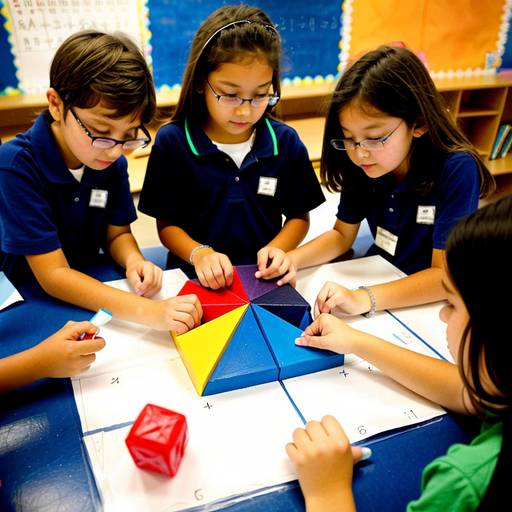
This 4th-grade math lesson focuses on identifying and describing three-dimensional shapes, including cubes, spheres, cylinders, cones, and pyramids. The lesson begins with an engaging discussion about shapes found in the students’ environment, followed by direct interaction with geometric solids in small groups. Students will explore the properties of these shapes by counting edges, vertices, and faces and will create visual charts to support their findings.
After presenting their charts to the class, students will participate in a scavenger hunt around the classroom or school to find real-world examples of the shapes learned. The lesson concludes with a worksheet assessment that tests their understanding of the concepts introduced.
Throughout the session, there are opportunities for differentiation to meet the diverse needs of learners, and extensions are suggested to engage students further. Overall, the lesson combines hands-on activities, collaborative learning, and real-life applications to help students grasp the essentials of 3D geometry comprehensively.
This 4th-grade math lesson focuses on geometry and the concept of perimeter. Students will begin by identifying and classifying various geometric shapes such as triangles, rectangles, squares, and circles. The instructor will introduce the concept of perimeter, explaining it as the total distance around a shape and demonstrating how to calculate it using specific formulas for each shape.
In a collaborative group activity, students will use cut-outs and rulers to measure the sides of different shapes and compute their perimeters, allowing them to apply what they've learned in a hands-on manner. Following this, learners will complete a worksheet that includes various shapes, requiring them to calculate the perimeter based on given dimensions or measurements.
The lesson will conclude with a class discussion to review the key concepts covered and an exit ticket exercise where students share their calculations and any lingering questions. Assessments will be conducted through observation during group work, evaluation of worksheets, and the exit tickets to determine student understanding and comfort with the material. Additionally, opportunities for extension activities will be provided to help students connect perimeter to real-world scenarios.
In this fourth-grade mathematics lesson, students will explore geometric shapes and learn how to calculate their perimeters. The session begins with an engaging discussion about familiar shapes encountered in everyday life, followed by a clear explanation of perimeter and its significance. Students will be introduced to various geometric shapes, including squares, rectangles, triangles, and circles, along with the respective formulas for calculating their perimeters.
Through guided practice, students will work in small groups to measure the sides of provided shape cutouts, calculating the perimeter collaboratively. Following this, they will complete independent worksheets featuring a range of shapes that require perimeter calculations, allowing the teacher to assess their understanding through observation and worksheet evaluation.
The lesson concludes with a wrap-up discussion, reinforcing the concept of perimeter and its practical applications. Extension activities for advanced learners and additional support for those needing it are also included, ensuring that all students can engage meaningfully with the content. This interactive and comprehensive approach aims to foster students' geometric understanding and measurement skills.
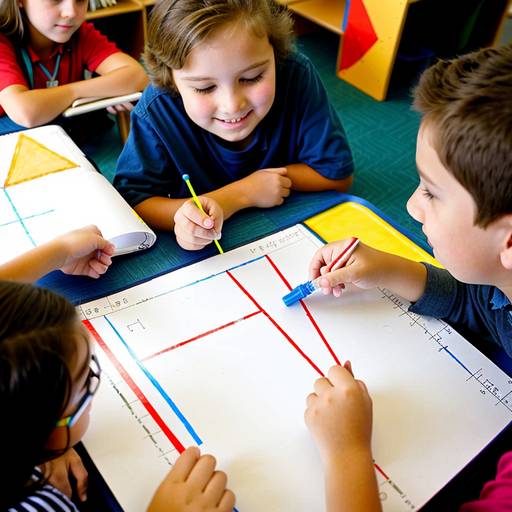
This lesson plan focuses on helping 4th-grade students understand the concept of area in geometry. Students will learn how to calculate the area of rectangles and squares using the formulas for area (Area = Length × Width and Area = Side × Side). The lesson begins with an engaging discussion on the importance of area, followed by direct instruction that incorporates interactive practice, allowing students to apply their knowledge.
In a hands-on activity, students will draw shapes on graph paper, calculate their areas, and verify each other's work through peer review. They will also cut out shapes from colored construction paper based on given dimensions and write the area on sticky notes to attach to their creations, resulting in a classroom display of their work.
The lesson closes with a review to reinforce key concepts and an exit ticket for students to reflect on their learning. Assessment methods include observing students during practice activities and reviewing their worksheets and exit tickets for comprehension. Extension activities are suggested for students ready to explore more complex shapes and area calculations. Overall, the plan aims to engage students in a fun and interactive way while building foundational geometry skills.
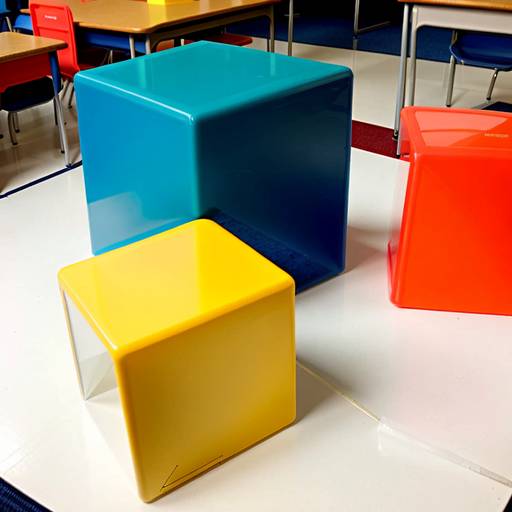
In this 4th-grade math lesson plan, students will explore the concept of perimeter through hands-on learning and real-world applications. The lesson begins with an introduction to shapes and the definition of perimeter, followed by direct instruction on the formulas for calculating the perimeter of rectangles, squares, and triangles.
Students will engage in guided practice with worksheets featuring various geometric shapes, working in pairs to calculate perimeters while explaining their reasoning to one another. Following this, a scavenger hunt will allow students to measure and record the perimeters of objects around the classroom using string or yarn, fostering a deeper connection to the concept.
The lesson concludes with a shared reflection on their discoveries and the significance of perimeter in everyday life. Assessments will include observations during activities and evaluation of the completed worksheets. Differentiation strategies will be implemented to provide support for struggling learners and challenges for advanced students, ensuring that all students benefit from the lesson.
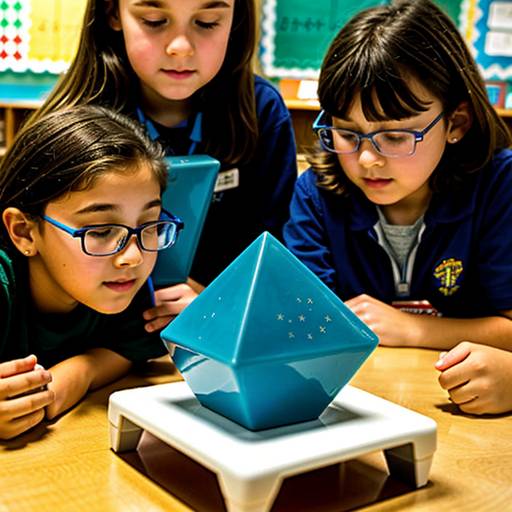
This lesson plan focuses on introducing 4th-grade students to three-dimensional shapes, or solids, emphasizing their properties, classifications, and real-world applications. The session begins with an engaging discussion about 3D shapes, where students identify various examples and learn about their characteristics, including faces, edges, and vertices.
Following the introductory discussion, students participate in a shape sorting activity in small groups, using manipulatives to categorize the solids and share their findings with the class. The lesson continues with a creative component in which each student designs their own unique solid, labeling its properties and dimensions, and then shares their creation with a partner.
To conclude, the class reflects on what they learned throughout the lesson, discussing interesting aspects of the solids they created and their practical applications. Assessment is conducted through observations, reviewing shape sorting mats, and evaluating students' designs based on clarity and accuracy. Extensions to the lesson encourage further exploration of real-world applications of solid shapes and introduce basic volume concepts if time permits. Overall, this lesson promotes hands-on learning, creativity, and collaborative engagement among students.
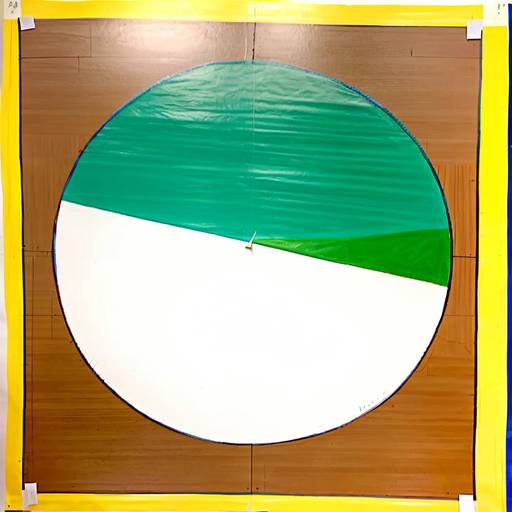
This 4th-grade math lesson focuses on helping students understand the concepts of geometry and area through hands-on activities and discussions. The lesson begins with an engaging discussion about the relevance of area in real life, followed by direct instruction on calculating the area of rectangles and squares using formulas. Students participate in guided practice by drawing shapes on graph paper and calculating their areas, promoting collaborative learning through partner discussions.
In small groups, students measure various classroom objects with measuring tapes, recording their dimensions and calculating area, further solidifying their understanding through practical application. The lesson culminates in group presentations, where students share their findings, fostering communication skills and reinforcing the importance of area in everyday scenarios.
Assessment is achieved through observation of group work, review of calculations, and graphed shapes. Extensions encourage more advanced learners to explore irregular shapes and introduce the concept of perimeter for future lessons. This comprehensive approach ensures that students gain a solid foundation in geometry and area while engaging in practical, real-world applications.
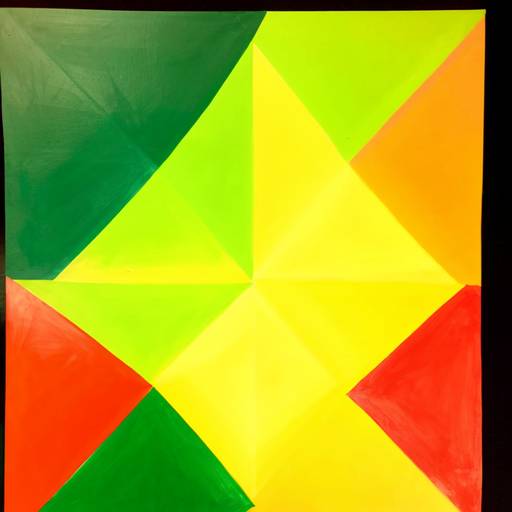
This lesson plan is designed for 4th-grade students to explore the concepts of geometry and symmetry. The objectives include defining symmetry, identifying symmetrical shapes and their lines of symmetry, and creating original symmetrical designs. The lesson begins with a discussion to introduce the idea of symmetry, followed by hands-on activities where students work in pairs to find lines of symmetry using mirrors and geometric cutouts. They will also design their own symmetrical shapes using construction paper and colored pencils. The session concludes with students sharing their creations and discussing the relevance of symmetry in art and nature. Assessment methods include observation during activities, evaluation of worksheets, and feedback on the students' designs. Extensions and differentiation strategies are provided to cater to varying learning needs and encourage deeper exploration of the topic.
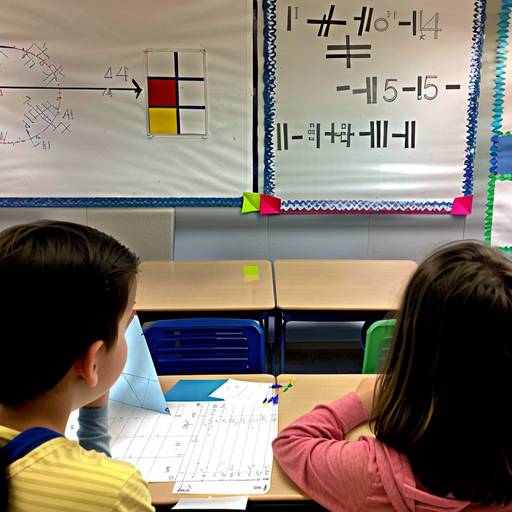
In this 4th-grade math lesson, students will explore the concept of angles through a combination of discussions, hands-on activities, and creative projects. The lesson begins with a warm-up discussion, where students identify different types of angles—acute, right, and obtuse—and observe examples in their daily lives.
Following this, they will engage in an angle scavenger hunt, working in small groups to find and document instances of each type of angle around the classroom or school. Next, students will receive a demonstration on how to measure angles using a protractor, followed by practice worksheets to reinforce their measurement skills.
In a creative activity, students will design their own shapes that incorporate various angles, labeling each angle with its measurement and classification. They will then present their designs to the class, further solidifying their understanding of angles. The lesson concludes with a summary of key concepts and an assignment for students to find additional examples of angles in their homes.
Assessment will be based on participation, accuracy in measuring angles, and the quality of the shapes created by the students, ensuring that all learners are engaged and challenged appropriately.