
Filters
Level
Grade
Subject
Subject Area
Subject Topic
Standard(s)
Audience
Keyword
DurationMinutes
4th Grade Geometry Lesson Plans

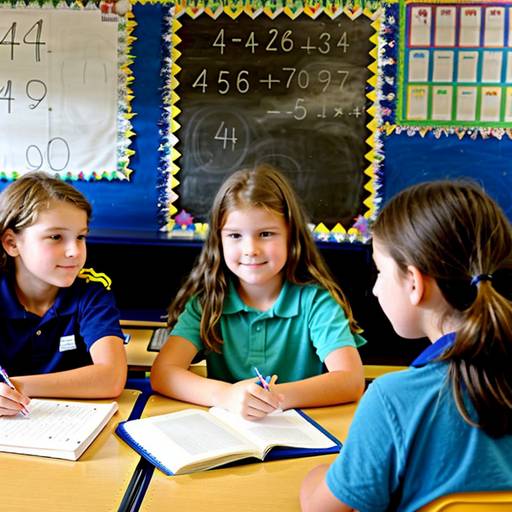
In this 4th-grade math lesson, students will explore the concepts of geometry and angles. They will learn to identify and classify different types of angles—acute, right, and obtuse—through a combination of direct instruction and hands-on activities. The lesson begins with a discussion about angles in everyday life, followed by a demonstration on how to measure angles using a protractor.
Students will practice measuring and classifying angles on the whiteboard and then engage in an independent scavenger hunt to find and record examples of angles around the classroom or at home. The lesson concludes with students sharing their findings, reinforcing their understanding of angle types, and participating in a quick identification quiz.
Assessment will involve observing student participation and reviewing their scavenger hunt worksheets to ensure comprehension of the material. Opportunities for extensions will also be provided for advanced learners. Overall, the lesson aims to create an interactive and relatable learning experience centered around the fundamental concepts of angles in geometry.
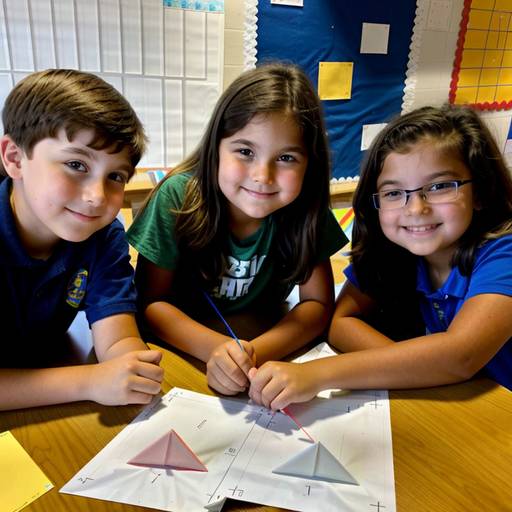
In this 4th grade math lesson plan, students will explore the concepts of geometry and angles, focusing on identifying and classifying angles as acute, right, and obtuse. The lesson begins with a discussion about angles in everyday life, followed by direct instruction that includes definitions and visual demonstrations on the whiteboard. Students will then engage in guided practice by creating and measuring angles using protractors and rulers. Afterward, they will complete worksheets that involve identifying angle types and practicing measurements independently. The session concludes with a review and optional extension activity that encourages students to find and document examples of angles and shapes in their environment. Assessment will include observing student participation and reviewing their completed worksheets to ensure understanding of the material. Overall, this lesson aims to foster a foundational understanding of angles and their applications in geometry.

This 4th-grade math lesson focuses on geometry and angles, specifically teaching students to identify and classify acute, right, and obtuse angles. The lesson begins with a discussion about angles and their importance in real-world contexts, followed by a visual presentation of the different types of angles. Students are guided through measuring angles using a protractor, working collaboratively to practice angle identification and classification on worksheets. They then create their own angles and accompany them with real-world examples on a poster. The lesson concludes with a sharing session where students discuss their work, reinforcing their understanding of the concepts presented. Assessment is conducted through the collected worksheets and group interactions, with differentiation strategies in place to support learners at varying skill levels. This engaging and hands-on lesson helps students connect geometry to their everyday lives.
In this 4th-grade math lesson, students will explore the concept of area and learn how to calculate it for rectangles and squares. The class begins with an engaging discussion about the meaning of area, followed by a demonstration of how to apply the formulas for calculating area. Students will have the opportunity to create their own shapes on grid paper, measure their dimensions, and perform area calculations. Working in small groups, they will apply their knowledge to a real-world scenario involving garden design, sharing their findings with the class. The lesson concludes with a recap of the key concepts, emphasizing the practical applications of area in everyday life. Assessment will involve observing student participation and reviewing their worksheets for accuracy in calculations. An extension activity is available for faster learners, encouraging deeper exploration of area concepts.
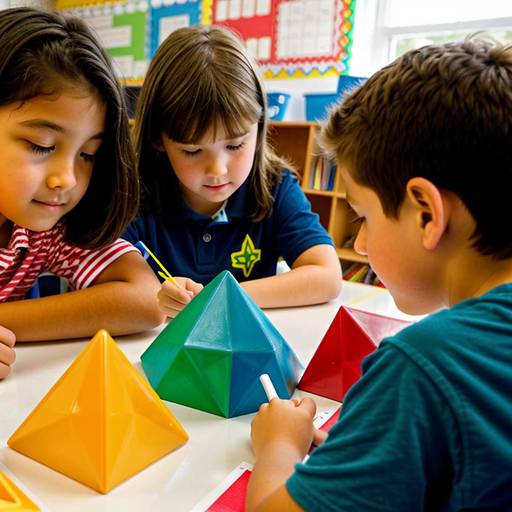
In this 4th-grade math lesson, students will explore the concept of three-dimensional shapes by identifying, analyzing, and creating various solids such as cubes, spheres, cylinders, cones, and pyramids. The lesson begins with a discussion about the shapes found in everyday life, followed by a mini-lecture that highlights the properties of each solid, including the number of faces, edges, and vertices.
Students engage in a scavenger hunt to find real-world examples of 3D shapes, promoting active learning and exploration. They then create their own models using construction paper, applying their understanding of shape properties. The lesson concludes with student presentations, where they share their models and reflect on the applications of these shapes in real life. Assessment will include observation during activities, the evaluation of models, and a quiz on identifying and describing 3D shapes. Differentiation strategies are included to support all learners, and extension activities provide opportunities for deeper exploration.
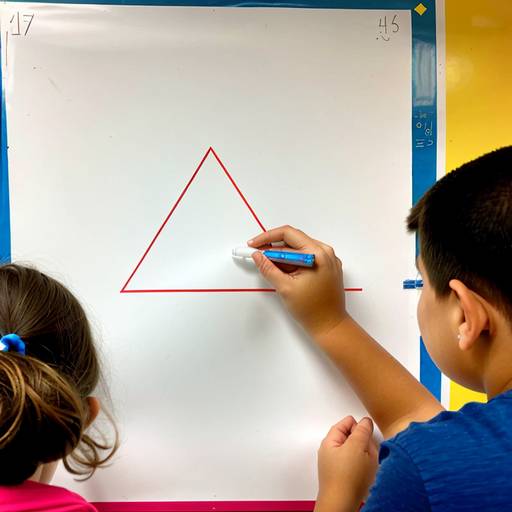
This lesson plan focuses on introducing fourth-grade students to key concepts in geometry and area measurement. The students will learn to identify and classify various geometric shapes, such as triangles, rectangles, squares, and circles. They will be guided through the process of calculating the area of rectangles and squares using the formula Area = Length x Width, and will explore real-world applications of these concepts through practical examples.
The lesson begins with a discussion about shapes found in the classroom, followed by direct instruction where the area formula is demonstrated through examples. Guided practice allows students to create and calculate the area of their drawings, fostering collaboration with peers. Independent practice includes worksheets with a variety of area calculation problems, including real-life scenarios.
The lesson concludes with a review of the material covered and a discussion on the relevance of area calculations in everyday life. Assessment through observation during practice activities and worksheet evaluations ensures understanding. Extensions for advanced learners and adaptations for students needing additional support are also included, promoting comprehensive learning for all students.
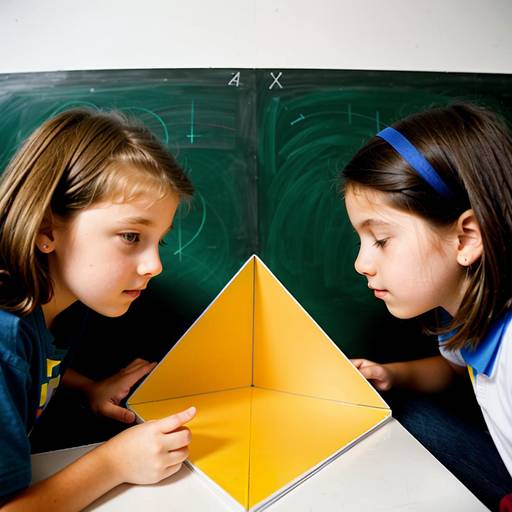
In this 4th-grade math lesson, students will explore geometric shapes and learn about perimeter. They will begin with an introduction to common shapes such as squares, rectangles, triangles, and circles, discussing their properties and real-life applications. Following this, students will learn how to calculate the perimeter for each shape using specific formulas.
During guided practice, they will work on a worksheet where they will calculate the perimeter of various shapes. This will be followed by a hands-on activity where students, in pairs, will create their own shapes using graph paper and scissors, measure the sides, and calculate the perimeter of their creations.
At the end of the lesson, students will have the opportunity to share their work, reflecting on their learning experiences. The lesson will be concluded with a quick quiz or review game to reinforce the concepts covered. Assessment will focus on students' worksheet completion, participation in the activity, and a short exit ticket to capture their learning. Differentiation strategies will be employed to support varying levels of understanding among students.
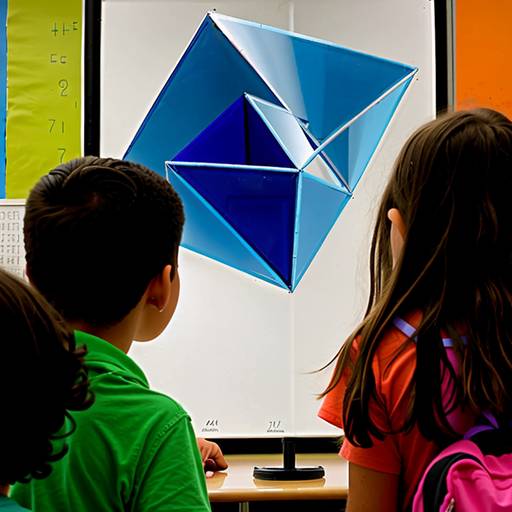
In this engaging 4th-grade math lesson, students will explore the concepts of geometry and symmetry. The lesson begins with an introduction to symmetry through visual examples and a discussion about its significance in everyday life. Students will participate in guided practice using mirrors to identify symmetrical and asymmetrical shapes. They will then move into an independent activity, where they create their own symmetrical designs on white paper, utilizing markers and rulers to enhance their artwork. Following the creation process, students will display their designs in a “Symmetry Gallery Walk” to share their work and understanding with classmates. The lesson concludes with a reflection on what they learned and the distribution of a “Symmetry Scavenger Hunt” worksheet for homework, encouraging students to find and recognize symmetry in their environment. Assessment will focus on student participation, their finished designs, and the completed scavenger hunt. Extensions for advanced students and modifications for those needing additional support are also included to cater to diverse learning needs.
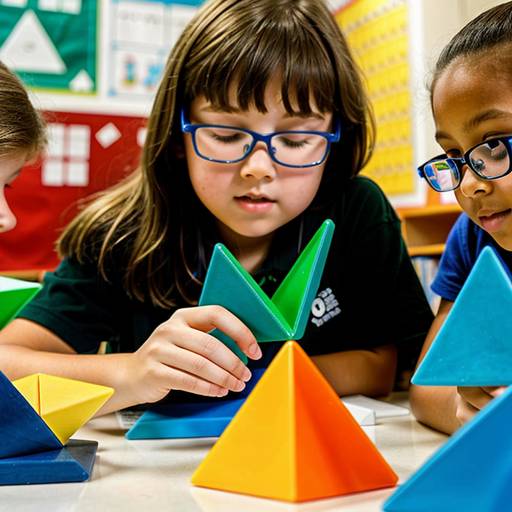
This 4th-grade math lesson focuses on introducing students to three-dimensional shapes and their properties. The lesson begins with a discussion on real-life examples of 3D shapes, followed by a presentation on various solids, including cubes, spheres, cylinders, cones, and pyramids. Students will engage in hands-on activities to examine and classify these shapes while counting their faces, edges, and vertices.
In small groups, they will work on worksheets to identify and classify different 3D shapes, reinforcing their understanding through collaboration. Students will then create their own 3D shapes on graph paper, labeling their properties. At the end of the lesson, there will be a review of key concepts and a homework assignment that encourages students to find and document examples of 3D shapes in their environment.
Assessment will be conducted through observation during activities and the evaluation of worksheets and homework for comprehension. Differentiation strategies will be employed to support all learners, including extensions for advanced students, and additional guidance for those needing extra help. Overall, the lesson aims to make learning about geometry engaging and relevant to students’ everyday lives.
In this 4th Grade mathematics lesson, students will explore the concept of symmetry through engaging activities that promote understanding and creativity. The lesson begins with a discussion about symmetry, using everyday examples to help students grasp the idea of mirror images and lines of symmetry. Through direct instruction, students will examine various geometric shapes, identifying those with symmetry and counting their lines of symmetry.
During guided practice, students will create their own shapes and adjust them to ensure symmetry, fostering collaboration as they compare their designs with a partner. For independent practice, they will engage in a hands-on symmetrical art project, using colored paper and scissors to produce visually appealing patterns that reflect symmetry.
The lesson concludes with a sharing session, allowing students to showcase their artwork and reflect on what they’ve learned about symmetry in both their designs and in the world around them. Throughout the lesson, assessments will be based on participation and the understanding demonstrated in their creative projects, with accommodations and extensions provided to meet diverse learning needs.