
Filters
Level
Grade
Subject
Subject Area
Subject Topic
Standard(s)
Audience
Keyword
DurationMinutes
4th Grade Language Arts Lesson Plans


In this 4th-grade Language Arts lesson, students will explore the essential components of sentence structure, including subjects, predicates, and objects. The lesson begins with a discussion on what constitutes a complete sentence, followed by direct instruction on different sentence types and their structures. Students will engage in guided practice by working in small groups to create sentences using provided word cards, fostering creativity and collaboration. For independent practice, they will combine simple sentences into more complex forms, illustrating one of their creations. The lesson concludes with a sharing session to reinforce learning and community building. Assessment will include observation during group activities and the evaluation of worksheets to measure understanding and creativity. Differentiation strategies will be employed to support diverse learners, and extensions will be offered for those ready to delve deeper into sentence structure. Overall, this lesson aims to enhance students' writing skills and their ability to express thoughts clearly.

In this 4th-grade language arts lesson, students will explore the fundamentals of grammar and sentence structure to enhance their communication skills. The lesson begins with a discussion about the importance of clear communication, followed by a review of complete sentences and the different types of sentences: simple, compound, and complex. Students will engage in group activities to transform simple sentences into more complex forms, reinforcing their understanding of subjects, predicates, and conjunctions. After collaborative practice, students will complete individual worksheets where they identify sentence parts, rewrite sentences, and create their own examples. The lesson concludes with reflection and an exit ticket to assess their learning. Throughout the session, students will be encouraged to think critically about how sentence structure impacts clarity and creativity in writing. Differentiation strategies are included to support diverse learners.
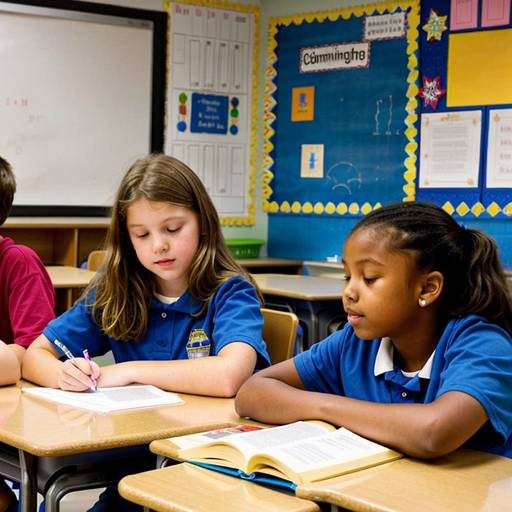
In this 4th-grade language arts lesson focused on grammar and sentence structure, students learn to identify and construct complete sentences. The lesson begins with a discussion on the importance of clear communication, followed by direct instruction on the parts of a sentence, including subjects, verbs, objects, and adjectives. Students engage in guided practice by collaborating in small groups to create sentences using sentence strips, encouraging creativity and collaboration.
During independent practice, students complete worksheets with incomplete sentences, adding necessary components and revising for clarity and detail. The lesson concludes with students sharing their revised sentences and illustrating their favorites. Assessment is based on participation and the quality of completed work, with differentiation strategies in place to support learners at varying levels. Extensions include writing a short story using the sentences created during the lesson, further reinforcing the skills practiced.

In this 4th-grade language arts lesson, students will learn about capitalization rules, focusing on when to use capital letters for the beginning of sentences, proper nouns, and titles. The lesson begins with a review of capitalization concepts, where students identify errors in example sentences on the whiteboard. Guided practice involves correcting sentences as a class, followed by individual work on a worksheet that contains a paragraph filled with capitalization mistakes. Students will work in pairs to discuss their corrections and reasoning. The lesson concludes with students sharing their findings with the class, with an emphasis on the importance of proper capitalization in writing. Assessment will include observation during practice and review of the completed worksheets. For homework, students will write original sentences incorporating capitalization rules, promoting reinforcement of the skills learned.

In this 4th-grade language arts lesson plan, students will explore the art of creative writing by focusing on the key elements of storytelling: character, setting, plot, conflict, and resolution. The lesson begins with a classroom discussion about favorite stories, followed by a review of story elements. Students will then work in small groups to brainstorm unique story ideas using a graphic organizer. They will choose one idea to develop into a short narrative, writing independently while receiving peer feedback during a sharing session. The lesson concludes with select students sharing their drafts with the class and reflecting on their writing experience. Assessment will include participation in activities, the completion of the graphic organizer, and evaluation of their short stories for creativity and the incorporation of story elements. Extensions include illustrating stories and presenting them in a storytelling festival, promoting further engagement with creative expression.

In this fourth-grade Language Arts lesson, students will explore the elements of narrative writing, focusing on characters, setting, conflict, and resolution. The lesson begins with a discussion about favorite stories, identifying key components that make them memorable. Following this, the teacher will introduce the components of narrative writing through direct instruction and guided practice, where students work in pairs to brainstorm and outline their own story ideas using storyboard templates. Afterward, students will independently write short stories based on their outlines, incorporating descriptive language and dialogue. The lesson concludes with opportunities for students to share their stories and engage in peer discussion. Assessment will involve monitoring participation and collecting the storyboards and written stories while providing differentiation to support varying skill levels. Extensions include activities such as illustrating stories or creating a class anthology to engage students further.

In this 4th Grade Language Arts lesson, students will engage in exploring grammar and punctuation, specifically focusing on different types of sentences: declarative, interrogative, imperative, and exclamatory. The lesson begins with a discussion highlighting the importance of punctuation in writing, followed by a clear presentation of each sentence type with examples on the whiteboard.
During guided practice, students will work in small groups to sort sentence strips into the correct categories while discussing the appropriate punctuation for each type. This collaborative activity will be shared with the class, fostering understanding through peer interaction. Following this, students will complete worksheets with various exercises that include identifying sentence types, adding proper punctuation, and creating their own examples.
As the lesson concludes, students will reflect on what they learned through a brief recap and an exit ticket activity where they write and present one sentence of each type. Assessment will involve monitoring group participation, reviewing worksheet answers, and collecting exit tickets to gauge individual understanding. Adaptations will be in place to support diverse learners, ensuring all students can engage meaningfully with the content. The lesson will conclude with a reflection on effectiveness for future improvement.

In this 4th-grade Language Arts lesson, students will explore the fundamentals of expository writing, focusing on its purpose and structure. The lesson begins with an engaging discussion to elicit prior knowledge about informative writing. Students will learn about the key components of an expository essay, including the introduction, body paragraphs, and conclusion, through a class reading of a sample essay.
During guided practice, students will collaborate in small groups to brainstorm topics of interest and select one for their essays. They will then create an outline to organize their ideas. In the independent practice phase, students will write the first draft of their expository essay based on their outlines, with the teacher providing support and feedback.
The lesson concludes with a sharing session where students present their main ideas. Assessment will focus on students’ outlines and drafts, evaluating clarity, organization, and completeness. Extensions may involve deeper research or the creation of visual aids. The lesson will also include differentiation strategies to support all learners. Reflection on student engagement and understanding will inform adjustments in future lessons.
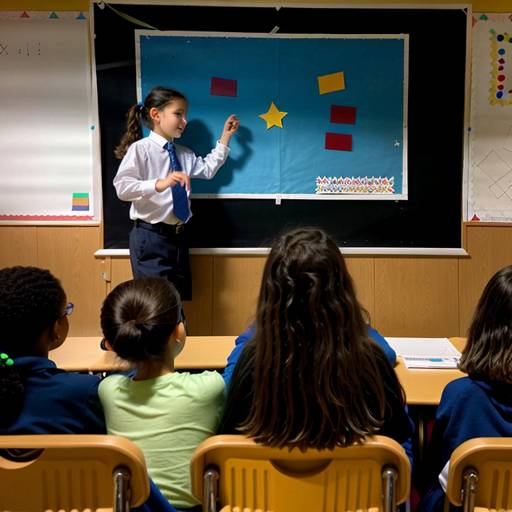
In this 4th-grade Language Arts lesson plan, students will enhance their reading comprehension skills by focusing on two key strategies: visualization and prediction. The lesson begins with an engaging discussion that encourages students to share how they create mental images while reading. The teacher will model these strategies using a short passage, demonstrating how to visualize and make predictions based on text clues.
Students will then work in small groups to read an excerpt together, discussing their visualizations and predictions, which will be shared with the class. Following this collaborative activity, each student will complete a visualization worksheet, drawing or writing about their mental images and predictions from a different text. They will also create prediction bookmarks summarizing their thoughts.
To conclude, students will reflect on how these strategies aided their understanding of the text, and they will be assigned homework to practice these skills at home. Assessment will occur through observations and the review of worksheets and bookmarks, allowing the teacher to gauge student comprehension and mastery of the strategies. Differentiation strategies will be incorporated to support varying levels of student understanding.

This 4th-grade Language Arts lesson plan focuses on enhancing students' reading comprehension through the exploration of a fictional story. The lesson begins with a discussion about the elements that make stories engaging, followed by a read-aloud session of a selected short fiction text. Students then work in small groups to analyze different story components—such as characters, setting, and plot—using graphic organizers. A whole-class discussion allows for sharing insights and understanding the story's conflict and resolution. To reinforce comprehension, students reflect individually by summarizing the story and sharing their thoughts with a partner. Assessment includes observation during group work, evaluation of graphic organizers, and collection of written reflections. The lesson encourages collaboration, critical thinking, and the application of comprehension skills to foster a greater appreciation for fiction. Extensions include creating original stories for future sharing and exploring additional related texts.