
Filters
Level
Grade
Subject
Subject Area
Subject Topic
Standard(s)
Audience
Keyword
DurationMinutes
3rd Grade Forces Lesson Plans

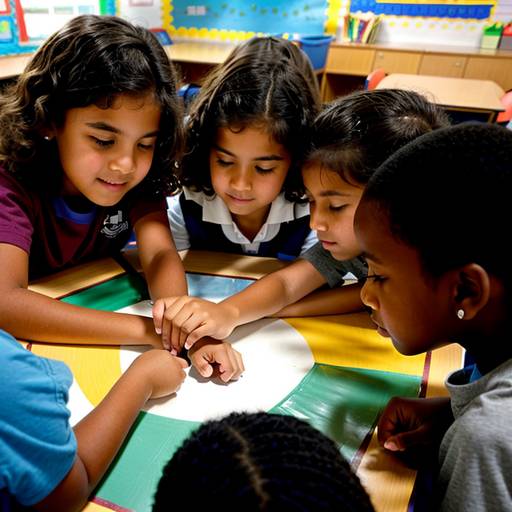
In this 3rd-grade science lesson, students will explore the fundamental concepts of pushes and pulls as types of forces through engaging discussions and hands-on activities. The lesson begins with students sharing their ideas about what forces are, followed by explanations and demonstrations using toy cars to illustrate pushing and pulling.
In small groups, students will conduct experiments by building ramps and testing how far toy cars travel when pushed or pulled, while varying the weight of the cars to observe the effects of different forces. They will record their findings and engage in a class discussion to share observations and insights about their experiments.
Students will solidify their understanding of these concepts through presentations and will be assessed based on their participation and the accuracy of their findings. Extensions and challenges for further exploration will be provided, encouraging students to apply their learning to real-life situations. Safety will be emphasized throughout the activities to ensure a secure learning environment.
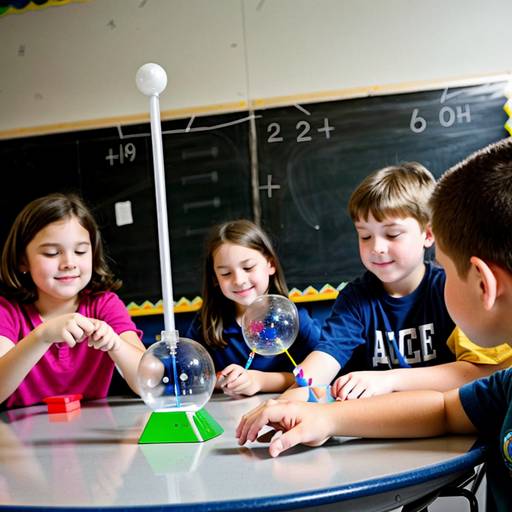
In this 60-minute lesson for 3rd-grade students, learners explore the concepts of forces and how they affect motion through engaging, hands-on activities. The lesson begins with a group discussion to activate prior knowledge about pushes and pulls, supported by a short video demonstration. Students then rotate through four interactive stations, where they conduct experiments with toy cars on ramps, launch balloon rockets, test the ease of moving various objects by pushing and pulling, and utilize rubber bands to launch small items, measuring their distances.
Following the exploration, a guided group discussion helps students articulate their observations and draw connections between their activities and the underlying science of motion. To wrap up the lesson, students reflect in their science journals, summarizing their learnings and including illustrations. Assessment includes monitoring participation during the activities and reviewing journal entries. Extensions and adaptations are provided to ensure all learners are engaged and challenged appropriately. Overall, the lesson fosters curiosity and a foundational understanding of physical science principles related to forces and motion.