
Filters
Level
Grade
Subject
Subject Area
Subject Topic
Standard(s)
Audience
Keyword
DurationMinutes
3rd Grade Music Theory Lesson Plans

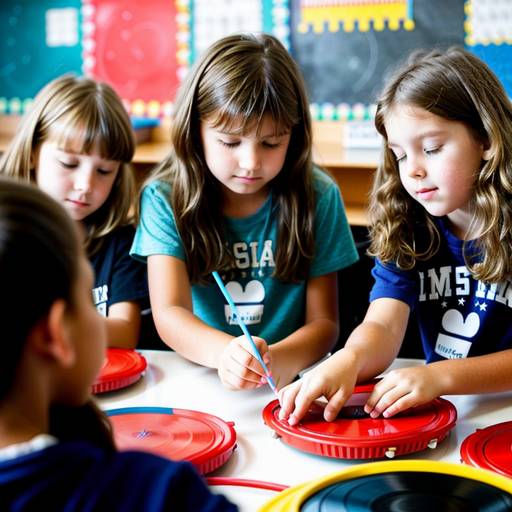
In this 3rd-grade music lesson, students will explore the concept of rhythm and learn to identify and perform basic rhythmic patterns. The session begins with a discussion on rhythm and tempo, differentiating between fast and slow beats. Students engage in a warm-up activity that involves clapping various rhythms at different tempos. They are then introduced to rhythmic notation through flashcards representing different note values and practice clapping simple rhythms together as a class.
Students will be divided into small groups to compose their own short rhythmic pieces, using body percussion and classroom instruments. After practice time, each group will perform their composition for the class, receiving feedback and encouragement. The lesson concludes with a discussion that reinforces the understanding of rhythm and encourages students to notice rhythm in their daily lives. Assessment will focus on participation, engagement, and the creativity demonstrated in group compositions. Extensions may include exploring rhythm with different instruments or using music notation software to deepen their understanding.
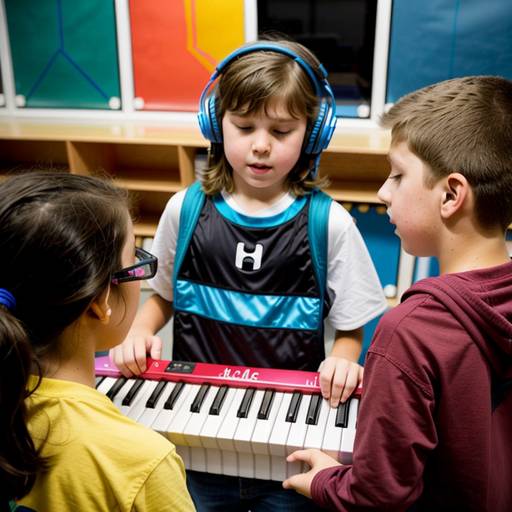
In this 3rd-grade music lesson, students will explore the fundamental concepts of rhythm and music theory by engaging in various activities related to beat, tempo, and rhythm patterns. The lesson begins with a discussion about the differences between beat and rhythm, where students will participate in clapping exercises to demonstrate their understanding. They will then explore tempo through listening and clapping exercises using a metronome or rhythm app.
Following this, students will work in small groups to practice and perform simple rhythm patterns using handouts provided by the teacher. The lesson includes an interactive game where students will mimic rhythms demonstrated by their peers, encouraging creativity and participation. At the end of the lesson, students will reflect on what they learned about rhythm and its presence in music and everyday life. Assessment will be based on observation of group participation, accuracy in rhythm replication, and understanding of rhythm notation through a worksheet. Extension activities will encourage further exploration of rhythm outside the classroom and promote composition skills. The overall goal is to build a solid foundation in rhythm while fostering a love for music.