
Filters
Level
Grade
Subject
Subject Area
Subject Topic
Standard(s)
Audience
Keyword
DurationMinutes
3rd Grade Factors Lesson Plans


In this 3rd-grade math lesson, students will explore the concepts of multiplication and factors through interactive activities and visual aids. The lesson begins with a review of addition to establish a connection to multiplication as repeated addition. Students will engage in group discussions to identify real-life applications of multiplication. The teacher will model the use of arrays to visualize multiplication problems, further explaining factors as numbers that can be multiplied to reach a given product.
During guided practice, students will participate in an activity involving a Factor Wheel to determine the factors of chosen numbers. Following this, each student will create their own multiplication arrays on grid paper, identifying corresponding factors. The lesson wraps up with student sharing and reflections, reinforcing their understanding of multiplication facts and factors. Assessment will be conducted through observation and review of students' work, along with an exit ticket to gauge individual comprehension. Differentiation strategies will be employed to support varied learning needs.
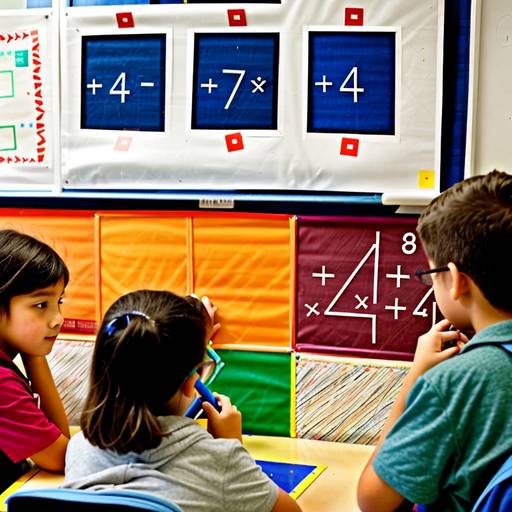
In this 3rd-grade math lesson, students will explore the concepts of multiplication and factors through interactive activities. The lesson begins with a discussion on counting groups of items, introducing multiplication as repeated addition. The instructor defines factors and leads a guided practice where students work in small groups, using dice to generate multiplication problems and identify their factors. To reinforce learning, students participate in a Factor Bingo game that encourages engagement and collaboration. Independent practice is provided through worksheets that challenge students to solve multiplication problems and identify corresponding factors. The lesson closes with a review of key concepts and an exit ticket to gauge student understanding. Differentiation strategies are incorporated to support diverse learners, ensuring that all students can grasp these foundational math skills.
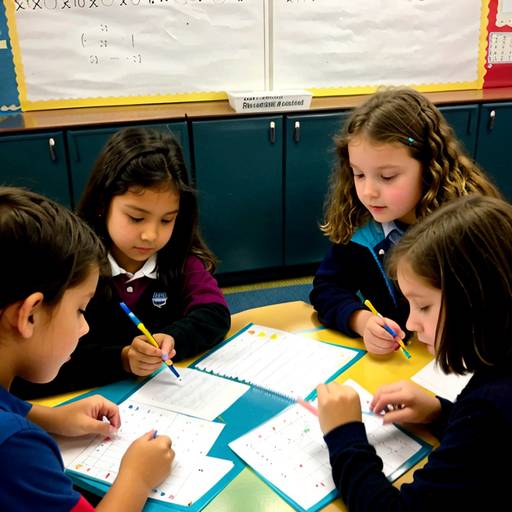
In this 3rd-grade math lesson, students will explore the concepts of multiplication and factors through a combination of direct instruction, hands-on activities, and independent practice. The lesson begins with a discussion about multiplication as repeated addition, followed by a demonstration using visual arrays to illustrate the concept. Students will learn to identify factors by finding pairs of numbers that multiply to produce a specific product.
Throughout the lesson, students will work in pairs using blocks or counters to create multiplication arrays and discuss their findings. They will then complete a worksheet with various multiplication problems and list the corresponding factor pairs. A “Factor Bingo” game will reinforce their understanding by allowing them to identify factors of a given product in a fun, interactive way.
The lesson concludes with a review of key concepts and an exit ticket for students to write one multiplication problem and its factors. Assessment will occur through observation, worksheet review, and exit tickets, with modifications available for students who need additional support or challenge. Lastly, students will be encouraged to find real-world examples of multiplication and factors at home, promoting the application of these concepts outside the classroom.
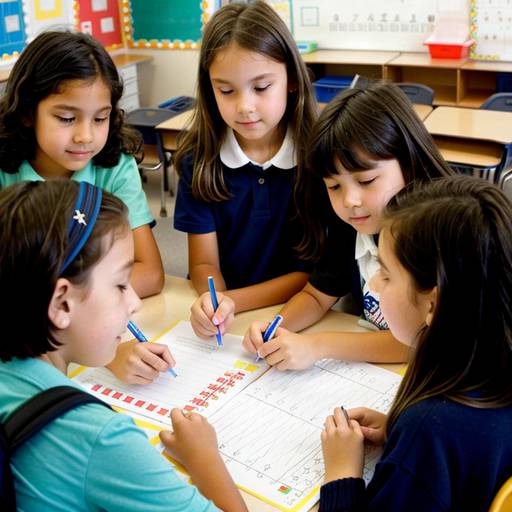
In this engaging 3rd-grade math lesson, students will explore the concepts of multiplication and factors through a variety of interactive activities. The lesson begins with a warm-up discussion to introduce multiplication as repeated addition and to explain the concept of factors. Visual demonstrations using counting blocks will help students understand multiplication in terms of groups, while also teaching them how to find factor pairs.
Students will work collaboratively in pairs to find factors for given numbers using manipulatives, reinforcing their understanding through hands-on experience. A number line activity will further illustrate the relationship between multiplication and factors, allowing students to visualize their findings.
Independent practice will involve completing a worksheet that requires identifying factors and writing multiplication sentences, encouraging individual reflection on the day's learning. The lesson concludes with a review of key concepts, a brief homework assignment to reinforce skills at home, and recognition for participation through small prizes or stickers. This lesson provides a comprehensive approach to understanding multiplication and factors, tailored to accommodate diverse learning needs.