
Filters
Level
Grade
Subject
Subject Area
Subject Topic
Standard(s)
Audience
Keyword
DurationMinutes
3rd Grade Lesson Plans
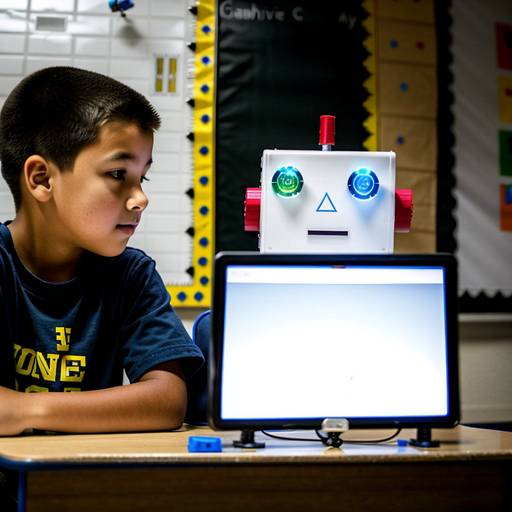
This lesson plan is designed for 3rd-grade students and introduces them to the fundamentals of robotics through engaging, hands-on activities. Students will learn about the basic components and functions of robots while collaborating in small groups to build a simple robot using provided materials. Over the course of two class periods, students will first explore the concept of robots, their real-world applications, and the roles of various team members in a project.
In the second class, groups will construct their robots and participate in two fun challenges: navigating an obstacle course and a timed race that tests their robot's speed. Throughout the lesson, emphasis is placed on teamwork, problem-solving, and creativity. Student participation will be assessed based on collaboration and challenge performance, and reflections will encourage them to consider the implications of robotics in everyday life and potential future applications. This lesson aims to foster an understanding of robotics while developing key 21st-century skills.
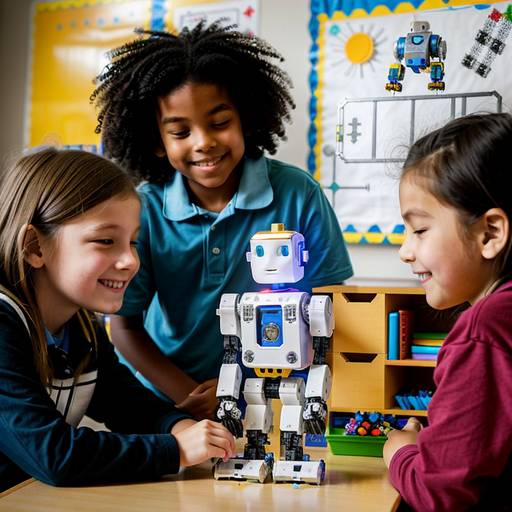
In this lesson plan designed for 3rd-grade students, learners will explore the world of robotics by engaging in the design and construction of their own simple robots using everyday materials. The lesson spans two class periods, beginning with an introduction to the concept of robots and their functions in daily life. Students will brainstorm and list the purposes and features of their robots in small groups and present their ideas to the class.
On the second day, students will put their designs into action by building their robots with provided materials, encouraging creativity and critical thinking. Throughout the building process, they will reflect on challenges and problem-solving strategies. Finally, each group will present their completed robots, demonstrating how they work and discussing their design process.
Assessment will focus on participation, creativity, functionality, and presentation skills. Extensions include modifying their robots for additional challenges and testing them in an obstacle course, reinforcing the learning experience. Overall, this activity fosters collaboration, critical thinking, and a deeper understanding of robotics and engineering concepts.
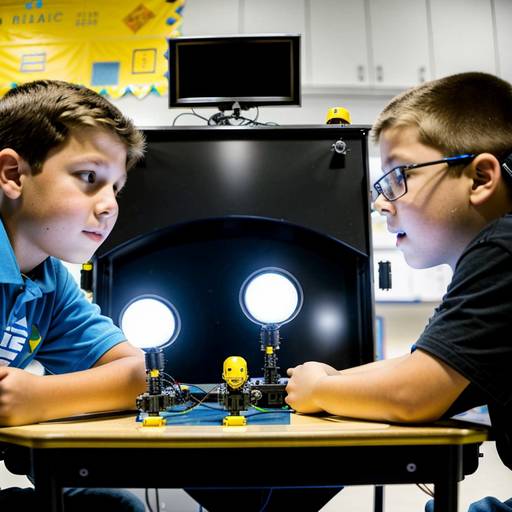
In this engaging technology lesson for 3rd-grade students, learners explore the fascinating world of robotics through hands-on activities and teamwork. The lesson begins with a video introduction to different types of robots, sparking a discussion about their real-life applications. Students are then divided into small groups where they brainstorm and plan a simple robot challenge. Each group designs and builds their own robot, using LEGO WeDo or Dash Robots, and learns to program it to complete a specific task or navigate obstacles.
After constructing their robots, groups test their designs, showcasing their projects to classmates and receiving constructive feedback. The lesson concludes with a reflective discussion, allowing students to share their experiences and insights about teamwork and the challenges they faced. Informal assessments through observation and reflective writings help gauge students' understanding and foster creativity in future robotics projects. This hands-on approach not only cultivates critical thinking and problem-solving skills but also encourages collaboration among peers.

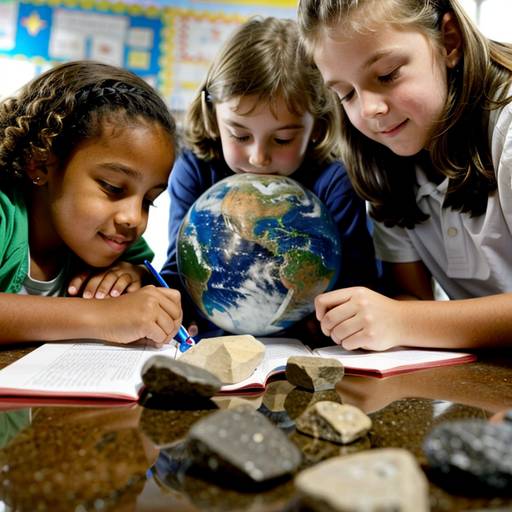
In this 3rd-grade Earth Science lesson, students will explore different types of rocks, including igneous, sedimentary, and metamorphic, while learning about their characteristics and formation processes. The lesson begins with a discussion about rocks, followed by a short video introducing the rock cycle. Students will then receive direct instruction on the three rock types, with samples provided for hands-on examination.
The class will engage in exploratory stations where they observe rock samples under magnifying glasses, completing a worksheet to classify their findings. A discussion on the importance of rocks in everyday life will help reinforce their learning. To conclude, students will share their observations and reflect on one new thing they learned and any questions they still have. Assessment will be conducted through the completed worksheets and exit tickets, with opportunities for extension activities and differentiation to enhance learning for all students.
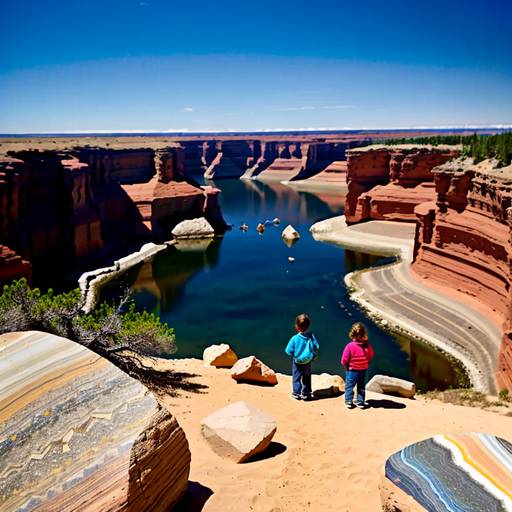
This 3rd-grade Earth Science lesson focuses on introducing students to the diverse world of rocks and minerals. Over the course of one hour, students will explore various types of rocks—igneous, sedimentary, and metamorphic—through hands-on activities at designated stations. They will use magnifying glasses to observe rock samples and complete worksheets to document their findings. A discussion on the rock cycle will follow, where students will learn about how rocks change forms through processes like melting, cooling, and erosion. The lesson incorporates collaborative learning, encourages curiosity, and reinforces key concepts through class discussions, exit slips, and potential extensions like field trips or projects. Accommodations are provided to support diverse learners and ensure everyone can engage with the material effectively.
This lesson plan for 3rd-grade students focuses on teaching essential internet navigation skills and the importance of online privacy. Students will gain an understanding of how to safely explore the internet and recognize the significance of keeping personal information secure. The lesson begins with a discussion about their online interests, followed by an explanation of key terms related to the internet and privacy settings.
Through guided practice, students will navigate a kid-friendly website, learning how to adjust basic privacy settings to control who can see their information. They will then fill out a checklist to reinforce their understanding of the concepts covered. The lesson concludes with a review and a Q&A session, allowing students to share their insights about maintaining online safety. Extension activities encourage creativity and reinforce safe practices. The plan also includes differentiation strategies to support all learners in the classroom. Overall, this lesson aims to equip students with vital skills for their digital interactions.

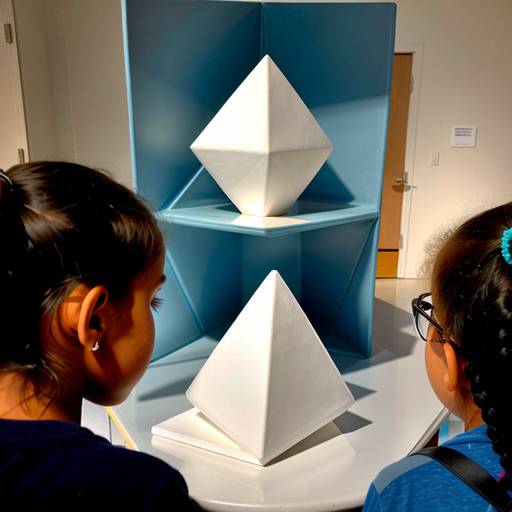
In this 3rd-grade art lesson, students explore the concept of sculpture and the various materials and techniques used to create three-dimensional art. The session begins with an introduction to different forms of sculpture, supported by visual examples that spark discussion about shapes and textures. Following a demonstration showcasing basic clay techniques, students will sketch their ideas before diving into the hands-on creation of their own sculptures using air-dry clay, natural materials, and recyclable items.
As they work, students are encouraged to experiment with different textures and shapes, fostering their creativity. Following the creation phase, there will be a clean-up period, and students will participate in a sharing session where they present their sculptures and describe their inspirations and the materials used. Assessment focuses on participation, creativity, and technique, allowing for a comprehensive understanding of the artistic process. Extensions include the potential for a class sculpture gallery and a "Sculpture Walk" to showcase their work within the school community. This lesson emphasizes creativity, self-expression, and an appreciation for three-dimensional art forms.

In this 3rd-grade language arts lesson, students will engage in exploring the fundamental components of sentences, focusing on subjects and predicates. The lesson begins with a discussion to clarify what constitutes a complete sentence, followed by guided practice where students work in small groups to create simple sentences using provided building blocks. Each group will share their sentences, promoting collaboration and class discussion.
For independent practice, students will assemble their own sentences on strips of paper, incorporating subjects, predicates, and conjunctions to form both simple and compound sentences. They will also illustrate their sentences, integrating creativity into their writing.
The lesson concludes with a peer review activity where students exchange their sentence strips and provide constructive feedback based on clarity and structure. This approach facilitates understanding of sentence construction while fostering teamwork and critical thinking skills. Assessment will be based on group participation, sentence construction, and the quality of peer feedback. This interactive lesson aims to reinforce grammar knowledge and enhance students' writing skills.
This 3rd-grade Language Arts lesson focuses on teaching students about the components of complete sentences, specifically subjects and predicates. The lesson begins with a discussion that encourages students to define and understand these terms. Students participate in a collaborative activity where they rearrange scrambled sentence cards to form complete sentences and identify their subjects and predicates. Following this, they create their own sentences using a worksheet, where they select a subject and construct a corresponding predicate, and illustrate their sentences. The lesson concludes with a class discussion to reinforce concepts learned, and student understanding is assessed through their participation in activities and completion of the worksheets. Differentiation strategies are included to support diverse learners, and an extension activity encourages students to apply their knowledge in a creative homework assignment.
In this 3rd grade Language Arts lesson, students will focus on identifying and constructing complete sentences through an engaging and interactive approach. The lesson starts with a brief introduction to the components of a sentence—subjects and predicates—using relatable examples to make the concepts clear. After modeling sentence breakdowns and practicing together, students will work in small groups to create their own sentences by matching subject and predicate flashcards.
Following the group activity, students will complete a worksheet that reinforces their understanding by having them identify the subject and predicate in given sentences and compose their own. The lesson concludes with a review of key concepts and an exit ticket, where students share their favorite food in a complete sentence. This comprehensive approach ensures students grasp fundamental grammar skills while fostering creativity and collaboration in their learning. Assessments will include observation during group work, worksheet analysis, and exit ticket responses, with opportunities for differentiation and extensions provided to meet diverse student needs.