
Filters
Level
Grade
Subject
Subject Area
Subject Topic
Standard(s)
Audience
Keyword
DurationMinutes
2nd Grade Music Lesson Plans

This 2nd Grade music lesson focuses on exploring the concepts of high and low pitches through interactive singing and sound activities. Students will engage in vocal warm-ups and learn to identify different pitches by mimicking sounds associated with high and low notes. The lesson includes a fun game where students split into teams to create corresponding sounds, as well as an activity where they use instruments to represent pitch variations. Guided discussions will help reinforce understanding, and students will conclude with a collaborative song that incorporates both pitch types. Throughout the lesson, participation will be assessed to gauge understanding, and extensions will encourage practice at home. The lesson aims to make learning about pitch an enjoyable and memorable experience for students.
In this 2nd-grade music lesson, students explore music theory through an engaging combination of activities focused on note names and rhythm. The class begins with an introduction to the staff and treble clef, where students learn to identify and label musical notes, including those on the lines and spaces of the staff.
Students participate in a relay activity, working in teams to correctly place note name flashcards on a drawn staff, reinforcing their understanding of note identification. This is followed by a clapping circle where they learn about quarter notes and half notes, practicing simple rhythm patterns together.
The lesson concludes with an auditory activity, where students listen to short melodies, identifying notes based on their position on the staff. The session wraps up with a class discussion and a homework assignment that allows students to practice drawing the staff and labeling notes. Overall, the lesson promotes active participation, collaboration, and a solid foundation in basic music theory concepts.
In this 45-minute music lesson for 2nd graders, students explore the concepts of rhythm and basic music notation. The lesson begins with an introduction to rhythm and a distinction between steady beat and rhythm patterns, using clapping as an interactive example. Students engage in a warm-up activity that includes body percussion to build their rhythm skills.
Following this, the teacher introduces basic rhythmic notations such as quarter notes, eighth notes, and half notes, using visuals to enhance understanding. Students are then divided into groups, where they practice and create their own rhythm patterns using body percussion or instruments. Each group shares their rhythm creations with the class, allowing for collaborative learning and expression.
The lesson wraps up with a reflection on what students learned and a discussion about their favorite rhythm patterns. Assessment is based on participation and understanding demonstrated during activities. Extensions include introducing songs that incorporate the rhythmic elements learned, while providing differentiation to support various learning needs within the classroom. By the end, students gain a foundational understanding of rhythm and experience the joy of making music together.
In this 2nd-grade music lesson, students will explore the fundamentals of rhythm and basic music theory by learning about quarter notes, eighth notes, and half notes. The class begins with an introduction to rhythmic values, accompanied by clapping exercises that reinforce counting and timing. Students will then engage with percussion instruments to practice these rhythms in a fun and interactive manner.
Following their instrumental practice, students will have the opportunity to create their own rhythm patterns using the note values introduced earlier. They will work in pairs or small groups to develop their patterns, culminating in a group performance where they can showcase their creativity and collaboration. Throughout the lesson, the teacher will assess student participation and understanding, allowing for feedback and opportunities for further exploration of rhythm outside the classroom. This engaging approach to rhythm aims to foster a love for music and build foundational skills in music theory.
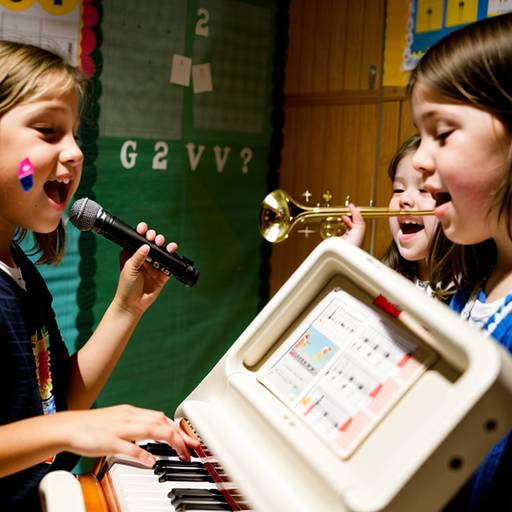
This 2nd-grade music lesson focuses on helping students understand the concept of pitch and differentiate between high and low sounds. The session begins with an introduction to pitch, using a piano or keyboard to illustrate examples. Students participate in vocal warm-ups to match high and low pitches, followed by singing simple songs that contain varying pitch elements.
In an engaging movement activity, students use scarves or ribbons to visually express the difference between high and low pitches through their movements. The lesson concludes with a reflection discussion, encouraging students to share their observations about high and low sounds and how movement aided their understanding. Ongoing assessments are made by observing participation and engagement, and optional extensions allow for further exploration of pitch using instruments. This structured yet interactive approach ensures that students grasp fundamental music concepts effectively while enjoying the learning process.
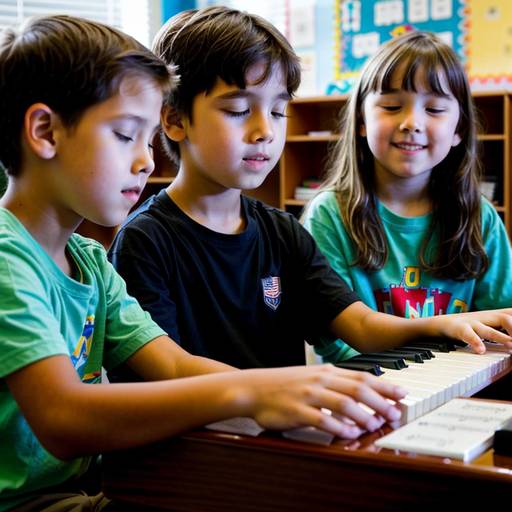
In this 2nd-grade music appreciation lesson, students will explore the world of music by enhancing their listening skills and developing an appreciation for various genres and instruments. The lesson begins with a discussion on music's significance in everyday life, allowing students to share their favorite songs. They will listen to short excerpts of different music styles, during which they will identify sounds, instruments, and emotions evoked by the music.
As part of the activity, students may use listening cones or blindfolds to focus on the auditory experience. Following the listening exercise, they will learn about various instruments through picture cards and discuss how these instruments contribute to different genres. To encourage creativity, students will complete a worksheet where they either draw their favorite instrument or write about their preferred music genre, focusing on their feelings and thoughts.
The lesson concludes with an invitation for students to share their creative responses with the class, promoting reflection on music's impact on emotions and connections. To wrap up, a lively song will be played to encourage movement and joy, reinforcing the idea that music is a source of happiness and unity. Additionally, options for extending the lesson through classroom playlists or a "Show and Tell" day are provided to keep the music engagement ongoing.
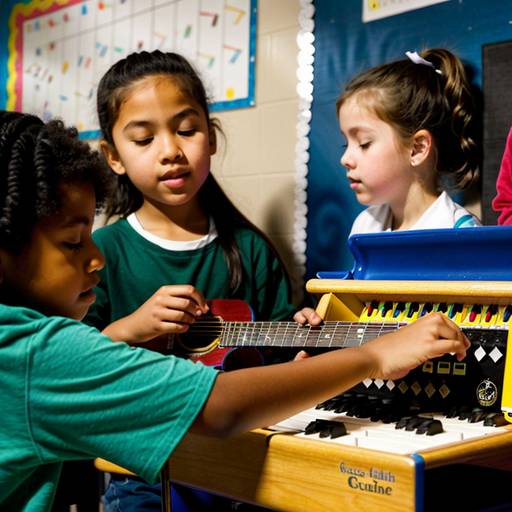
In this second-grade music appreciation lesson, students will explore the diverse world of music and sound. The class begins with a discussion about music's role in their lives, followed by an engaging listening activity where they hear short clips from various genres. After each clip, students will share their thoughts on the instruments, emotions evoked, and visual imagery inspired by the music. They will also learn about different cultural instruments related to the pieces they heard.
To encourage creative expression, students will create artwork inspired by the music, focusing on colors and shapes that represent their interpretations. The lesson concludes with a final listening activity, prompting students to reflect quietly on the music. Assessment will be based on participation, completed artwork, and students' ability to articulate their responses and feelings about the music. Extensions include listening to additional music at home to share in future classes and contributing to a classroom “listening wall” to celebrate their favorite songs. This lesson aims to enhance listening skills, foster cultural appreciation, and encourage personal expression through music.
In this 2nd-grade music lesson, students embark on an engaging journey through the world of music history by exploring the lives and works of notable composers such as Mozart, Beethoven, and Tchaikovsky. The lesson begins with a discussion about music and its ability to convey stories and emotions. Students then learn fun facts about each composer as they listen to selected audio clips of their most famous pieces.
After the listening session, students break into small groups to further explore a specific composer’s music, recreating the sounds using various instruments while focusing on dynamics and tempo. This hands-on experience allows them to express their interpretations creatively. Following this, they collaborate to compose their own simple melodies inspired by the composer they studied and illustrate a picture that represents their music or the composer’s spirit.
The class concludes with a reflection on their experiences, reinforcing what they learned about the composers and the expressive power of music. Students also receive a take-home worksheet featuring composer facts and musical symbols to reinforce their learning. The lesson encourages participation, creativity, and an appreciation for music history.