
Filters
Level
Grade
Subject
Subject Area
Subject Topic
Standard(s)
Audience
Keyword
DurationMinutes
1st Grade Physical Science Lesson Plans

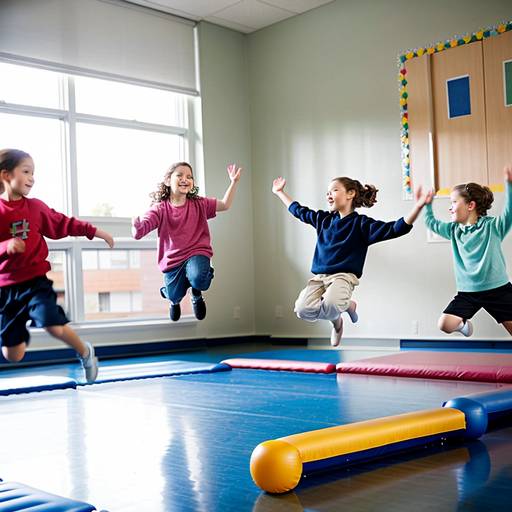
In this 1st-grade science lesson, students explore the concepts of motion by investigating how various objects bounce and roll. The lesson begins with a discussion about the forces that cause movement, highlighted by a demonstration of a bouncing ball. Students are then divided into small groups to participate in hands-on activities at different stations, where they experiment with various balls and toy cars, measuring bounce heights and distances traveled on inclined planes. Throughout the activity, students make observations and predictions, enhancing their understanding of how factors like weight, shape, and surface affect motion. The lesson concludes with students sharing their experiences and findings, solidifying their grasp of motion and the forces that influence it. Worksheets are used to encourage individual expression of their favorite activities and to reinforce learning outcomes. Overall, this interactive approach fosters engagement and curiosity about physical science concepts related to motion.
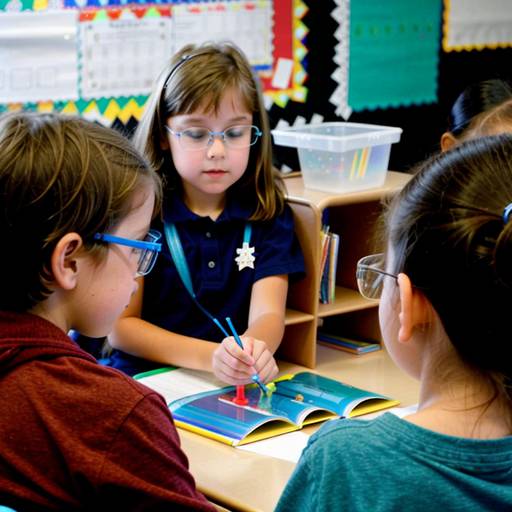
In this 1st-grade science lesson, students will explore the concept of matter, focusing on its three states: solids, liquids, and gases. The lesson begins with an engaging discussion about what matter is, followed by a direct instruction segment where students will learn the characteristics of each state through hands-on interactions with ice cubes (solid), water (liquid), and balloons filled with air (gas).
To reinforce their understanding, students will participate in a sorting activity, where they categorize various objects based on their state of matter, and will visually display these examples on a chart. The lesson concludes with a creative drawing activity, allowing students to illustrate one example of each state. Throughout the session, the teacher will assess student participation and comprehension, ensuring an interactive and engaging learning experience. Reflective practices will help identify areas for future improvement or further exploration of related concepts.
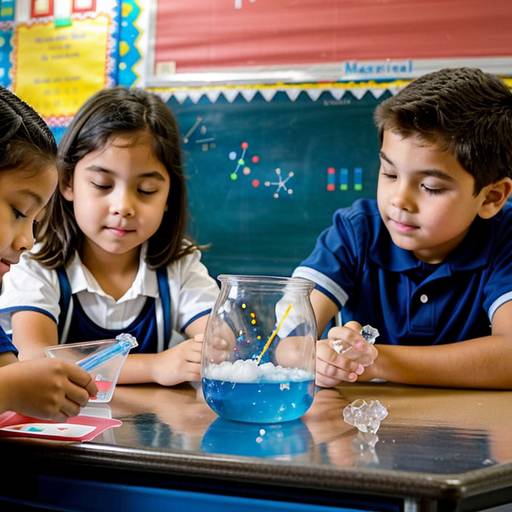
In this 1st-grade science lesson, students will explore the concept of matter and its three states: solids, liquids, and gases. The lesson begins with an introduction to matter, highlighting its definition and properties through visual aids and real-life examples. Students will engage in a discussion to classify various items as solid, liquid, or gas, sharing personal observations. They will then complete an interactive worksheet that reinforces their understanding of each state of matter.
For a hands-on experience, students will participate in a simple experiment, observing a clear cup of water and a balloon filled with air to see the characteristics of liquids and gases. The lesson will conclude with a recap and a sharing session, allowing students to express what they learned. The overall goal is to cultivate curiosity and foundational knowledge of matter through engaging discussions, activities, and personal exploration. An extension activity will encourage students to bring items from home to create a "Matter Museum" for further exploration and discussion in future classes.
This first-grade science lesson focuses on exploring the physical properties of everyday materials. Students will begin by discussing the concept of matter and the three states: solids, liquids, and gases. Through interactive demonstrations, they will learn about the properties that distinguish these states, such as shape and texture.
In a hands-on activity, students will work in small groups to investigate a selection of everyday objects using magnifying glasses and measuring tools. They will record their observations about the properties of these materials, fostering teamwork and discussion.
The lesson will conclude with each group sharing their findings with the class, reinforcing their learning. An exit ticket will assess student understanding through a drawing of an object and its properties. Extension activities include exploring objects at home and conducting simple experiments related to states of matter. Overall, the lesson aims to engage students in discovering the characteristics of matter in a fun and interactive manner.
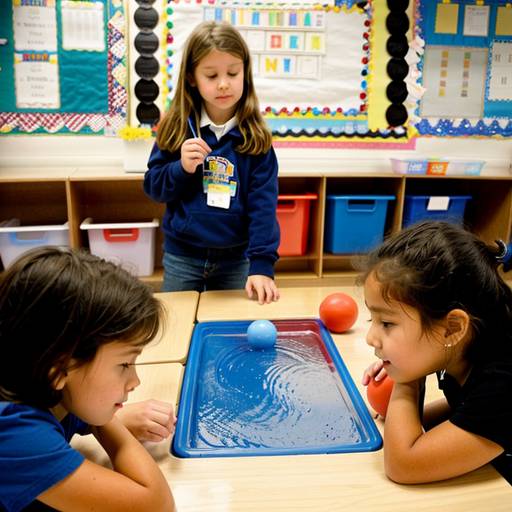
In this 1st-grade science lesson, students explore the fundamental concepts of force, specifically focusing on push and pull, and how these forces affect the motion of objects. The lesson begins with a discussion that engages students in sharing their ideas about what makes things move. They then learn the definitions of push and pull through simple demonstrations with toy cars.
In small group activities, students investigate various objects to determine whether they can push or pull them, fostering collaboration and hands-on learning. The lesson includes a hands-on challenge where students experiment with a ramp to observe how height affects the distance objects travel when pushed or pulled. Students also have the opportunity to measure forces using a spring scale if available.
As the lesson concludes, students reflect on what they learned by sharing insights with a partner and creating drawings that illustrate examples of push and pull. The instructor assesses understanding through observation during activities and by reviewing students' worksheets.
Extensions and adaptations are included to support diverse learning needs, promoting an inclusive and engaging environment. This lesson aligns with the Next Generation Science Standards for K-2 science, providing a foundational understanding of motion and forces.
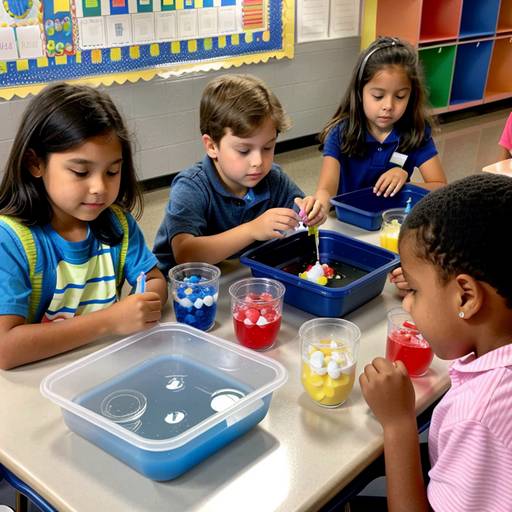
In this 1st grade science lesson, students will explore the concept of matter by identifying and classifying materials as solids, liquids, or gases. The lesson begins with a discussion where students share examples from their surroundings, followed by an explanation of the properties of each state of matter.
The class will then divide into small groups to engage in hands-on exploration at three different stations: observing solids with magnifying glasses, pouring water to understand liquids, and inflating balloons to demonstrate gases. After completing the stations, students will reconvene for a group discussion to share their findings, contributing to a class chart that summarizes the characteristics and examples of each state of matter.
An interactive sorting game will allow students to classify various objects into the appropriate category. The lesson concludes with a recap of the states of matter, encouraging students to reflect on their learning. For homework, students will find items at home that represent each state and prepare to share them in the next class. This engaging and interactive lesson fosters curiosity and a foundational understanding of physical science concepts related to matter.
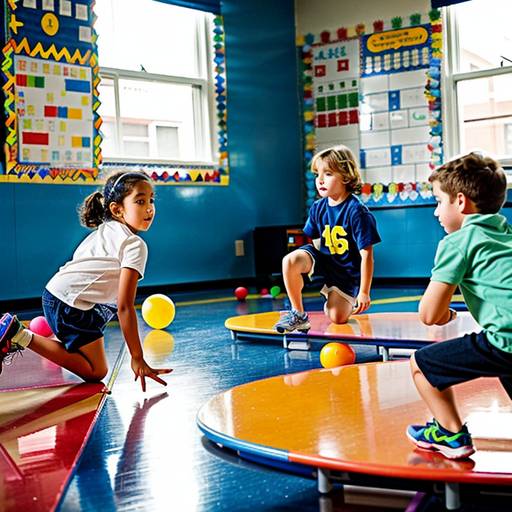
In this 1st-grade science lesson, students will explore the concept of motion through engaging, hands-on activities. The lesson begins with a discussion on motion, introducing key vocabulary such as "push," "pull," "slide," "roll," and "speed." Students are then divided into small groups to participate in three interactive stations: one focusing on rolling objects using toy cars and ramps, another on sliding objects across different surfaces, and the third on pushing and pulling various-sized balls. They will observe and record their findings, discussing how different factors affect movement. To reinforce their understanding, students will reflect on their observations and share their learning with the class. As an optional extension, they can conduct a "Motion Hunt" at home, identifying items that move and how they do so. The lesson encourages active participation and fosters an understanding of motion, distance, and speed through observation and collaboration. Assessment will involve monitoring student engagement and reviewing their notes and drawings to gauge comprehension.
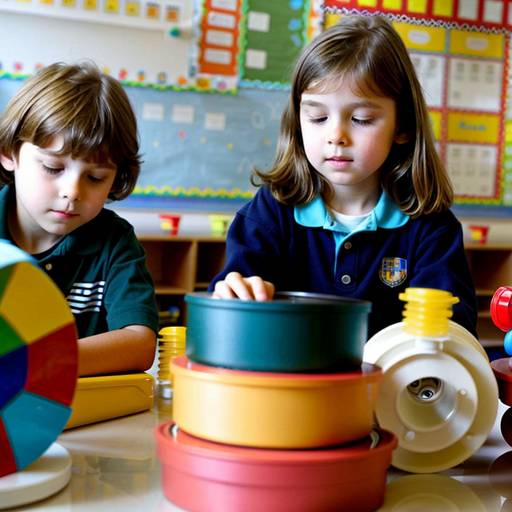
This 1st-grade science lesson focuses on introducing students to the concepts of motion in physical science. The lesson begins with a discussion about what motion is, using simple vocabulary such as push, pull, roll, slide, and stop. Students engage in hands-on activities where they experiment with various objects, including toy cars and balls, to observe how they move when pushed or pulled. Groups are formed to facilitate collaborative exploration, allowing students to work with ramps and different surfaces to see how objects roll, slide, and respond to force. The lesson encourages students to share their findings, reinforcing their understanding and vocabulary. As a wrap-up, students complete a worksheet to illustrate the different motions they explored. The lesson promotes engagement through interactive activities, group collaboration, and encourages critical thinking about everyday motion. Extensions and differentiation strategies are included to accommodate various learning needs.