
Filters
Level
Grade
Subject
Subject Area
Subject Topic
Standard(s)
Audience
Keyword
DurationMinutes
1st Grade Plants Lesson Plans

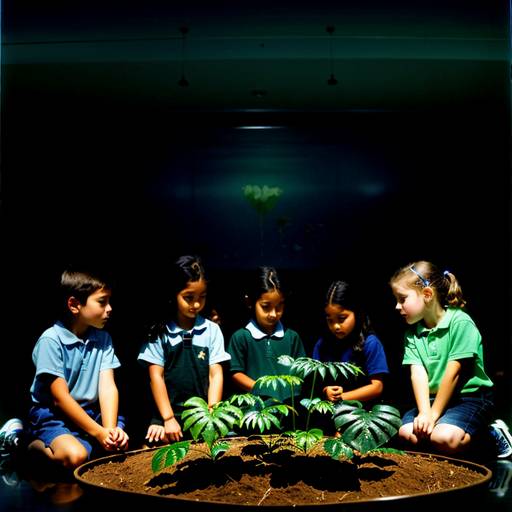
In this first-grade science lesson, students will explore the essential needs of plants, including sunlight, water, soil, and air, while learning to identify the different parts of a plant. The lesson begins with an engaging discussion on what plants require to survive, followed by hands-on activities.
Students will receive potted plants, where they will label the parts—roots, stem, leaves, and flower—while closely observing them with magnifying glasses. Next, they will plant seeds in clear plastic cups filled with soil, watering them and discussing optimal sunlight placement.
The lesson concludes with a group discussion to review key concepts and encourage students to share their excitement about nurturing their plants at home. Assessment will focus on students' participation in activities and their ability to illustrate and label their plants. Extensions, such as creating a classroom garden or reading related stories, can further enhance the learning experience. Safety precautions will be emphasized to ensure a safe, engaging environment for all students.
In this first-grade science lesson, students will explore the world of plants, focusing on their basic needs, structure, and growth processes. The lesson begins with an engaging discussion about plants, where students will learn key terms such as roots, stems, leaves, and flowers. Through group activities, students will observe and identify the parts of a potted plant, using drawing and labeling to reinforce their understanding.
Next, students will engage in a hands-on planting activity, where they will plant seeds in individual cups, while discussing the necessary conditions for growth. As they care for their plants, they will document their observations and actions on a growth chart. In the closure, students will reflect on their learning and share their discoveries about plants. Assessment will be based on participation, drawings, and a follow-up worksheet related to plant care. Additionally, students will create a Plant Growth Journal to track their plants' growth over time, fostering a deeper appreciation for nature and the environment.
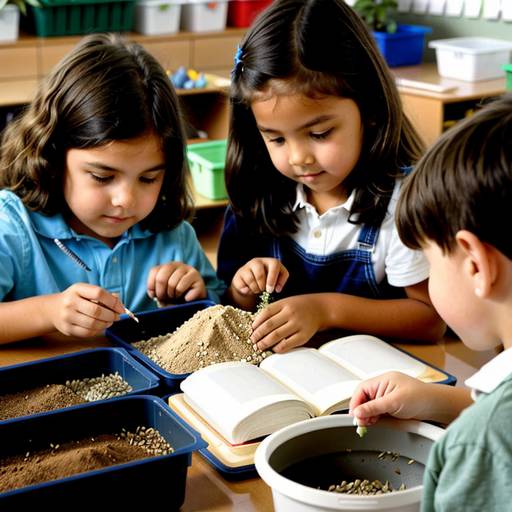
In this first-grade life science lesson, students will embark on an engaging exploration of plants, focusing on the parts of a plant and the process of growth from seeds. The lesson begins with a discussion about what plants need to thrive, fostering curiosity and activating prior knowledge. Students will have hands-on experience as they observe various seeds using magnifying glasses, noting their characteristics, and sharing their findings with the class.
Following this exploration, students will participate in a planting activity, where they will prepare small pots with soil, plant their seeds, and learn about the care required for their growing plants, such as sunlight and water. Each student will keep a Plant Growth Journal to record their observations and track changes in their plants over time.
The lesson wraps up with a review of key concepts and a creative poster activity that reinforces their learning about plant anatomy and growth. Through observation, hands-on activities, and collaborative discussions, students will gain a foundational understanding of the importance of plants in our ecosystem and the role of seeds in their growth. Opportunities for assessment will include observing participation and reviewing journals and posters for comprehension.
This 1st-grade science lesson focuses on introducing students to the world of plants and their essential parts. Students will learn to identify and describe the functions of the main parts of a plant—roots, stems, leaves, and flowers—while understanding what plants need to grow, such as sunlight, water, and soil. The lesson begins with a discussion and visual aids, followed by hands-on exploration of real plants in small groups. Each group will present their findings to the class. Students will then engage in a creative craft activity to create and label their own plant diagrams. The lesson concludes with a review of the plant life cycle using a poster, allowing students to share their insights. Assessment will be based on participation, group discussions, and the quality of their plant diagrams. The lesson may be extended with a planting activity, encouraging students to observe plant growth over time. Overall, this lesson provides an interactive and engaging way for young learners to explore life science concepts related to plants.