
Filters
Level
Grade
Subject
Subject Area
Subject Topic
Standard(s)
Audience
Keyword
DurationMinutes
1st Grade Time Lesson Plans


In this 1st grade math lesson, students will explore the concept of time and learn to tell time using both analog clocks and daily schedules. The lesson begins with a discussion about the importance of telling time in everyday life, followed by a demonstration of clock components, including the hour and minute hands. Guided practice allows students to customize their individual paper clocks to match various times called out by the teacher. A story reading reinforces the connection between time and daily activities. Following this, students will complete a worksheet that includes filling in their own daily schedules with corresponding times. The class concludes with a review of key concepts and sharing of student schedules. Assessment will occur through observation during activities and evaluation of the completed worksheets. Adaptations are suggested to support diverse learning needs, with optional extension activities available to further engage students in the topic.
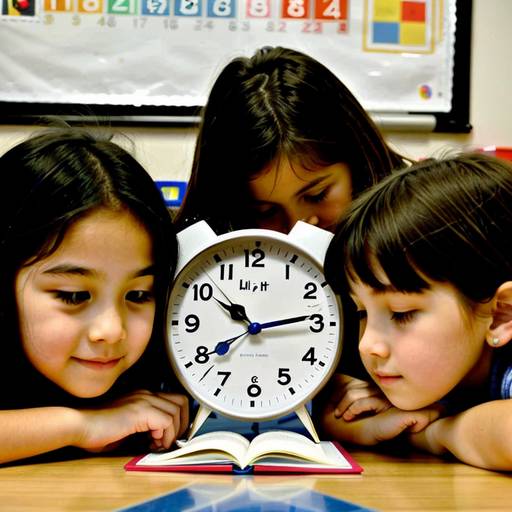
This 1st-grade math lesson focuses on teaching students how to tell time using analog clocks. The session begins with a lively song about time to engage the students, followed by a discussion on the significance of time and its daily applications. The teacher introduces the components of a clock, explaining the hour and minute hands while demonstrating how to read the time to the hour and half-hour. Students then participate in interactive practice by drawing the clock hands on printable clock faces.
Next, they engage in an activity where they connect common daily activities with the appropriate times on a “My Daily Schedule” worksheet. Independent practice allows students to reinforce their learning by completing their clocks or worksheets, while the closure involves sharing key takeaways and reflecting on the lesson. Throughout the session, assessment occurs through observation and the review of student worksheets to gauge understanding. Differentiation strategies are included to accommodate varying levels of proficiency among students, ensuring a comprehensive and enjoyable learning experience.