

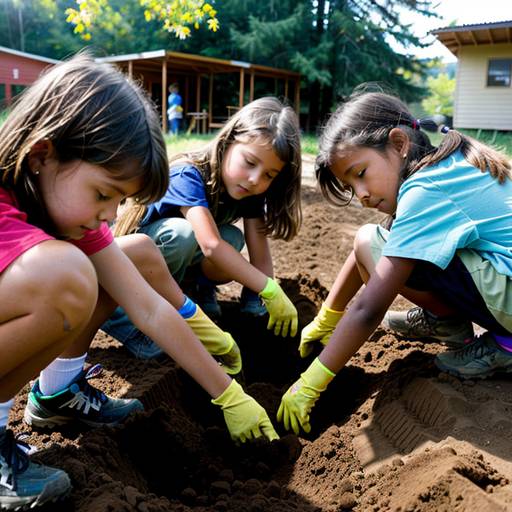
This 2nd-grade Earth Science lesson focuses on exploring soil and its significance in the environment. Students will begin by activating their prior knowledge about soil and discussing its components, layers, and various uses. Through direct instruction, they will learn about the different layers of soil (topsoil, subsoil, bedrock) and the four main types of soil (sand, silt, clay, and loam).
The hands-on activity allows students to engage with soil samples at different stations, where they will observe and record characteristics such as texture and water retention using magnifying glasses and clear cups. This observational activity fosters critical thinking as students classify the soil samples and discuss their findings as a group.
The lesson will conclude with a review of key concepts and an open-ended discussion about the relationship between soil and the support of plant and animal life. Assessments will be made through group participation and the clarity of recorded observations. To extend learning, students may also bring in soil samples from home and explore soil-themed art projects. Overall, this lesson promotes curiosity and a deeper understanding of Earth's natural resources.
| Level | Elementary School |
| Grade | 2nd Grade |
| Subject | Science |
| Subject Area | Earth Science |
| Subject Topic | Soil |
| Age Range | 7 to 8 |
| Audience | Group |
| Language | English |
| Duration | 60 mins |