
The Kindergarten curriculum is designed to develop foundational skills across key academic areas, including English Language Arts, Mathematics, Science, and Social Studies. In English Language Arts, students engage in reading and writing activities that promote phonemic awareness, comprehension, and expressive skills. The Mathematics component focuses on counting, basic operations, measurement, and geometry, fostering critical thinking and problem-solving abilities. In Science, learners explore physical and life sciences, emphasizing hands-on experimentation and environmental awareness. Finally, the Social Studies section introduces concepts of history, geography, civics, and economics, helping students understand their roles within their communities and the importance of collaboration and responsibility. This curriculum provides a well-rounded educational framework to inspire and engage young learners.

The 1st-grade curriculum encompasses a well-rounded educational framework that includes English Language Arts, Mathematics, Science, and Social Studies. In English Language Arts, students engage with texts to develop reading comprehension and writing skills, including crafting opinions and narratives, while enhancing their communication abilities. The Mathematics component emphasizes foundational skills in operations, place value, measurement, and geometry, fostering critical thinking and problem-solving. In Science, learners explore physical properties, life sciences, and basic weather concepts, encouraging inquiry and exploration of their environment. The Social Studies section introduces students to geography, history, citizenship, and economic concepts, promoting an understanding of their community and the world around them. This integrated approach ensures students acquire essential knowledge and skills for their future academic endeavors.
The 2nd-grade English Language Arts curriculum focuses on enhancing students' reading and writing skills through engaging activities that develop comprehension, fluency, and critical thinking. Key components include analyzing characters and story elements, understanding diverse cultural narratives through fables and folktales, and learning to summarize and convey central messages from texts. Students will also explore informative reading skills by utilizing text features to locate information and establish the main purpose of various materials. Writing exercises will emphasize crafting informative and explanatory texts, allowing children to effectively introduce topics and support their ideas with relevant details. This curriculum promotes creativity and interdisciplinary connections, fostering a comprehensive learning experience that prepares students for future academic success.
The Third Grade Curriculum encompasses a comprehensive approach to education that integrates key subjects such as English Language Arts, Mathematics, Science, Social Studies, and Health and Physical Education. In English Language Arts, students develop reading fluency, writing skills, and effective communication through various texts and interactive discussions. The Mathematics section emphasizes understanding place value, operations, and geometry, fostering critical thinking through real-world applications. The Science segment encourages inquiry and exploration, focusing on physical, life, and earth sciences through hands-on activities. Social Studies connects students to their communities and history by exploring significant events and civic responsibilities. Additionally, Health and Physical Education promotes personal well-being and healthy lifestyle choices, ensuring a well-rounded educational experience that prepares students for future learning.
The 4th Grade Curriculum encompasses a comprehensive range of subjects designed to foster students' academic and personal growth. In English/Language Arts, it focuses on developing reading comprehension, writing skills across various genres, and effective communication through speaking and listening activities. The math component emphasizes operations and algebraic thinking, including multi-digit calculations and data interpretation, while also covering geometry concepts. The science curriculum introduces Earth and space sciences, life sciences, and physical science, encouraging hands-on exploration and critical thinking. In social studies, students engage with important historical events, cultural diversity, geography, and civic understanding. Health education focuses on personal wellness, including nutrition and mental health, complemented by physical education that promotes fitness, teamwork, and sportsmanship. Overall, the curriculum aims to create a well-rounded educational experience that prepares students for future learning and personal development.
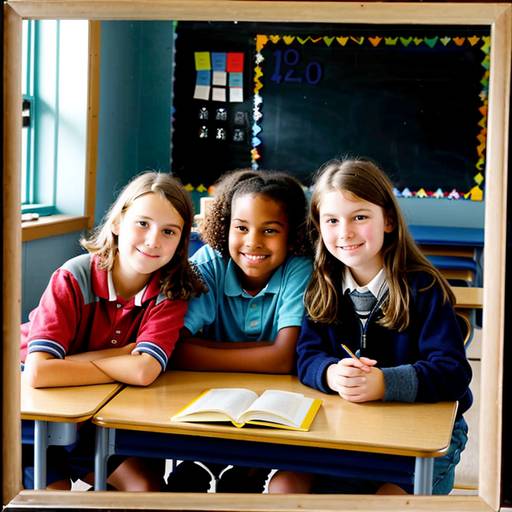
The 5th grade curriculum encompasses a comprehensive range of subjects designed to foster academic and personal growth in students. In English Language Arts, students develop reading comprehension, writing, and communication skills through exploration of various genres and writing formats. The mathematics section emphasizes problem-solving and conceptual understanding, covering topics such as operations with whole numbers, fractions, decimals, and basic geometry. Science education focuses on inquiry-based learning, with students investigating physical properties, life sciences, and Earth and space topics through hands-on experiments. Social studies encourages exploration of history, geography, and civics, enabling students to understand their role in society and the foundations of government. Overall, the curriculum aims to equip students with critical thinking skills and a strong knowledge base across disciplines.