
Filters
Level
Grade
Subject
Subject Area
Subject Topic
Standard(s)
Audience
Keyword
DurationMinutes
Preschool Coding Concepts Lesson Plans
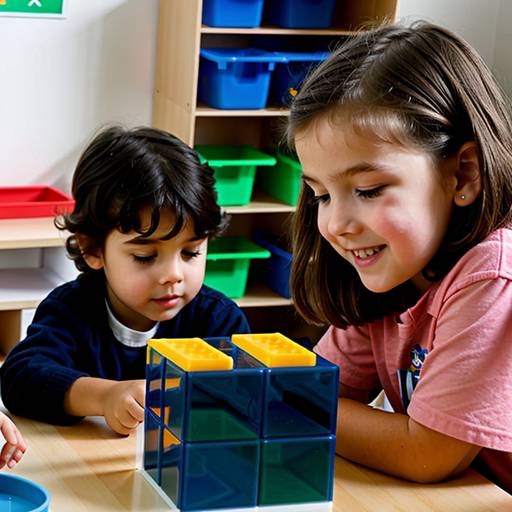
This lesson plan provides a structured approach for preschool students to explore foundational coding concepts through engaging, hands-on activities. Over the course of 45 minutes, children will learn about sequences, patterns, and problem-solving in a fun and interactive manner.
The lesson begins with a brief introduction to key terminology, using relatable examples to foster understanding. Students will then participate in group activities, where they will build structures using colorful blocks while following specific sequences. This collaborative effort encourages teamwork and enhances communication skills.
Subsequently, the class will engage in a movement coding activity, where students take turns being the "coder" and the "robot," following action cards to navigate a designated path. This physical representation of coding concepts reinforces their learning through active participation.
If technology is available, students will have the opportunity to explore a simple coding app, fostering independent problem-solving skills. The lesson concludes with a group reflection, encouraging students to share their experiences and insights gained throughout the activities. The overall aim is to provide a fun and accessible introduction to coding concepts, promoting critical thinking and creativity in young learners.

This preschool lesson plan focuses on introducing young students to basic coding concepts through creative storytelling. The session begins with a discussion about favorite stories, helping to connect storytelling with coding. Students explore coding apps in small groups, learning to create simple sequences that drive their digital narratives. Using story cubes for inspiration, they brainstorm and illustrate a collaborative story, highlighting the beginning, middle, and end structure. Each group presents their illustrated story to the class, sharing both the narrative and the coding process they employed. The lesson concludes with a recap of the key concepts—sequencing, coding, and storytelling—while encouraging students to think about their applications in everyday life. Assessment includes observing group interactions and evaluating the creativity in their illustrated stories and presentations. Additional resources are suggested for further exploration of coding concepts during free play.
This preschool lesson plan introduces young children to fundamental coding concepts such as sequencing, patterns, and algorithms through engaging, hands-on activities. The lesson begins with an interactive circle time where children explore the idea of giving instructions. A story that emphasizes sequences is read, prompting discussions about the order of events.
Next, children participate in a physical movement activity using a large grid, where they follow a series of directional instructions, helping them grasp the importance of sequencing. After that, they work in small groups to create visual patterns using colorful foam shapes or coding blocks, fostering collaboration and creativity.
The lesson culminates with hands-on exploration of coding toys, allowing children to program robotic devices to move in specific directions. The session wraps up with a group reflection, reinforcing what they learned about sequences and patterns while rewarding their participation with stickers. Overall, the lesson promotes critical thinking, problem-solving, and teamwork in a playful learning environment.