
Filters
Level
Grade
Subject
Subject Area
Subject Topic
Standard(s)
Audience
Keyword
DurationMinutes
Preschool Emotional Awareness Lesson Plans

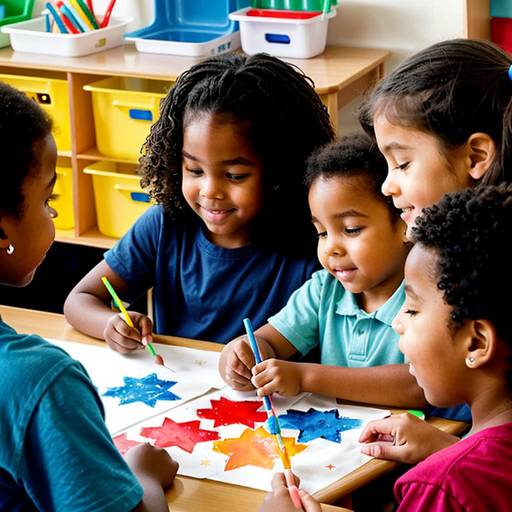
This preschool lesson plan focuses on promoting emotional awareness among young children through interactive activities and creative expression. It begins with a circle time discussion about emotions, using a visual emotion wheel to help children identify and relate to various feelings. A storybook is read to further explore these emotions, encouraging students to share their thoughts and demonstrate emotions through facial expressions.
The lesson includes an engaging activity where children act out different feelings, fostering empathy by allowing peers to guess the emotions being portrayed. Following this, students are invited to create drawings that represent their own feelings, using colors that they associate with those emotions. As they create, they engage in discussions about their artwork, reinforcing their understanding of emotional expression.
The lesson concludes with a sharing circle, where children present their drawings and articulate their chosen colors and feelings. The overall goal is to help children recognize, express, and empathize with emotions, providing them with essential social and emotional skills for their development. Extensions to the lesson involve creating an “Emotion Wall” and introducing mindfulness practices to help manage emotions.
In this preschool lesson plan focused on emotional awareness, students will engage in activities designed to help them identify and express various feelings. The session begins with a circle time where children explore different emotions through facial expressions and discussion. A storybook centered on emotions will be read aloud, prompting students to relate the characters' feelings to their own experiences.
Following the story, students will contribute to a feelings chart by matching emotion cards with their current feelings and explaining their choices. An art activity will allow children to draw scenes that represent emotions they have experienced. The lesson concludes with reflections where students share their artwork and receive "Emotion Explorer" sticker badges for their participation.
Overall, this plan aims to foster emotional literacy by encouraging students to recognize, articulate, and appropriately express their feelings in a supportive group setting.
In this preschool social studies lesson focused on emotional awareness, students will engage in activities designed to help them identify and express various basic emotions, such as happy, sad, angry, surprised, and scared. The lesson begins with a circle time discussion where children share their understanding of feelings, followed by the use of illustrated emotion cards to reinforce their learning.
A storybook that highlights emotions will be read, prompting students to discuss the feelings of characters and share personal experiences related to those emotions. To further enhance their understanding, children will use a feelings wheel to identify and talk about their own feelings.
Following the discussion, students will participate in a lively song and dance activity that incorporates movements representing different emotions. This is complemented by an art activity where children will draw a picture expressing how they feel that day and share it with the group.
Throughout the lesson, students will work on assessments through observations during discussions and activities, as well as through their drawings. The lesson emphasizes that all feelings are valid and creates a supportive environment for children to express themselves, promoting emotional awareness and social skills. A follow-up activity will reinforce their learning by encouraging students to share their feelings throughout the week.
This preschool social studies lesson focuses on emotional awareness, enabling young learners to identify and express various feelings. The session begins with a circle gathering where students share and list emotions, followed by a read-aloud of a children's story that illustrates different feelings. To reinforce understanding, students engage with emotion cards, making facial expressions in front of a mirror while discussing personal experiences related to those feelings.
Next, children participate in a creative activity where they draw flowers that represent a specific emotion, explaining their choice with assistance. Their artwork is then displayed around the classroom as part of an "Emotion Garden." The lesson concludes with a reflection and a calming breathing exercise to emphasize the importance of discussing emotions. Through observation and participation, the teacher assesses the children's emotional vocabulary and understanding, while future activities may include daily emotion check-ins and access to books about feelings, further promoting emotional literacy and empathy.