
Filters
Level
Grade
Subject
Subject Area
Subject Topic
Standard(s)
Audience
Keyword
DurationMinutes
Preschool Community Lesson Plans

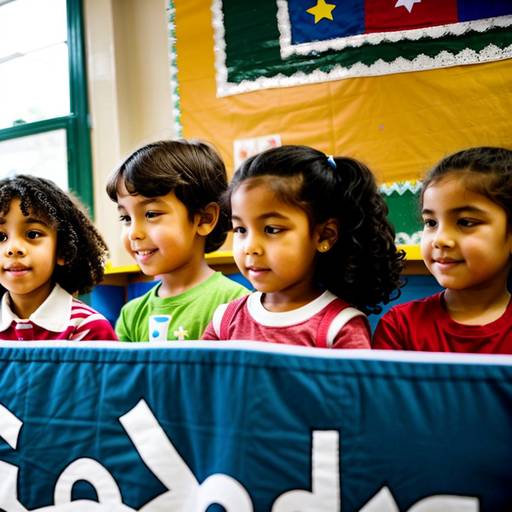
In this preschool lesson plan, students are introduced to the concept of community helpers and their significant roles within the neighborhood. The session begins with a circle discussion where children share their experiences with various community helpers, such as firefighters, doctors, and police officers. A storybook about community helpers is then read aloud, prompting interactive questions to deepen understanding.
The children participate in activities, including trying on community helper costumes to engage in role-play, allowing them to envision themselves in these vital positions. They also create simplified community maps illustrating their interpretations of where community helpers can be found, showcasing their creativity with crayons and paper.
To foster gratitude, students write or draw thank-you notes to community helpers in a designated mailbox, reinforcing their appreciation for these individuals. The lesson concludes with a closing circle, where each child shares something they learned or expresses their future aspirations related to community service.
Throughout the lesson, children are encouraged to actively engage and participate, providing opportunities for them to develop a sense of citizenship and recognize the importance of helping their community. Optional extension activities, such as a field trip to a local fire station or an invitation for a community helper to visit the classroom, can further enhance their learning experience. Overall, the lesson aims to instill an understanding of community, engagement, and the values of service and gratitude.
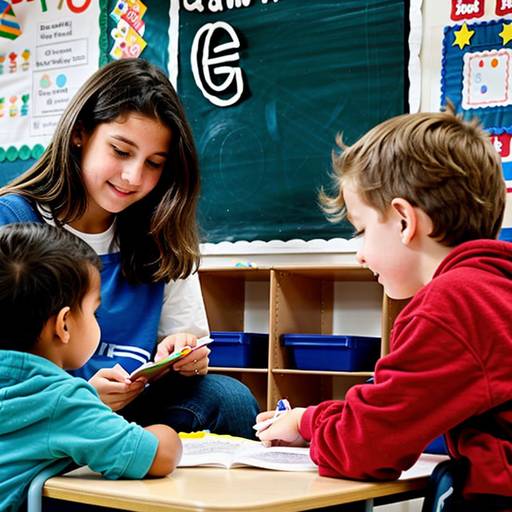
This preschool lesson focuses on fostering a sense of community and kindness among students. The session begins with a welcoming circle, where students are encouraged to share their thoughts on what being part of a community means. A story about kindness is read aloud, prompting discussions about how to show care for one another.
Students then participate in a craft activity, creating personal representations of caring, which are displayed on a bulletin board for a "gallery walk." The lesson includes an interactive "Fill the Bucket" activity, where each child contributes a kind idea, symbolically filling a class bucket with paper hearts.
The lesson concludes with a reflective discussion about ongoing ways to cultivate a caring environment in the classroom. Students leave the session with a deeper understanding of community and the importance of kindness towards others. Opportunities for ongoing kindness challenges and further exploration of community helpers are suggested for future engagements.
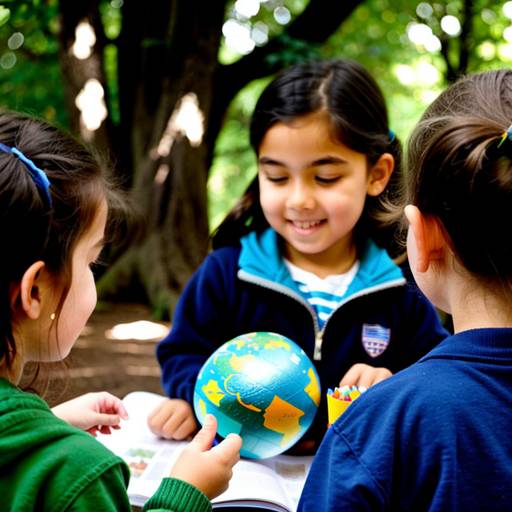
This lesson plan focuses on helping preschoolers explore the connection between their environment and community through interactive activities over a 19-minute session. The lesson begins with a group discussion about what children observe in their neighborhood and who helps them in the community. It includes a storytime segment where a picture book is read, emphasizing the relationship between nature and community.
Following the story, students participate in a nature scavenger hunt, collecting items from their surroundings and sharing their findings with peers. The lesson continues with a discussion about community helpers, where children learn how these individuals contribute to the community and interact with nature.
For creative expression, students draw their favorite natural elements or community helpers. The session concludes with a sharing circle where each child presents their artwork, reflecting on how nature and community work together. Throughout the lesson, children are encouraged to participate, engage in discussions, and understand their roles within their environment and community.
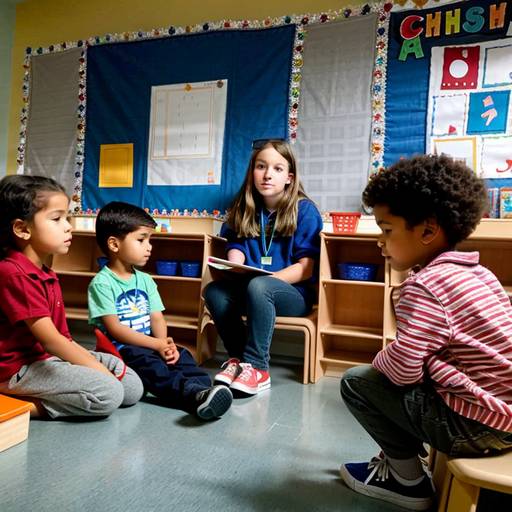
In this preschool social studies lesson, students will explore the concept of community by identifying various roles within it and recognizing the diverse individuals who contribute to its function. The lesson starts with a group discussion to define what a community is, followed by a read-aloud of a picture book that illustrates different community members. Students will then engage in a creative activity where they draw or color pictures of their favorite community helpers on a large poster.
After completing their artwork, they will participate in a group discussion to share their thoughts on the importance of each role. To conclude, students will form a circle to share one thing they learned about community helpers or what they enjoy about their community, promoting active listening and collaboration. The lesson reinforces the idea that everyone has a special role in creating a supportive environment. Optional snacks may be provided during this reflection time. The lesson's assessment involves observing participation and understanding during discussions and activities. Adaptations are included to support diverse learners, and an extension activity seeks to deepen their understanding by exploring community places in future lessons.
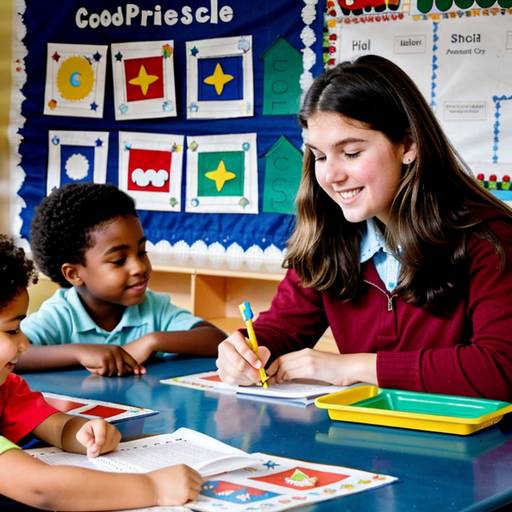
This lesson plan focuses on teaching preschool students the concepts of cooperation and sharing within a community context. It begins with an engaging group discussion to introduce the ideas of teamwork and community. Following this, a picture book is read to illustrate these concepts in action, prompting children to reflect on how characters work together and the feelings associated with sharing.
Students are then divided into small groups for a hands-on activity where they collaborate to build towers using blocks, emphasizing communication and the importance of sharing materials. This is followed by a collaborative art project where children create a mural that represents their ideas about cooperation and community.
Finally, the lesson concludes with a reflection circle, allowing children to express their thoughts on the activities and what they learned about collaboration and sharing. Throughout the lesson, students enhance their social and emotional development by practicing empathy, respect, and positive interactions with their peers. The plan includes adaptations for varying needs, ensuring an inclusive environment for all participants.