
Filters
Level
Grade
Subject
Subject Area
Subject Topic
Standard(s)
Audience
Keyword
DurationMinutes
Preschool Forces And Motion Lesson Plans

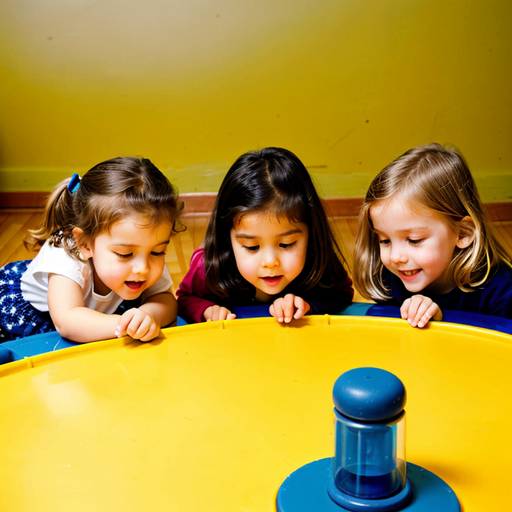
This preschool lesson introduces young children to the fundamental concepts of forces and motion through engaging discussions and hands-on activities. The session begins with a circle time discussion that encourages students to think about what makes objects move and introduces key terms like "force" and "motion." A demonstration using a toy car and a ramp illustrates how gravity affects movement, encouraging predictions about different outcomes based on varying conditions.
Students then participate in small group activities that involve experimenting with various objects, including rolling cars down ramps, dropping different items to observe how they fall, and using balloons to explore the concept of air movement. Following the experimentation, children reconvene to share their findings and create a collaborative diagram that summarizes their observations.
The lesson emphasizes critical thinking and reflection as children discuss what they learned about movement and the forces that influence it. The session concludes with a recap of key concepts and the encouragement of ongoing exploration of forces and motion in their everyday lives. The lesson plan incorporates assessment through observation of student engagement and participation, and suggests extensions for continued learning.
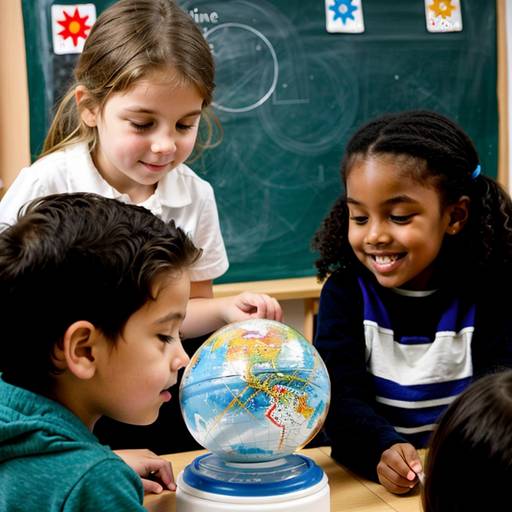
In this preschool science lesson, students explore the concepts of push and pull through engaging hands-on activities. The session begins with a circle time discussion where children learn the basic definitions of push and pull, accompanied by demonstrations using toy cars and balls.
The lesson includes two main activities: a ramp race where students push toy cars down a slope, allowing them to observe how different levels of force affect motion, and a push and pull challenge with boxes and lightweight objects. Following these activities, students reflect on their experiences and share which actions felt easier and why.
To reinforce the concepts, children participate in a creative art activity, drawing something they pushed or pulled during the session. The lesson concludes with a recap and encourages students to identify examples of push and pull in their everyday lives. Throughout the lesson, the emphasis is on observation, discussion, and playful experimentation, allowing children to grasp the fundamental principles of forces and motion in a fun and interactive manner.
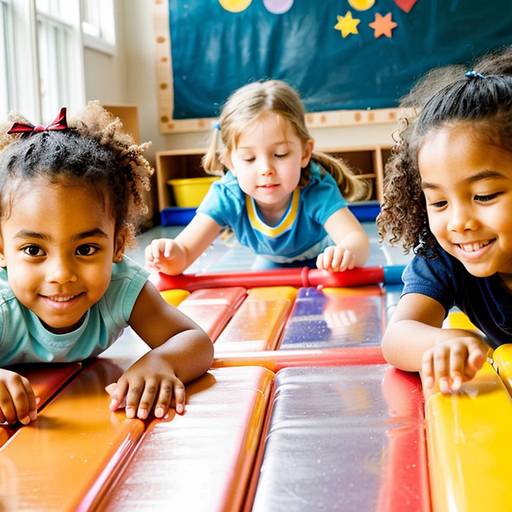
In this preschool science lesson, students will engage in hands-on activities to explore the basic concepts of forces and motion through pushing and pulling. The lesson begins with an interactive discussion where students are encouraged to share their ideas about movement. They will then work in small groups to experiment with toy vehicles and balls on a smooth ramp, observing how different objects move in response to these forces.
After conducting their experiments, students will come together to discuss their observations, learning about the influence of gravity on motion. To reinforce their understanding, they will create drawings of their favorite experiments, labeling the types of forces involved. The lesson concludes with students sharing their artwork and reflecting on what they learned. Throughout the lesson, teachers will assess engagement and comprehension based on observations and discussions. This engaging experience aims to provide preschoolers with a foundational understanding of how forces impact the movement of objects.
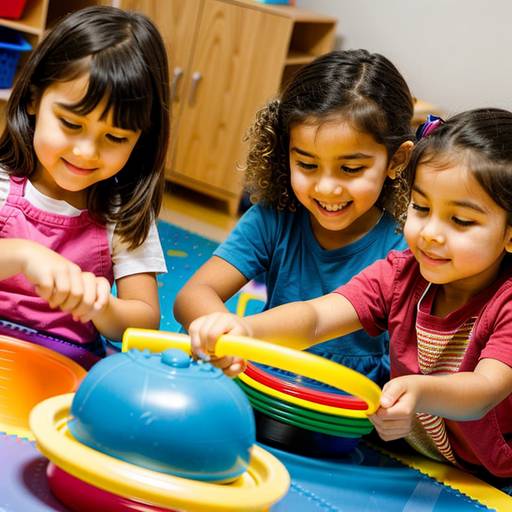
This preschool lesson focuses on introducing young learners to the concepts of forces and motion through interactive and hands-on activities. Students will engage in discussions to identify and describe different forces, such as pushing and pulling. The lesson includes exploration stations where children can experiment with toy cars on ramps, observe the effects of gravity using various balls, and practice moving soft toys with different weights. A fun group game allows students to weave through obstacles, reinforcing their understanding of motion. The session concludes with a reflection circle and a creative drawing activity, enabling children to articulate and visualize their learning experiences. This engaging approach fosters an early curiosity about the principles of movement and encourages cooperative learning among the children.