
Filters
Level
Grade
Subject
Subject Area
Subject Topic
Standard(s)
Audience
Keyword
DurationMinutes
Preschool Energy Lesson Plans

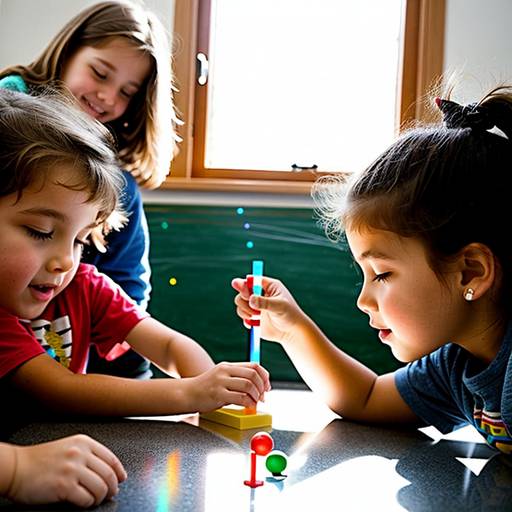
In this preschool science lesson, students will engage in an exploration of energy through hands-on activities that focus on motion and light. The lesson begins with a circle discussion to introduce the concept of energy and its role in movement and illumination. The children will rotate through two stations: one where they experiment with flashlights and mirrors to observe the behavior of light, and another where they interact with battery-operated or wind-up toys to see how energy creates motion. Following these explorations, the class will gather together to reflect on their discoveries, documenting their observations on a poster board. Finally, students will express their favorite findings through drawings and share them with peers. This engaging and interactive approach allows children to develop their curiosity, collaborative skills, and foundational understanding of energy in a fun, safe environment.
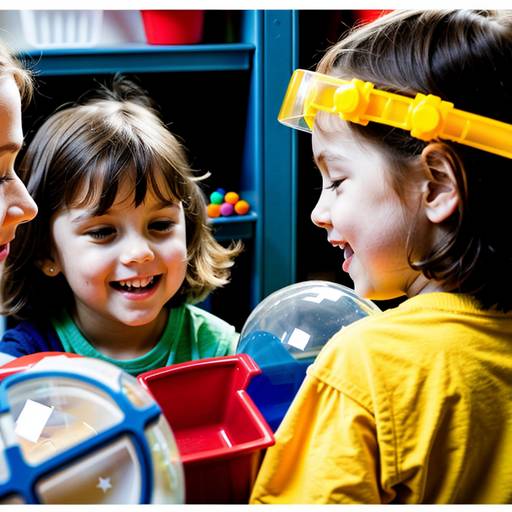
This preschool science lesson introduces young children to the concept of energy through engaging, hands-on activities and exploration. Designed for a group of 4-5-year-olds, the lesson lasts 30 to 45 minutes and includes various activity stations focused on different aspects of energy. Children will experiment with toy cars on ramps to observe how energy affects motion, release air from balloons to see air pressure in action, shake musical instruments to explore sound energy, and go outside to identify forms of energy in nature like sunlight and wind.
The lesson begins with a circle discussion to familiarize children with the idea of energy, prompting them to think about what makes things move or produce sound. After station activities, children gather to reflect on their experiences, sharing their observations and preferences. They then engage in a creative drawing activity, illustrating their favorite energy-related experience from the day. The lesson concludes with a recap of the different forms of energy explored and the distribution of a small energy “passport” for them to take home.
Assessment focuses on children's engagement and understanding during activities and discussions, providing an opportunity for reinforcement of concepts. Extensions encourage families to explore energy at home, fostering ongoing curiosity and learning. Overall, this lesson aims to lay a foundation for scientific inquiry and literacy by making the concept of energy accessible and fun for young learners.
This preschool science lesson aims to introduce young learners to the concept of energy through hands-on exploration and engaging activities. The lesson begins with a group discussion to spark interest in energy, where students are encouraged to share their thoughts on what makes things happen around them.
Students rotate through three interactive stations, each focusing on a different form of energy: light, motion, and sound. At the first station, they use flashlights to explore light energy and create shadows. The second station features battery-operated toys and the opportunity to launch toy cars using homemade catapults, emphasizing motion energy. The final station allows students to experiment with musical instruments, discovering sound energy.
After the station activities, students regroup to share their findings and reflect on their experiences. They then engage in a creative drawing activity where they illustrate their favorite energy-related experience and contribute their artwork to a collaborative display.
The lesson concludes with a summary of what was learned and encourages students to explore energy in their everyday lives, extending the learning experience to their homes. Assessment is based on participation during activities and the ability to communicate understandings through their drawings. Follow-up activities include sharing discoveries from home and incorporating energy-themed songs or stories in future lessons.
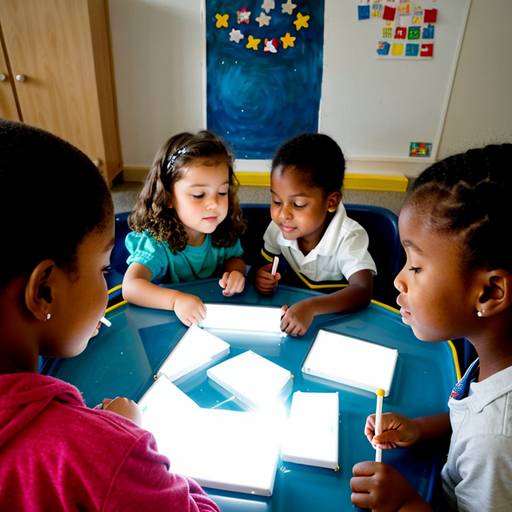
This preschool science lesson focuses on the concept of energy, engaging young learners through interactive and hands-on activities. The lesson begins with a group discussion to introduce the idea of energy and its various forms, such as light, movement, air, sound, and heat. Students are then divided into small groups to rotate through several activity stations, each highlighting a different type of energy. At these stations, children explore practical examples, such as using flashlights to understand light, winding up toys to see stored energy in action, feeling air from a fan, creating sound with instruments, and making bubbles. After the activities, students reconvene to share their experiences and reflect on what they learned. They express their favorite activity through drawings, reinforcing their understanding of energy. The lesson concludes with ideas for further exploration at home and strategies for adapting the activities to meet different learning needs, ensuring an inclusive experience for all participants.