
Filters
Level
Grade
Subject
Subject Area
Subject Topic
Standard(s)
Audience
Keyword
DurationMinutes
Preschool Number Recognition Lesson Plans

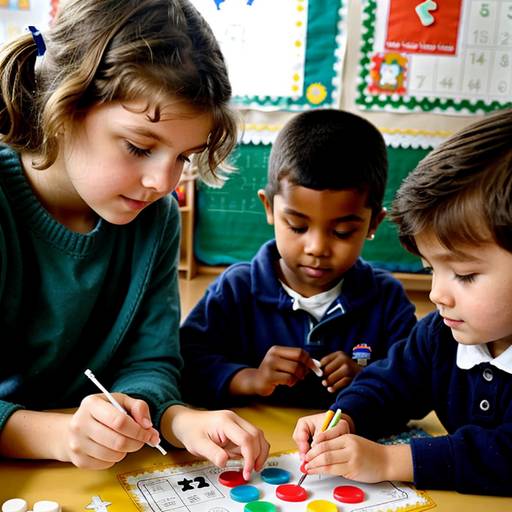
In this preschool math lesson, students engage in a variety of activities designed to enhance their number recognition skills. The lesson begins with a group circle time where children learn to identify numbers 1 through 10 by repeating after the teacher and answering related questions that encourage number awareness. Students then participate in an interactive exploration with toy critters, where they match the number of critters to corresponding number cards, reinforcing counting skills through hands-on practice.
Following this, the class engages in a group counting activity where they collectively identify and count critters chosen by their peers, further solidifying their understanding. An independent activity allows students to work with counting mats, placing the correct number of critters on each mat as they practice one-to-one correspondence.
The lesson concludes with a closing circle where students share their experiences, participate in a final review of the numbers, and receive stickers or stamps as rewards for their engagement and effort. Throughout the lesson, students build their number recognition and counting skills in a playful and supportive environment.
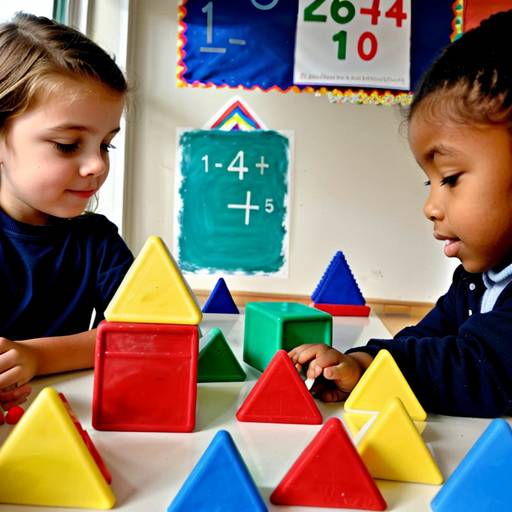
This lesson plan focuses on number recognition for preschool students aged 3-5 years. The objective is to help students identify and understand numbers from 0 to 10 through a series of engaging activities that incorporate shapes and counting.
The lesson begins with a warm welcome and a brief discussion about numbers known by the students. It continues with a shape sorting activity, where students identify shapes and match them to corresponding number cards based on the number of sides each shape has. Following this, students engage in a counting game, where they count objects like blocks and collaborate to count various classroom items, gradually reinforcing their number recognition skills.
The lesson concludes with a recap, allowing students to share their favorite numbers and participate in a fun number song. Throughout the activities, teachers observe student interactions to assess their understanding and provide positive reinforcement. Extensions are suggested for advanced learners, including simple addition and tracing number sheets to further enhance their learning experience. Overall, the lesson promotes a playful and interactive approach to foundational math skills.
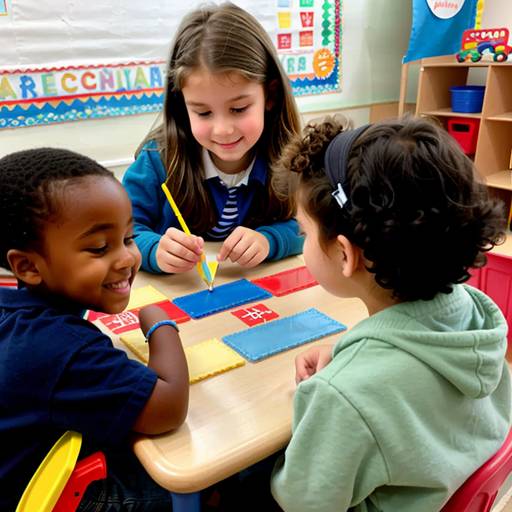
This preschool math lesson focuses on number recognition for children aged 3 to 5 years. The 30-minute session begins with an engaging introduction where students discuss the concept of numbers and their importance. To reinforce number knowledge, the children participate in a lively number song that encourages counting from 1 to 10 with hand motions.
The main activity features a number hunt, where hidden large number cards are discovered by the students, promoting active participation as they identify each number aloud upon retrieval. Following this, the class engages in an animal counting game where small groups match animal cut-outs to their corresponding number cards based on quantity, enhancing their grasp of counting and number identification.
The lesson concludes with a group reflection and the distribution of number recognition worksheets for additional practice. Throughout the session, the teacher assesses students' understanding of numbers, checking for recognition and providing support as needed. Extensions for further learning and parent involvement are also suggested to deepen students' understanding of number recognition.
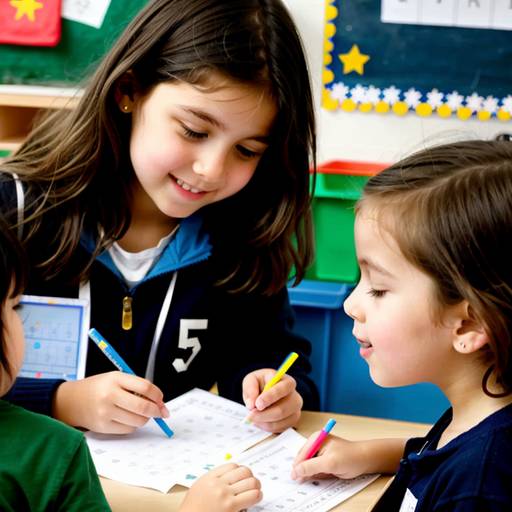
This preschool math lesson focuses on number recognition for children aged 4-5, aiming to help them identify and understand numbers 1 through 10. The session begins with a group circle where students are introduced to numbers through a poster board, followed by a lively number song that incorporates physical movements.
Next, children engage in an interactive treasure hunt using a map that guides them to find objects corresponding to the numbers. Working in pairs, they explore the classroom to collect items and then share their findings with the class, reinforcing their counting and recognition skills.
To conclude the lesson, each child receives a number card that serves as a keepsake, and they participate in a quick game where they hold up their cards when a number is called. This approach not only encourages active participation and collaboration but also provides a fun and engaging way for young learners to develop their foundational math skills. The lesson includes opportunities for informal assessment through observations of children's interactions and understanding.