
Filters
Level
Grade
Subject
Subject Area
Subject Topic
Standard(s)
Audience
Keyword
DurationMinutes
Preschool Addition And Subtraction Lesson Plans


This preschool math lesson focuses on introducing basic addition and subtraction concepts using colorful counting bears as manipulatives. Beginning with a circle time discussion, students will explore the meanings of addition and subtraction through visual and interactive demonstrations. The teacher will model simple math problems on a whiteboard, showcasing how to add and subtract using the counting bears.
In a hands-on activity, students will receive their own counting bears and solve various addition and subtraction problems by physically manipulating the bears, allowing them to count and visualize the outcomes. Following this guided practice, students will express their understanding creatively by drawing their favorite number of bears based on what they learned.
The lesson concludes with a reflection period where students share their insights and experiences related to the math concepts. Throughout the session, the teacher will assess students' understanding via observation and participation, ensuring an engaging and supportive learning environment that reinforces the fundamentals of early math.
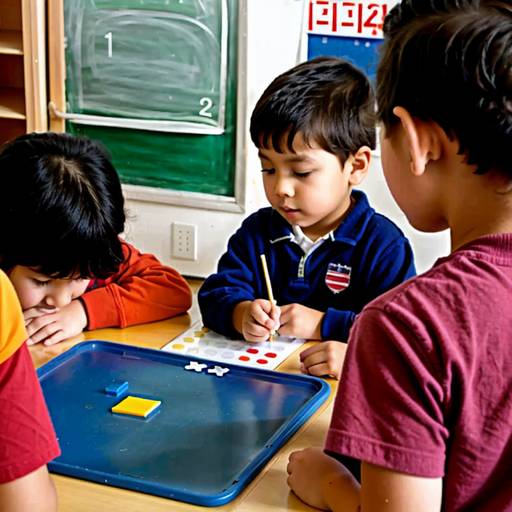
This preschool math lesson is designed to introduce young learners to the concepts of addition and subtraction through engaging story problems. The session begins with a brief introduction to the ideas of adding and taking away, using questions to stimulate discussion and prior knowledge. Students participate in group activities involving picture cards and manipulatives to explore both addition and subtraction.
Using simple stories as a springboard, children work with visual props to understand how numbers change with the addition of new items and the removal of others. The lesson includes opportunities for hands-on counting and problem-solving, fostering critical thinking skills.
As the session wraps up, students share their insights and favorite parts of the activity, reinforcing their learning through communication. The educator observes student responses to assess understanding and encourages reflection on their surroundings for real-life applications of the concepts discussed. Adaptations are suggested to accommodate different learning styles and maintain engagement among all students.
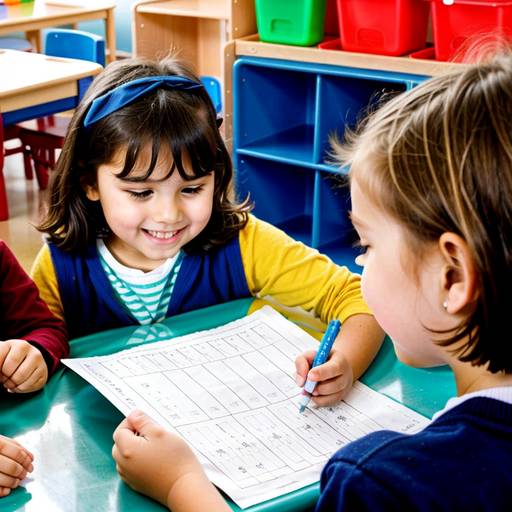
Students participate in hands-on activities at various math stations. In the first station, they use counting manipulatives to create and solve their own addition problems. The second station focuses on subtraction, where they practice taking away items from a larger group. The final station involves matching number cards to corresponding quantities.
The class then comes together for a fun relay activity that reinforces both addition and subtraction. As they take turns running to collect items and forming equations, they deepen their understanding of these mathematical operations.
To conclude the lesson, children reflect on their learning and share the equations they created. The session ends with another engaging song, ensuring a positive and memorable experience. Throughout the lesson, teachers assess students' understanding through their participation, responses, and ability to solve basic problems, providing opportunities for further challenge or support as needed.
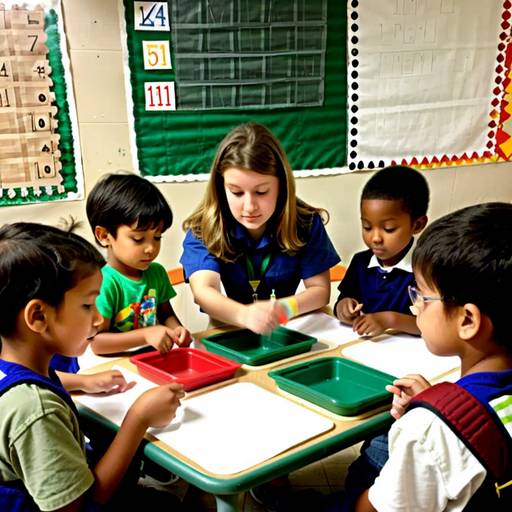
In this engaging preschool lesson, students will explore basic addition and subtraction concepts through a jungle-themed experience. The session begins with a circle time where children are introduced to the theme, followed by a read-aloud of a counting story featuring jungle animals to pique their interest.
The main activities involve hands-on group work, where students use toy animal counters to solve simple addition and subtraction problems collaboratively. This interactive approach allows them to visualize mathematical concepts and encourages peer discussion. An interactive game further reinforces these concepts, as children find and mark numbers on a jungle scene poster based on the problems presented.
To wrap up the lesson, students gather to reflect on what they learned, share insights, and complete a simple worksheet featuring jungle-themed math problems. If time permits, extension activities such as a dance and count session or a creative art project allow for movement and artistic expression while reinforcing the lesson's objectives.
Throughout the lesson, the teacher assesses understanding by observing participation and reviewing completed worksheets. The overall goal is to create a fun and dynamic environment where children can readily connect math concepts to their surroundings.