
Filters
Level
Grade
Subject
Subject Area
Subject Topic
Standard(s)
Audience
Keyword
DurationMinutes
Preschool Listening And Speaking Lesson Plans
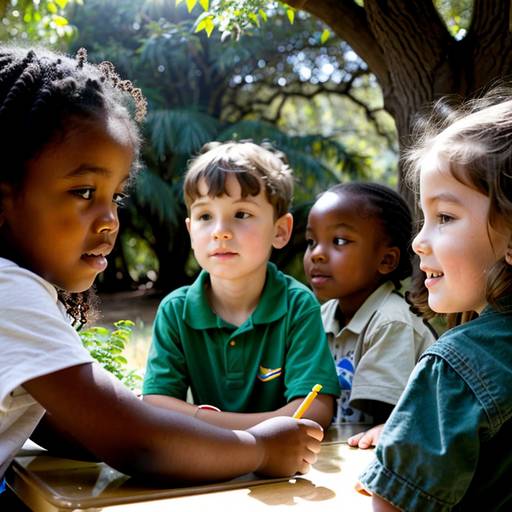
In this preschool language lesson plan, students will enhance their listening and speaking skills through engaging activities centered around the sounds of nature. The lesson begins with a group gathering where children participate in sound identification exercises by listening to various nature sound clips and discussing what they hear. Following this, a story related to animals or nature is read aloud, with opportunities for the children to predict and share their thoughts.
Students then create their own drawings of their favorite animal or a nature scene, providing a chance for each child to present their artwork to the group and articulate their choices. The lesson concludes with a collaborative sound-making activity where children use instruments to mimic nature sounds, encouraging turn-taking and respectful listening. Assessment will focus on the children's participation and ability to express themselves throughout the activities, with additional extension activities suggested for further exploration of nature and sound.
This preschool lesson plan focuses on enhancing listening and speaking skills through engaging activities centered around sound identification and storytelling. The session begins with a warm-up song, encouraging children to express themselves by mimicking animal sounds. Following this, students participate in a sound identification activity where they listen to various sound clips and describe what they hear.
A story is then read, incorporating sound elements that allow children to join in by making sounds and discussing their favorite parts. Next, a playful listening game is introduced, where children express themselves through movement using colorful scarves in time with music or nature sounds.
The lesson concludes with a group discussion about their favorite sounds and characters, followed by a drawing activity where children illustrate their favorite sound or story element and share their creations with the class. The session promotes active participation, creativity, and verbal expression while fostering a deeper understanding of auditory experiences. Assessment is based on children’s engagement and ability to identify and replicate sounds during the activities. Adjustments are made throughout to accommodate varying levels of skill and attention within the group.
This preschool language lesson focuses on enhancing listening and speaking skills through interactive and engaging activities. The session begins with a discussion about sounds in the environment, allowing students to share their favorites. Following this, a warm-up activity prompts them to mimic various environmental sounds while describing them using descriptive language.
The next segment features a reading of a rhythmic story, encouraging participation through repeated phrases and sound effects, followed by open-ended questions to promote discussion. Students then engage in a sound match game where they identify and replicate sounds associated with picture cards, fostering vocabulary development.
The lesson continues with a hands-on instrument exploration, where students create and describe their own sounds, boosting their confidence in expression. A calming cool-down activity allows students to listen to soothing sounds, encouraging reflection on their feelings associated with the sounds.
The lesson concludes with a group reflection, where students share their favorite sounds, reinforcing the importance of effective communication. Assessment is based on participation, the ability to describe sounds and stories, and peer interaction, with adaptations available to meet diverse learning needs. Overall, the lesson provides a dynamic and supportive environment for developing critical language skills.
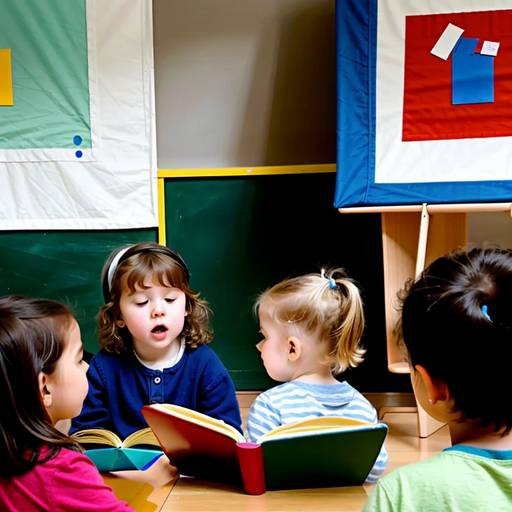
In this preschool language development lesson, children will embark on an interactive storytelling experience designed to enhance their listening and speaking skills. The session begins with a warm-up song to engage students, followed by a vote on which storybook to read. During the storytelling, the teacher will employ expressive narration and encourage student participation through questions and predictions.
Afterward, the children will collaborate to create sound effects for key moments in the story using small instruments, further enhancing their engagement. A vocabulary chart will introduce new words, fostering language comprehension as students contribute examples and meanings. The lesson culminates in a creative activity where children illustrate their favorite parts of the story or create their own characters, providing an opportunity to practice their speaking skills while sharing their artwork. The lesson concludes with a closing circle, where students share their thoughts, reinforcing their communication abilities in a supportive environment. This comprehensive approach emphasizes active participation, creative expression, and vocabulary building in a fun and engaging manner.