
Filters
Level
Grade
Subject
Subject Area
Subject Topic
Standard(s)
Audience
Keyword
DurationMinutes
Kindergarten Telling Time Lesson Plans


This kindergarten math lesson focuses on teaching students about time and how to tell time on an analog clock. The lesson begins with an engaging discussion about the importance of time in daily routines, followed by an introduction to the clock's components, including the hour and minute hands. Through direct instruction, students learn to recognize and identify times by moving the hands on a large paper clock, reinforced by reading a story related to time management.
In guided practice, each student uses their own paper clock to replicate times called out by the teacher. During independent practice, students complete a worksheet where they create their own clocks to depict various whole hour times. The lesson concludes with a review and sharing session to reinforce their understanding. Assessment occurs through observation during practice and collection of completed worksheets. Extensions and adaptations are included to cater to different learning needs and enhance the lesson further. Overall, the lesson provides a fun and interactive way for students to grasp the concept of telling time.

In this Kindergarten math lesson, students will explore the concept of time and learn how to read an analog clock. The lesson begins with an engaging discussion about the importance of time, followed by a storytelling session featuring a book that relates to different times of the day. Afterward, students will participate in a hands-on activity where they create their own paper plate clocks, learning to distinguish between the hour and minute hands. Guided practice will involve identifying specific times on a large clock, with students sharing their creations and demonstrating their understanding. Independent practice will consist of worksheets that reinforce telling time to the hour. The lesson concludes with a class discussion to recap key concepts, and optional extension activities will allow students to connect telling time to their daily routines. Assessment will occur through observation during activities and review of completed worksheets, with differentiated support provided as needed. This lesson aims to build a foundational understanding of time in an engaging and interactive manner.
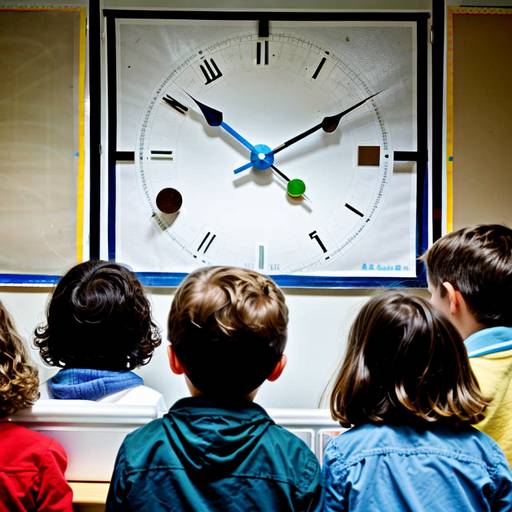
This Kindergarten math lesson focuses on introducing students to the concept of time and teaching them how to tell time using both analog and digital clocks. The lesson begins with a discussion about time, spurred by a story that highlights daily activities occurring at various times. Students learn about the components of a clock—such as the hour and minute hands—through a large cardboard clock demonstration.
In guided practice, each student receives a small paper clock to show different times as the teacher calls them out. Afterward, students work independently on worksheets that involve drawing clock hands and solving simple time-related problems. The lesson concludes with a review and discussion, allowing students to share their clocks and experiences.
Assessment occurs through observation during practice and reviewing worksheets for accuracy. Differentiation strategies are included to cater to varying skill levels, and extensions provide opportunities for further exploration of time concepts. The overall goal is to create an engaging and interactive environment where students can develop a foundational understanding of time.