
Filters
Level
Grade
Subject
Subject Area
Subject Topic
Standard(s)
Audience
Keyword
DurationMinutes
Kindergarten Subtraction Lesson Plans

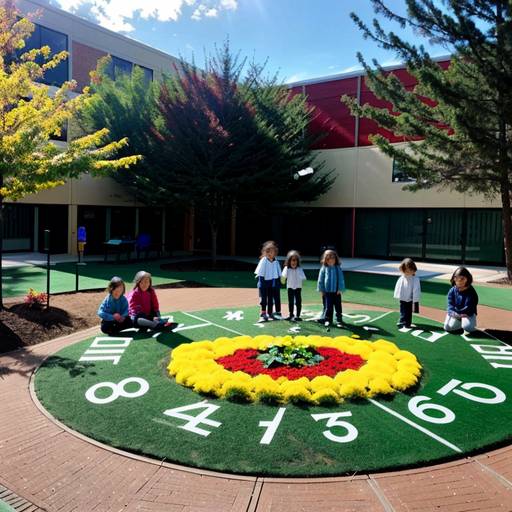
In this Kindergarten math lesson, students will explore the concept of subtraction through a hands-on activity involving garden-themed cut-outs and colorful pom-pom "seeds." The lesson begins with reading a subtraction-themed story to introduce the idea of "taking away." Students will then engage in direct instruction where visual aids help illustrate subtraction as they remove seeds from flowers on the whiteboard.
During guided practice, each child will have cut-out flowers and seeds, allowing them to physically manipulate the objects as they solve simple subtraction problems called out by the teacher. Students will then complete worksheets that feature visual subtraction problems involving the flowers and seeds, reinforcing their understanding through coloring and recording their answers.
The lesson concludes with a class discussion where students share their experiences, emphasizing key subtraction concepts. Assessment will occur through observation and worksheet review, with differentiated support available for varying student needs. Overall, this interactive lesson aims to foster a solid foundation in subtraction while keeping students engaged and enthusiastic about math.
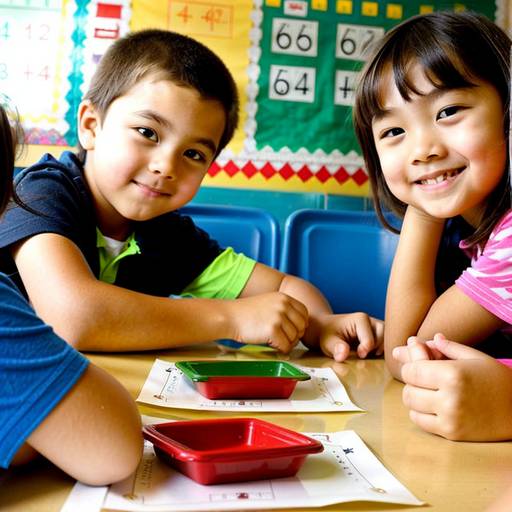
In this Kindergarten math lesson, students will explore the concept of subtraction as "taking away." The lesson begins with a story that illustrates subtraction in a fun and accessible way, engaging students through questions about the narrative. The teacher then explains subtraction using visual aids and manipulatives, demonstrating the concept on the whiteboard.
Students will participate in guided practice by using counting bears to solve simple subtraction problems, promoting hands-on learning. Following this, they will work independently on subtraction worksheets featuring visual problems, allowing them to apply what they have learned.
The lesson concludes with a class discussion where students can share their experiences and understanding, reinforcing their learning. Throughout the lesson, the teacher will assess student participation and understanding, providing support and praise as needed. Extensions are suggested for early finishers and for practicing subtraction at home, ensuring that the lesson is engaging and supportive of different learning needs. Reflection opportunities will help the teacher evaluate the effectiveness of the lesson and make adjustments for future classes.

The lesson plan focuses on teaching Kindergarten students the concept of subtraction through interactive and engaging activities centered around a fun theme involving plush animals. The lesson begins with an interactive discussion where students count and take away animals, helping them grasp the idea of subtraction as "taking away." Visual aids, such as a number line and chart paper, are used to reinforce this concept.
Students then participate in a collaborative animal rescue activity, working in pairs or small groups to solve subtraction problems using the plush animals provided. Following this, each student practices independently by solving subtraction problems on their whiteboards.
To conclude, the class reviews the concepts learned and each student reflects on their understanding by drawing a subtraction problem and writing the corresponding equation. Assessment is based on observation during group activities, correctness of whiteboard solutions, and the completeness of exit tickets. Differentiation strategies support students at various learning levels, while extensions encourage real-life applications of subtraction, making the lesson comprehensive and engaging.
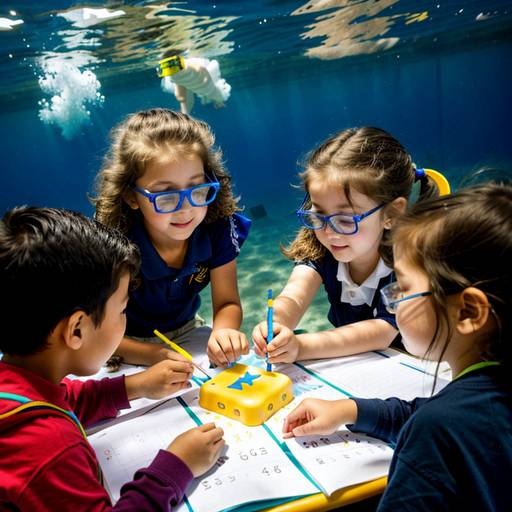
In this Kindergarten math lesson focused on subtraction, students will explore the concept of taking away using visual aids and hands-on activities. The lesson begins with a discussion about ocean life, introducing plastic sea creatures as a tangible resource for understanding subtraction. Through direct instruction, students learn to model subtraction problems on the whiteboard, observing how quantities decrease when items are removed.
During guided practice, students work in small groups with their own sets of sea creatures, engaging in exploration and counting while collaborating with peers. They then complete subtraction worksheets featuring images of sea creatures, allowing for independent assessment of their understanding.
To conclude, students participate in a treasure hunt activity, applying their subtraction skills in a playful context. Throughout the lesson, educators assess student comprehension through observation and worksheet completion, with opportunities for extension activities and adaptations based on varying student needs. This interactive approach aims to make subtraction both enjoyable and understandable for young learners.