
Filters
Level
Grade
Subject
Subject Area
Subject Topic
Standard(s)
Audience
Keyword
DurationMinutes
Kindergarten Weight Lesson Plans

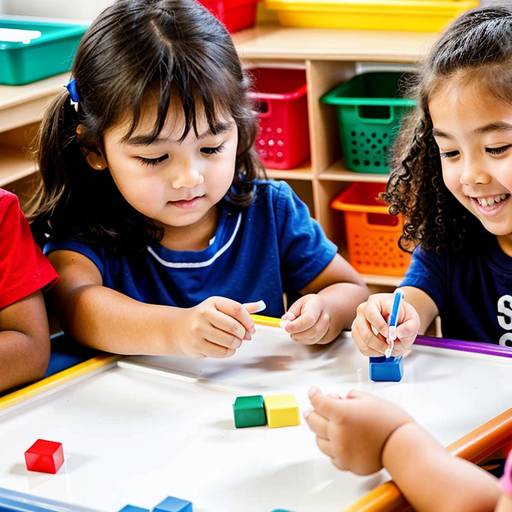
This Kindergarten math lesson focuses on measurement and weight, allowing students to explore and compare the weights of various objects through a hands-on approach. The lesson begins with an interactive discussion about weight, introducing key vocabulary such as heavy, light, balance, and scale. Students are then divided into small groups, each provided with balance scales and an assortment of classroom objects to weigh. As they experiment, they predict and observe which items are lighter or heavier, using the vocabulary to describe their findings.
Following the group activity, the class engages in a sharing session where each group presents their observations, reinforcing the concept of balance and providing a platform for discussion about their discoveries. The lesson wraps up with a reflective conversation and a fun chant to reinforce the vocabulary learned. Assessment is based on student participation, engagement, and the accuracy of their recorded observations. An optional extension activity encourages further exploration with a "Weight Hunt," where students classify additional items as heavy or light. Overall, the lesson aims to build foundational skills in measurement and weight through active participation and collaborative learning.
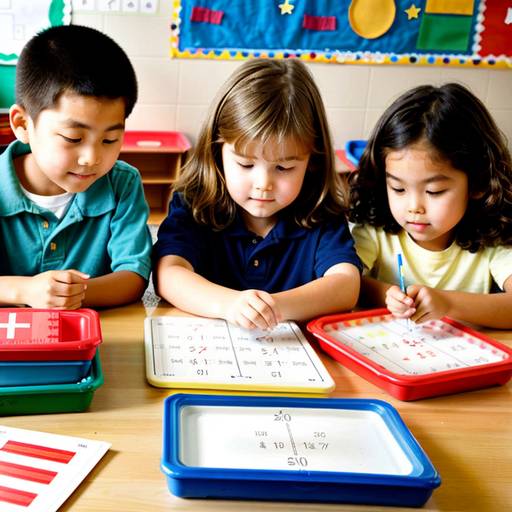
In this kindergarten math lesson, students will explore the concepts of measurement and weight through engaging hands-on activities. The lesson begins with an introduction to the vocabulary terms "light," "heavy," and "balance," accompanied by a demonstration using a balance scale. Students will then work in small groups to weigh various objects, discussing their findings and identifying which items are light or heavy. A class comparison chart will be created to visualize their observations, fostering collaboration and discussion. Following this, students will complete a worksheet where they draw and label one light and one heavy object they explored during the activity. The lesson concludes with a wrap-up discussion to reinforce concepts and vocabulary, providing a comprehensive and interactive learning experience that encourages observation and critical thinking.
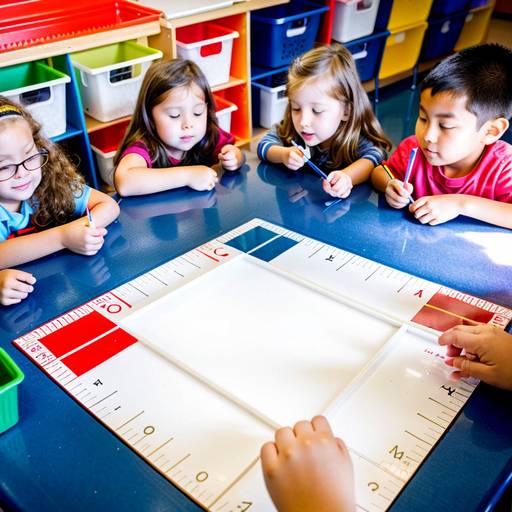
This Kindergarten math lesson focuses on introducing students to the concepts of measurement and weight. The objectives include helping students understand how to measure length using non-standard units, such as unifix cubes and paperclips, and to compare the weight of various objects using balance scales.
The lesson begins with a discussion about the importance of measurement in everyday life, followed by a warm-up activity where students measure classroom items using non-standard units. In small groups, students then explore the weights of different objects using balance scales, making predictions about which items are heavier or lighter before weighing them. They document their findings on a worksheet, which encourages collaboration and discussion.
At the end of the lesson, the class comes together to share their observations and findings, reinforcing the vocabulary related to measurement and weight. Assessment is based on student engagement, group collaboration, and the accuracy of their recorded findings. Opportunities for extensions and differentiation are provided to accommodate varying skill levels among students. Overall, the lesson emphasizes hands-on learning, critical thinking, and effective communication in understanding measurement.
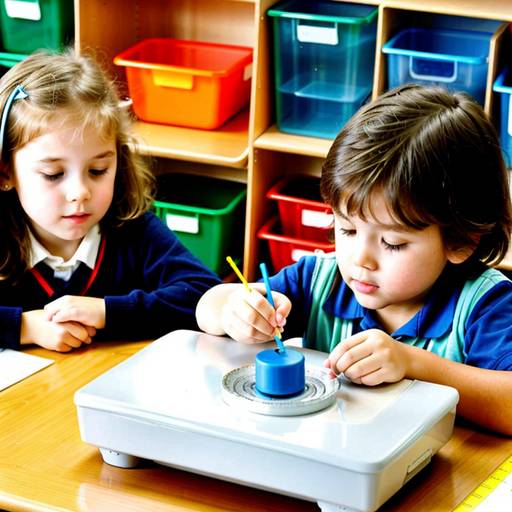
This Kindergarten math lesson focuses on introducing students to the concepts of measurement and weight through engaging, hands-on activities. The lesson begins with a discussion about measurement and weight, encouraging students to express their understanding and observations. In the instructional phase, the teacher demonstrates how to use a balance scale and non-standard units, such as blocks or cups, to measure the weight of various objects.
Students then participate in a guided practice where they work in pairs to weigh their chosen objects using the balance scale and measure them with blocks or cups. They record their findings on worksheets and share their results with the class, allowing for collaborative learning and discussion.
Following this, students complete an independent worksheet where they illustrate and categorize objects based on their weight (light, medium, or heavy). The lesson concludes with a recap of the key concepts learned, reinforcing the understanding of weight and measurement through class participation and rewards. The lesson also includes adaptations to support diverse learning needs and offers extensions to connect measurement to real-life contexts. Overall, the lesson promotes active engagement and critical thinking skills while fostering a foundational understanding of measurement and weight.