
Filters
Level
Grade
Subject
Subject Area
Subject Topic
Standard(s)
Audience
Keyword
DurationMinutes
Infant Object Permanence Lesson Plans

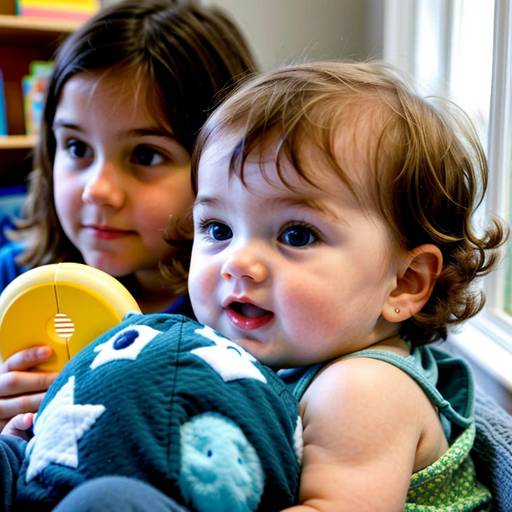
This lesson plan focuses on introducing infants aged 6 to 12 months to the concept of object permanence through engaging activities. The aim is to help infants recognize that objects continue to exist even when they are out of sight. The session begins with a warm-up activity where infants explore a soft toy.
Next, a "hide and seek" game is played, where the toy is concealed under a blanket and then revealed, encouraging the infants to search for it. This is followed by an exploration using a small box containing various toys, allowing infants to discover them while reinforcing the idea that they are still there even when not visible.
To engage the infants further, a sound game is introduced with rattles or crinkly paper, linking sounds to hidden objects. The lesson wraps up with a reflection circle where infants can interact with the soft toy again, and a simple rhyme or song is incorporated for additional engagement.
Throughout the lesson, caregivers are encouraged to observe and interact, helping to support the infants’ developing understanding of object permanence. In addition, optional extensions are suggested to further reinforce the concept at home through books and everyday interactions.
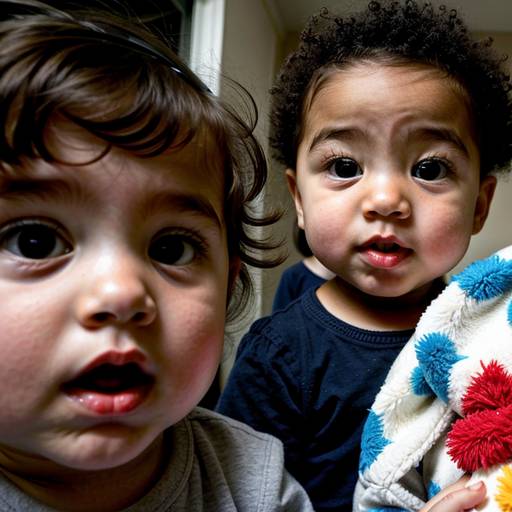
This lesson plan is designed for infants aged 6-12 months to introduce them to the concept of object permanence through interactive play and sensory exploration. The session begins with a warm welcome and a brief explanation for caregivers about object permanence. It features engaging activities such as a game of peek-a-boo, where caregivers cover their faces and then reveal themselves, helping infants understand that people still exist even when out of view.
Next, infants participate in a "hide and seek" game with toys hidden under blankets or inside boxes, encouraging them to uncover the toys and reinforcing the idea that objects remain, even when not visible. Mirror play allows infants to explore their reflections, further aiding their understanding of presence and identity. The lesson concludes with music and movement, where caregivers encourage interaction with simple instruments, emphasizing that sounds continue even when they can't be immediately seen.
Throughout the activities, caregivers are encouraged to observe and engage with their infants, enhancing learning experiences. The lesson wraps up with a reflection period where caregivers can share their observations and experiences, along with suggestions for continuing these activities at home to further support cognitive development. Overall, the plan emphasizes sensory exploration, active engagement, and playful interaction to foster infants' understanding of their environment.

This lesson plan focuses on introducing infants to the concept of object permanence, helping them understand that objects continue to exist even when they are not visible. The session, designed for infants between 6 to 12 months, lasts for 30 minutes and includes engaging activities that stimulate cognitive development.
The lesson begins with an introduction to the concept in simple terms, followed by a warm-up rhyming song that incorporates hiding and finding objects to engage both infants and caregivers. The main activity involves a hidden object game, where caregivers facilitate the exploration of hidden toys under a blanket and within a container, encouraging infants to actively search for the items.
At the end of the session, caregivers and infants gather to reflect on the experience, reinforcing the understanding of object permanence through discussion and visual cues. Observations of infants' reactions during the activities are used to assess their engagement and understanding. The lesson also includes suggestions for similar extension activities that caregivers can replicate at home, further promoting the development of cognitive skills through play and interaction.

This lesson plan is designed for infants aged 6-12 months to foster their understanding of object permanence, the awareness that objects continue to exist even when out of sight. The session lasts 30-40 minutes and involves interactive activities that engage both the infants and their caregivers.
The lesson begins with a brief introduction to the concept of object permanence, accompanied by demonstrations using toys. The first activity involves hiding toys under a colorful scarf or box while encouraging the infants to search for them, promoting curiosity and engagement. In the second activity, caregivers utilize a large cloth to hide toys, allowing infants to experience the thrill of discovery when the objects are revealed.
To conclude, a musical hide-and-seek game with small instruments reinforces the idea that objects can be temporarily hidden but still exist. Throughout the activities, caregivers are encouraged to observe their infants’ responses and engage with them to deepen the learning experience.
The plan also includes suggestions for follow-up activities that caregivers can continue at home, reinforcing the developmental milestone of object permanence through playful interactions and reading. Overall, this session aims to create a playful, stimulating environment that supports cognitive development in infants.