
Filters
Level
Grade
Subject
Subject Area
Subject Topic
Standard(s)
Audience
Keyword
DurationMinutes
5th Grade Programming Robots Lesson Plans
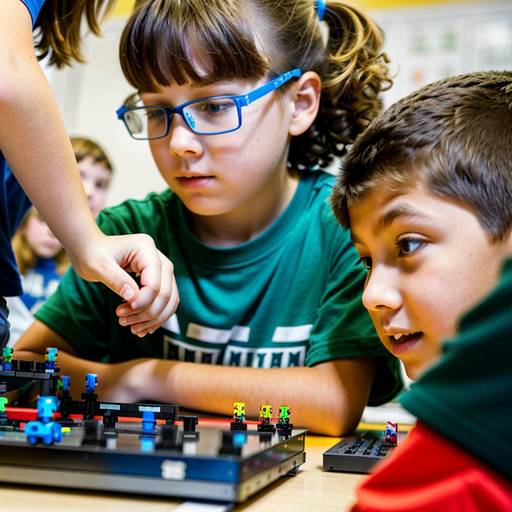
In this 90-minute lesson for 5th-grade students, learners will explore robotics and programming through a hands-on, collaborative experience. The lesson starts with a discussion about robotics and its applications, introducing students to the basic components of a robot. Students will then be divided into small groups, each receiving a robotics kit to construct their own robot.
After completing their builds, groups will learn to use programming software to code their robots for specific tasks, such as navigating a maze or following a pattern. The lesson culminates in testing and demonstrating their robots’ abilities in a friendly challenge, encouraging teamwork and problem-solving throughout the process.
Finally, the class will come together for a reflection on their experiences, discussing challenges faced and lessons learned in both building and programming their creations. This interactive lesson not only fosters technical skills but also emphasizes collaboration and critical thinking.
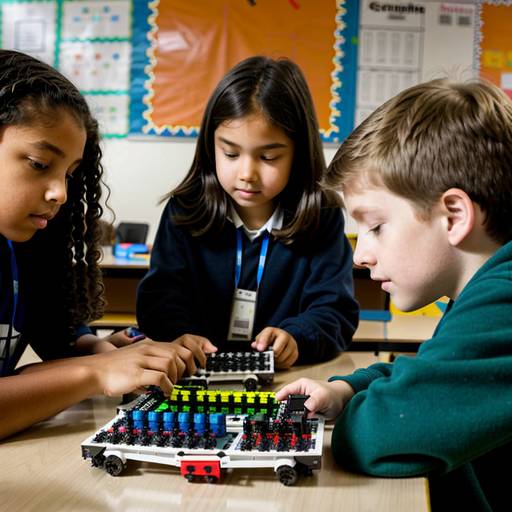
This lesson plan is designed for 5th-grade students to explore the fundamentals of robotics and programming through hands-on activities. Over two sessions, students will learn about the basic components of robotic systems and collaborate in small groups to design, build, and program a robot capable of completing a specific task.
The first session focuses on introducing the concept of robotics, discussing real-world applications, and encouraging students to brainstorm and sketch their robot designs. In the second session, students will construct their robots using LEGO kits and utilize block-based programming software to code their robots to perform designated functions.
Throughout the process, students will gain practical experience in teamwork, critical thinking, and problem-solving. The lesson concludes with opportunities for testing, reflection, and potentially a friendly competition, fostering an engaging and collaborative learning environment while developing essential skills in technology and engineering.
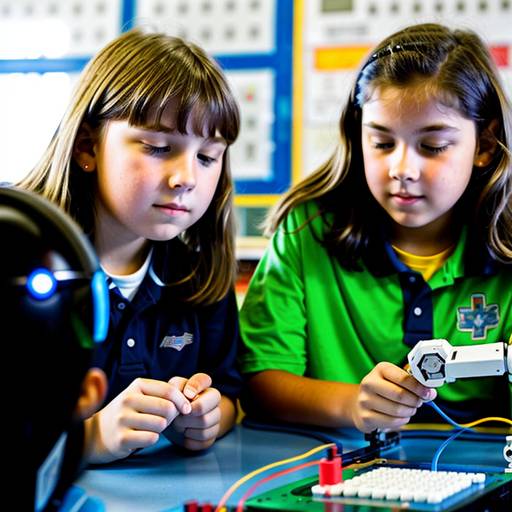
In this 5th-grade technology lesson, students will explore the fundamentals of robotics and programming. The lesson begins with an introduction to what robots are, their applications in various fields, and a discussion of basic programming concepts such as commands, loops, and sequences. Students will work in small groups to brainstorm and plan a simple task for a programmable robot, designing flowcharts to outline their programming logic.
During the second part of the lesson, students will learn to use specific programming software or apps to implement their flowcharts and control the robots. They will test their robots, make necessary adjustments, and each group will showcase their robot's performance by completing the assigned task. Throughout the lesson, students will enhance their collaboration and problem-solving skills while engaging in hands-on programming experiences. Assessment will focus on participation, the clarity of flowcharts, and the effectiveness of the programmed tasks. Extension opportunities will encourage students to delve deeper into programming and robotics applications in real-life scenarios.
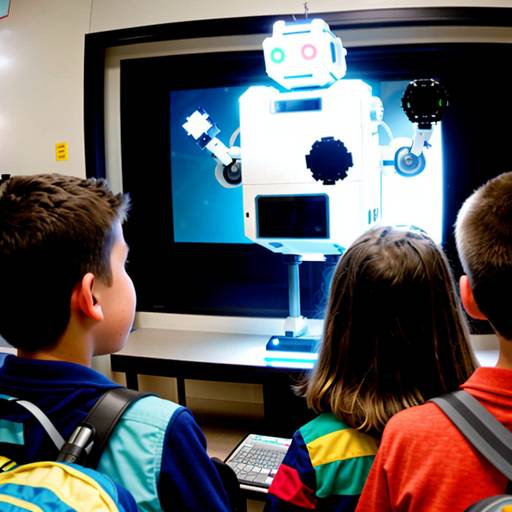
In this 5th-grade technology lesson plan, students will explore the world of robotics and programming through hands-on activities. The lesson is divided into two class periods. In the first period, students will learn about the basic components of robots and engage with building simple robot models using LEGO Mindstorms or EV3 kits. They will also be introduced to fundamental programming concepts such as sequencing and loops, using related coding software.
During the second period, students will apply their learned skills to design and program their robots to navigate a custom obstacle course they created in pairs. They will iteratively test and optimize their code while collaborating and troubleshooting any issues. As a class, students will evaluate each other's robots through demonstrations and peer feedback, promoting critical thinking and teamwork. Assessments will focus on participation, the robot's performance, and a reflective assignment where students will articulate their learning experiences and challenges encountered. Optional extensions will encourage further exploration and creativity in robot capabilities. Overall, the lesson aims to foster an understanding of robotics, coding, and essential collaborative skills.