
Filters
Level
Grade
Subject
Subject Area
Subject Topic
Standard(s)
Audience
Keyword
DurationMinutes
5th Grade Rocks Lesson Plans

In this 5th-grade Earth science lesson, students will explore the rock cycle and the three main types of rocks: igneous, sedimentary, and metamorphic. The lesson begins with an engaging video introduction, followed by a discussion about different rock types and their characteristics. Students will then participate in a hands-on activity where they investigate rock samples, using magnifying glasses to observe their features and classify them. A creative project follows, in which students work in groups to create a mobile depicting the rock cycle, illustrating the processes that transform rocks. The lesson concludes with group presentations and reflections, along with an exit ticket to assess individual learning. Throughout the lesson, students are encouraged to collaborate and engage with the material, fostering a deeper understanding of geological processes. Extension opportunities include bringing in personal rock samples, planning field trips, and conducting research projects on geology.
This lesson plan focuses on teaching 5th-grade students about different types of rocks and the rock cycle. The objectives include helping students identify and classify igneous, sedimentary, and metamorphic rocks, as well as understanding the processes involved in the rock cycle.
The lesson begins with an engaging discussion to activate prior knowledge about rocks, followed by a brief video introduction (if time permits). Students then work in small groups to observe and classify rock samples using magnifying glasses and worksheets. Afterward, they create posters illustrating the rock cycle, incorporating their categorized rocks and explaining the formation processes for each type.
Each group presents their poster to the class, fostering collaborative learning and discussion. The lesson concludes with a class summary, where students reflect on what they learned through an exit ticket. The assessment includes observing group participation, evaluating worksheets, and reviewing exit tickets for comprehension.
Extensions may involve field trips to geological sites or creating a classroom rock collection. Differentiation strategies are included to support diverse learners and encourage advanced students to explore local geology further. Overall, the lesson aims to engage students and foster a deeper understanding of Earth Science and the nature of rocks.
In this 60-minute Earth Science lesson for 5th graders, students will explore the fascinating world of rocks by learning about the three main types: igneous, sedimentary, and metamorphic. The lesson begins with a class discussion to gauge prior knowledge and spark interest. Students will be introduced to the rock cycle through a visual diagram, which illustrates how rocks transform from one type to another.
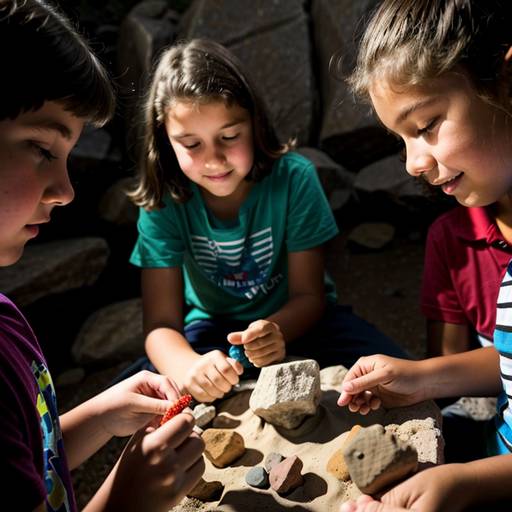
Following the instruction, students will engage in a hands-on activity where they will work in small groups to observe and classify a variety of rock samples using magnifying glasses and worksheets. They will analyze the characteristics of each rock, identify its type, and present their findings to the class.
The session will conclude with a discussion about the significance of rocks in everyday life and the natural environment. Students will then complete a short quiz to assess their understanding of the material. To reinforce learning, they will have a homework assignment to find and bring in a rock from their surroundings for further exploration in the next class. Differentiation strategies are included to support all learners.
This lesson plan for 5th-grade students focuses on Earth Science with an emphasis on rocks and the rock cycle. Over two class periods, students will learn to identify and classify three main types of rocks: igneous, sedimentary, and metamorphic. The lesson begins with an engaging discussion and a video introduction about rocks and their formation processes. Students will participate in hands-on activities where they examine rock samples using magnifying glasses, record observations, and classify the rocks based on their characteristics.
On the second day, students will review their previous learning and create their own illustrations of the rock cycle, demonstrating their understanding of the processes that transform one rock type into another. Additionally, they will explore soil and sediment samples, gaining insight into their role in the environment and the rock cycle. Throughout the lessons, students will engage in group discussions, reflecting on their findings and the impact of rocks on their daily lives. Assessment will include observation during activities and review of rock classification worksheets and rock cycle diagrams. Extensions, such as research projects and potential field trips, will further enhance students' connection to the geological aspects of their surroundings.