
Filters
Level
Grade
Subject
Subject Area
Subject Topic
Standard(s)
Audience
Keyword
DurationMinutes
5th Grade Rhythm Lesson Plans

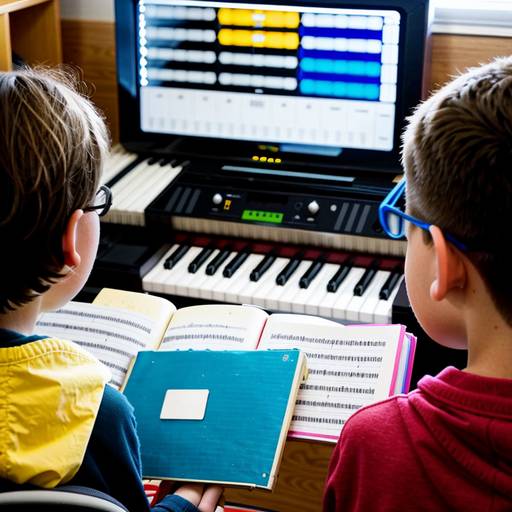
In this 5th-grade music lesson, students will delve into fundamental concepts of rhythm and music theory, focusing on rhythmic notation and time signatures. The session begins with a warm-up clapping exercise to establish a steady beat and to introduce various note values such as quarter notes, half notes, whole notes, and rests. Students will then work in small groups to practice and perform rhythmic patterns, which they will translate into playing on percussion instruments, fostering creativity and collaboration.
As a group, the class will combine their rhythms into a layered performance, using a metronome for synchronization. Following the rhythmic activities, students will listen to selected songs, identifying their rhythmic elements and time signatures, reinforcing their learning through real-world examples. The lesson concludes with a reflection and writing exercise where students summarize what they learned and pose any remaining questions. Assessment will be based on participation, group performances, and individual reflections. Extensions for the lesson include homework on identifying rhythmic elements in favorite songs, encouraging further exploration of rhythm in music.
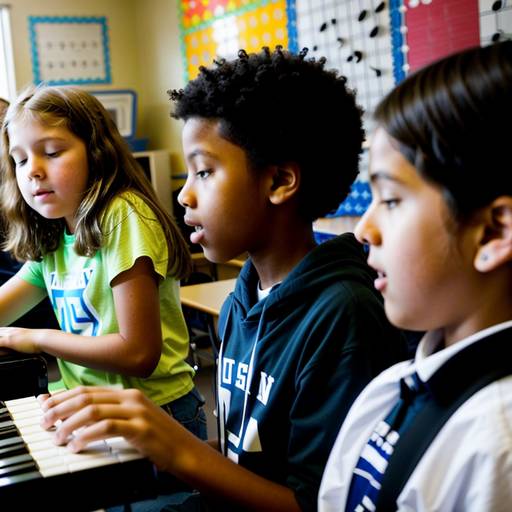
This 5th-grade music lesson focuses on music theory and rhythm, engaging students through various activities designed to enhance their understanding of rhythmic patterns. The lesson begins with a clapping warm-up to introduce basic rhythmic concepts, followed by a discussion that involves students sharing their prior knowledge.
Students will learn about different rhythmic elements, including quarter notes and eighth notes, and practice clapping specific patterns. An interactive listening activity allows them to identify rhythms in music, while a rhythm echo game reinforces their skills in a fun and engaging manner.
In small groups, students will create their own rhythmic patterns using percussion instruments, fostering their collaborative skills and creativity. The lesson culminates in a performance where groups showcase their rhythmic creations, followed by a reflective discussion on the importance of rhythm in music. Assessment will be based on participation and student-generated rhythms, with adaptations available for diverse learning needs. Extensions for future lessons may explore rhythms from different cultures, broadening students' musical horizons.