
Filters
Level
Grade
Subject
Subject Area
Subject Topic
Standard(s)
Audience
Keyword
DurationMinutes
5th Grade Note Names Lesson Plans


In this 5th-grade music lesson, students will explore the fundamentals of music theory by focusing on note names and their corresponding positions on the musical staff. The lesson begins with a discussion about the role of notes in music, followed by engaging activities that involve recognizing and identifying notes (A through G) on the staff. Students will learn about whole notes, half notes, and quarter notes through clapping exercises that highlight rhythmic concepts.
The hands-on portion of the lesson allows students to work in small groups, using keyboards or xylophones to practice playing or singing assigned notes. They will create short melodies while incorporating diverse rhythms. A fun assessment activity, “Note Name Challenge,” encourages students to demonstrate their knowledge by identifying notes and showcasing their sounds.
The lesson concludes with a reflection on what they learned about note names and their significance in music. Extensions and adaptations are included to enhance learning outcomes for all students, ensuring a comprehensive understanding of music theory fundamentals.
This lesson aims to foster an engaging and interactive learning environment that empowers students to develop a solid foundation in music theory.
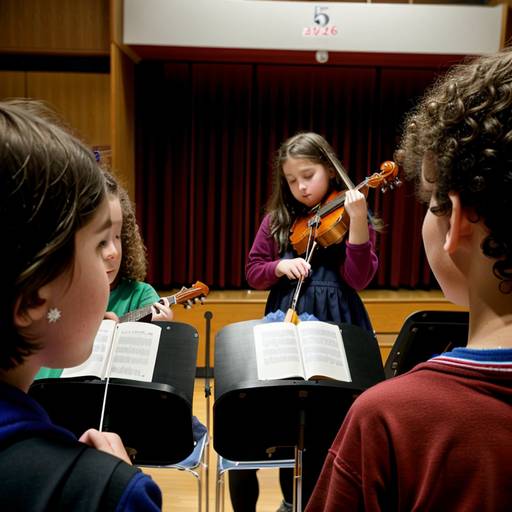
In this 5th-grade music theory lesson, students will explore the fundamental concepts of musical notes and their placements on the staff. The lesson begins with an engaging discussion about music and its relationship to everyday sounds, followed by introducing the musical staff, including the notes found on the lines and in the spaces, through acronyms to aid memorization. Students will also learn about different note values, including whole, half, quarter, and eighth notes.
During guided practice, students will work in small groups with flashcards to name notes and place them onto an illustrated staff on the board. They will also have a hands-on opportunity to play these notes on a keyboard or xylophone. For independent practice, students will create their own melodies on a blank staff worksheet, applying what they’ve learned.
The lesson concludes with a recap and a discussion about how notes create melodies, with opportunities for students to share their work. Assessment will include observation of participation and review of worksheet completion. Additional extensions are available for advanced learners, while support is offered to those who need it, ensuring an inclusive learning environment that fosters collaboration and creativity.