
Filters
Level
Grade
Subject
Subject Area
Subject Topic
Standard(s)
Audience
Keyword
DurationMinutes
5th Grade Volume Lesson Plans

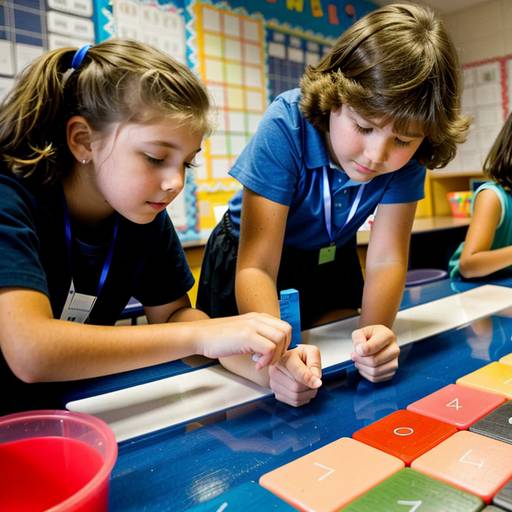
In this 5th-grade math lesson, students will explore the concept of volume through engaging discussions, direct instruction, and hands-on activities. The lesson begins with an introduction to volume and the formula for calculating it for rectangular prisms. Students will learn to measure dimensions using rulers and apply the formula to solve problems individually or in pairs.
Following guided practice, students will participate in a hands-on exploration where they work in small groups to measure and fill containers with rice or beans, as well as water, calculating and recording their findings. The groups will discuss their observations and any challenges they encountered during the activity. The lesson concludes with a review of key concepts and applications of volume in real life, while also incorporating a homework assignment for further practice. Differentiation strategies are included to support diverse learning needs, ensuring all students have the opportunity to understand and apply the concept of volume effectively.
This 5th-grade math lesson focuses on measurement and volume, guiding students to understand how to calculate the volume of geometric solids such as cubes and rectangular prisms. The session begins with an engaging discussion about the importance of measuring volume in real-world contexts. Students learn the volume formula (Length × Width × Height) through direct instruction and hands-on demonstrations involving measuring dimensions and using water for practical volume measurement.
During guided practice, students work in small groups to measure geometric shapes, calculate their volumes, and document their findings in Volume Adventure Journals. Independent practice involves solving related problems on a worksheet. The lesson concludes with a class discussion where groups share their observations and reflections on the utility of knowing an object's volume. An exit ticket prompts students to express their thoughts on the importance of volume measurement. Assessment includes reviewing journals and worksheets for calculation accuracy, participation in discussions, and group activities, with opportunities for extension and accommodations to meet diverse learning needs.