
Filters
Level
Grade
Subject
Subject Area
Subject Topic
Standard(s)
Audience
Keyword
DurationMinutes
5th Grade Area Lesson Plans

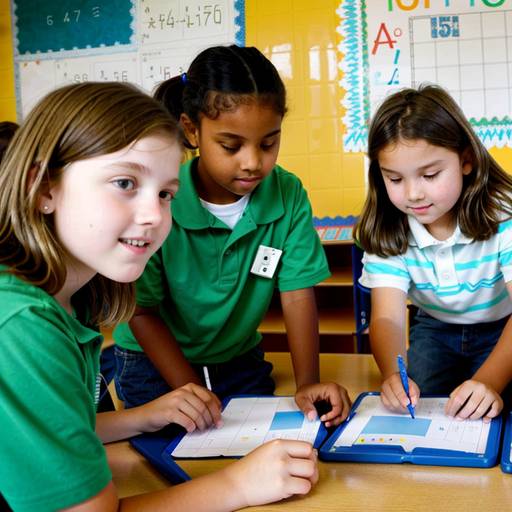
In this 5th-grade math lesson, students will explore the concepts of measurement and area through engaging activities. The lesson begins with a discussion on the importance of measurement in everyday life and introduces the concept of area as the space within various shapes. Students will learn how to calculate the area of rectangles and squares, using hands-on activities with rulers and graph paper to create their own shapes. They will practice measuring and calculating areas both individually and in pairs, ultimately designing a “city block” that incorporates different geometric shapes. Throughout the lesson, students will present their work, enhancing their understanding through collaboration and peer feedback. The lesson concludes with a reflection on their learning and real-world applications of measurement. Assessment will be based on student participation, the accuracy of their area calculations, and their reflective exit tickets. Extensions for advanced students will include exploring area calculations for triangles and circles, encouraging further engagement with geometric concepts.

This 5th Grade math lesson focuses on measurement and area, aiming to help students understand the importance of these concepts in real life. Students will learn how to calculate the area and perimeter of shapes, especially rectangles, through guided practice and hands-on activities. They'll engage in measuring objects in the classroom and create unique polygons using graph paper, allowing them to apply their measurement skills in a creative way. The lesson encourages collaboration and discussion as students share their creations and calculations with classmates. Assessment will include worksheets and observation of student participation, with extensions offered for advanced learners. Differentiation strategies are provided to support all students in grasping the concepts effectively.
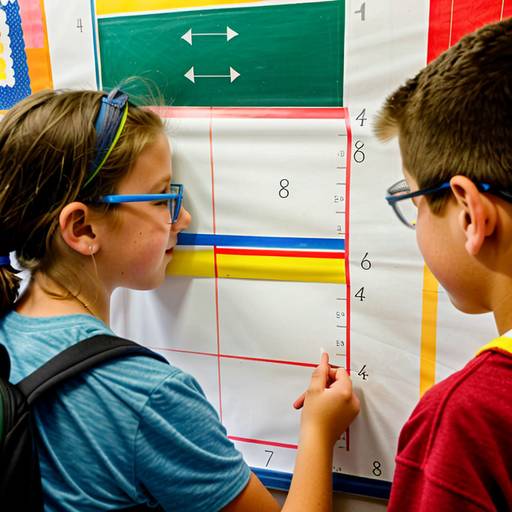
In this 5th-grade math lesson, students will explore the concept of area and measurement through a series of engaging activities. The lesson begins with a discussion to elicit students' prior knowledge about area, followed by an introduction to the formula for calculating the area of rectangles. During direct instruction, students will learn to measure lengths and widths using rulers.
Following this, students will be given graph paper to practice drawing rectangles and calculating their areas, guided by the teacher. In a hands-on group activity, students will measure the area of pre-cut cardboard rectangles using tape measures, allowing for practical application of the concepts learned.
The lesson concludes with a class discussion to reflect on findings and challenges faced during the activities. Students will be assessed through observation during group work and the collection of individual area worksheets. To differentiate instruction, support will be provided for students who need it, while advanced students will be encouraged to explore irregular shapes. Extension activities include measuring areas in their own homes and using technology for further exploration of the topic. Overall, the lesson aims to make the concept of area relatable and engaging for students through interactive learning and real-world applications.
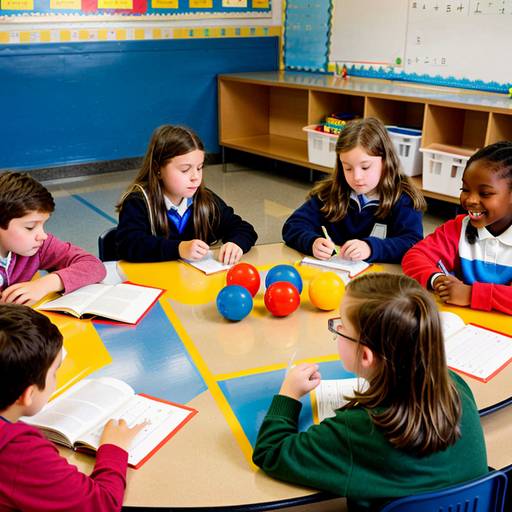
This lesson plan for 5th-grade mathematics focuses on the concepts of measurement and area through engaging, hands-on activities. Students begin with a discussion on the significance of measurement in everyday life, followed by an introduction to calculating the area of rectangles using the formula Area = Length × Width. They practice measuring and calculating areas with graph paper, visualizing their results with small squares.
In groups, students are tasked with redesigning a garden within a specified area, allowing them to apply their understanding of area in a practical context. The activity encourages collaboration, creativity, and real-world application of mathematical concepts. The lesson concludes with a class discussion about their designs and a reflective exit ticket to reinforce what they learned. Assessments are based on worksheet responses and observations during group work, with extensions provided for students who advance quickly through the material. Overall, the lesson aims to deepen students' comprehension of measurement and area while showing their relevance in real-life scenarios.