
Filters
Level
Grade
Subject
Subject Area
Subject Topic
Standard(s)
Audience
Keyword
DurationMinutes
5th Grade Area Lesson Plans

This lesson focuses on teaching 5th-grade students about geometry and area by exploring various 2D shapes such as squares, rectangles, triangles, and parallelograms. Students will learn to identify these shapes and use appropriate formulas to calculate their areas, with applications to real-life scenarios. The lesson includes direct instruction on area formulas, guided group practice with shape calculations, and independent practice through a worksheet.
To reinforce understanding, students will creatively design their own parks using different geometric shapes while calculating their respective areas. The lesson concludes with a group reflection on the importance of area in everyday contexts. Assessment will include observations during collaborative activities, completed worksheets, and evaluations of park designs. Extensions and modifications are provided to accommodate varying skill levels. Finally, students will be assigned homework to apply their knowledge at home by calculating the area of an object or space in their environment.
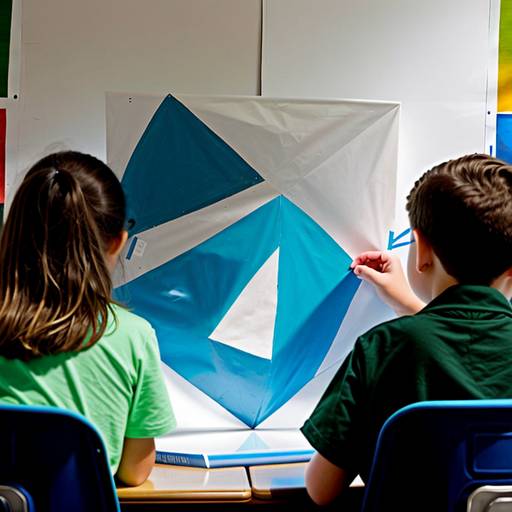
In this lesson, 5th-grade students will explore the concept of area in various geometric shapes, including rectangles, triangles, and parallelograms. The class begins with a review of geometric shapes and an introduction to the definition and significance of area. Students will learn the specific area formulas for different shapes, followed by a hands-on activity where they measure dimensions on provided cutouts and calculate the area using the appropriate formulas. After guided practice, students will complete a worksheet independently, which will assess their understanding of the topic. The lesson concludes with a review and discussion of the answers, reinforcing the importance of measurement and calculation methods. Extension activities for advanced learners and accommodations for those needing additional support will ensure that all students can engage with the material effectively. The lesson will culminate in a reflection to evaluate student understanding and strategies for improvement in future lessons.

This lesson plan is designed for 5th-grade students to explore the concepts of geometry and area. The objectives are to help students define geometric shapes such as squares, rectangles, and triangles, and to teach them how to calculate the area of these shapes using specific formulas. The lesson begins with an engaging discussion about familiar shapes in their surroundings, followed by direct instruction that introduces the area formulas and demonstrates their application.
Students will participate in hands-on activities where they create their own geometric shapes on graph paper, using rulers and cutouts, enabling them to apply their understanding of area in a practical way. Peer review and collaboration are encouraged as students verify each other's calculations.
After guided practice, students will complete an independent worksheet that challenges them to calculate the area of various shapes. The lesson concludes with a class review of the worksheet answers and a discussion on the real-world applications of calculating area. As an assessment, students will submit an exit ticket that reflects their understanding of area in their own words, providing insight into their grasp of the concept. Accommodations are made for diverse learners, ensuring all students can engage with the material effectively.
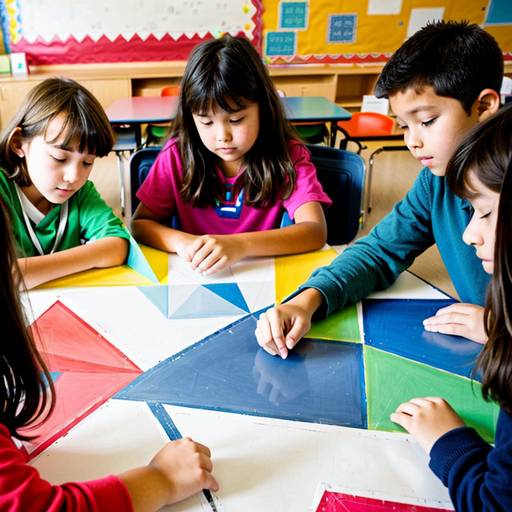
In this 5th-grade math lesson, students explore the concepts of geometry and area through the study of various polygons, including triangles, rectangles, parallelograms, and trapezoids. The lesson begins with a review of polygon types and the significance of area in real-life applications. Students learn and practice calculating the area of each polygon using the appropriate formulas, moving from direct instruction to guided and independent practice. Throughout the activities, they engage in drawing shapes on grid paper to reinforce their understanding and apply their knowledge to solve related word problems. The lesson concludes with a review and discussion of how area calculations are used in various fields, allowing students to connect mathematical concepts to everyday situations. Assessment is conducted through observation during paired activities and graded worksheets. Extension activities offer challenges for faster learners, while differentiation strategies support those needing additional help. Overall, the lesson encourages collaboration and hands-on engagement with geometry.