
Filters
Level
Grade
Subject
Subject Area
Subject Topic
Standard(s)
Audience
Keyword
DurationMinutes
5th Grade Reading Fluency Lesson Plans


This 5th-grade Language Arts lesson focuses on improving reading fluency through interactive and engaging activities. Students will learn about the components of fluency, including speed, accuracy, and expression. The lesson begins with an introduction to reading fluency, followed by a guided practice session where students read short texts in pairs, emphasizing the role of punctuation. For independent practice, students work on fluency worksheets, reading selected passages multiple times to enhance their skills. Following this, they perform chosen passages for their classmates, using a rubric to provide and receive constructive feedback. The lesson concludes with a reflection on their learning experiences and strategies for continuing to improve fluency at home. Assessment includes evaluating worksheets, peer performances, and reflections, while accommodations are provided for diverse learners to ensure an inclusive environment. Overall, the activities are designed to foster both reading skills and a love for literature.
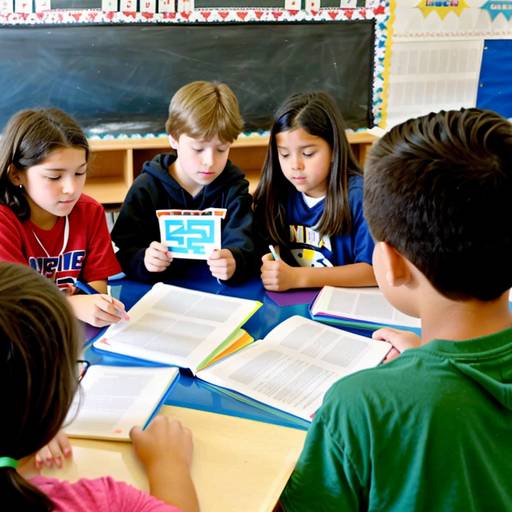
This 5th-grade Language Arts lesson focuses on enhancing reading comprehension and fluency through an interactive group activity. Students are divided into teams and provided with short reading passages to practice. They work together to improve their reading skills, concentrating on speed, accuracy, and expression during their practice time. The central activity is a relay-style reading challenge, where team members take turns reading aloud for timed intervals. Their progress is monitored using fluency tracking sheets to record times and improvements. The lesson concludes with a reflection session, where students share their insights and summarize their readings to demonstrate comprehension. Assessment is based on fluency performance, comprehension, and teamwork. Extensions include regular reading relays with new materials and opportunities for students to showcase their reading efforts.

This 5th-grade language arts lesson focuses on enhancing reading fluency through engaging activities and group discussions. Students begin by discussing their experiences with enjoyable reading and what fluency entails. They listen to a fluent reading sample and participate in a choral reading of a selected passage to understand rhythm and expression.
During guided practice, the teacher models fluent reading, followed by a group discussion to assess comprehension of the text. In independent practice, students pair up to read the text aloud to one another, tracking their words per minute and focusing on accuracy and expression during multiple readings.
The lesson concludes with a group reflection where students discuss their reading experiences and strategies for tackling difficult words. An exit ticket activity reinforces learning, as each student notes one new insight about reading fluency. Assessment includes observing student interactions during reading, reviewing progress charts, and evaluating exit ticket responses. Differentiation strategies ensure that all students, regardless of their reading levels, receive appropriate support and challenge.
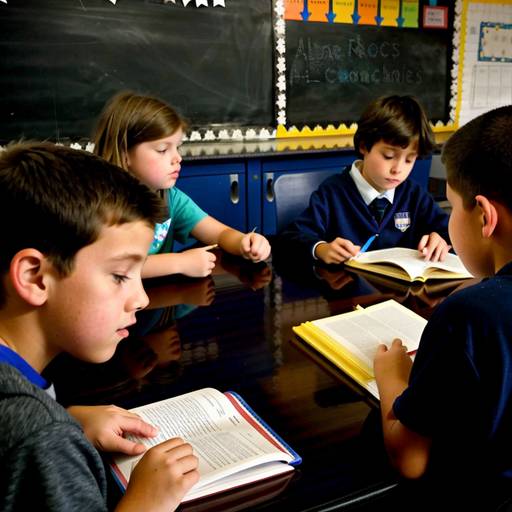
This 5th-grade language arts lesson focuses on enhancing reading fluency through various engaging activities. Students begin by exploring the concept of reading fluency, including its components of rate, accuracy, and prosody. The teacher models fluent reading and introduces strategies such as re-reading, partner reading, and reading aloud with expression.
During guided practice, students pair up to read selected texts while providing feedback to each other, and they track their reading times to monitor progress. The lesson then shifts to independent practice through reader’s theater, where students rehearse and perform scripts in small groups, focusing on expression and fluency.
The lesson concludes with group performances, allowing students to showcase their skills while receiving positive feedback from their peers. Reflection on the benefits of fluency practice reinforces the importance of ongoing reading at home. Differentiation strategies are included to support diverse learners, ensuring that all students can improve their reading fluency in a collaborative and creative environment.