
Filters
Level
Grade
Subject
Subject Area
Subject Topic
Standard(s)
Audience
Keyword
DurationMinutes
5th Grade Reading Comprehension Lesson Plans


This 5th-grade Language Arts lesson focuses on enhancing reading comprehension through the exploration of key story elements, including setting, character, plot, conflict, and resolution. The lesson begins with a class discussion about engaging elements in stories, followed by a joint reading of a selected text where students identify and discuss these elements.
Students will then collaboratively work in pairs to fill out graphic organizers based on the first section of the text. Afterward, they will read the next chapter independently, completing a prediction chart that connects their expectations to evidence from the text. A set of comprehension questions will further help students summarize key ideas and details.
The lesson closes with students sharing their predictions and insights into the text, reinforcing the importance of evidence in comprehension. Assessment includes evaluating their graphic organizers, prediction charts, and comprehension responses. Extension opportunities for creative writing and differentiated activities are provided to meet diverse student needs. Overall, the lesson aims to promote critical thinking and deeper understanding of narrative structures in literature.
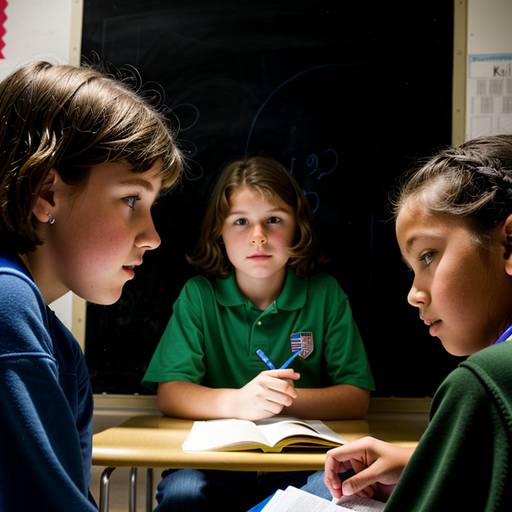
In this 5th-grade Language Arts lesson, students will focus on analyzing character development and motivations within a selected text. The lesson begins with a discussion about favorite characters to spark interest. Students will then engage in guided reading of a short story or excerpt, practicing comprehension strategies such as summarization and inference through targeted questions.
Following the reading, students will work in small groups to complete a character trait chart, identifying and providing evidence for the main character’s traits based on the text. A class discussion will follow, allowing groups to share their findings and explore how characters evolve throughout the story.
To encourage creative expression, students will create visual representations of their chosen character's journey, including relevant quotes from the text. The lesson concludes with a brief sharing session and a homework assignment where students will write a paragraph about the character's impact on the overall story. Assessment will include participation in discussions, the accuracy of character trait charts, and creativity in their illustrations. Various differentiation strategies will be employed to meet the needs of all learners.