
Filters
Level
Grade
Subject
Subject Area
Subject Topic
Standard(s)
Audience
Keyword
DurationMinutes
5th Grade Grammar Lesson Plans


In this 5th-grade language arts lesson plan, students explore key components of sentence structure, including subjects, predicates, and objects. The lesson begins with an engaging introduction discussing the importance of grammar and sentence formation. Following the discussion, the teacher presents different types of sentences: simple, compound, and complex, with examples created collaboratively with the class.
Students then participate in an interactive activity where they work in small groups to build sentences using provided flashcards, ensuring they incorporate a variety of sentence types. Each group is tasked with writing a short story based on a given prompt, emphasizing the use of diverse sentence structures and proper grammar. After writing, groups share their stories with the class, encouraging discussion about the sentences used.
Assessment includes observation of group work, collection of worksheets to gauge individual understanding, and evaluation of the stories for sentence variety and grammatical correctness. Extension activities are suggested to reinforce the concepts learned. Reflection on the lesson's effectiveness is encouraged for future planning. Overall, the lesson aims to enhance students' writing skills while making grammar engaging and interactive.

This 5th-grade language arts lesson focuses on teaching students the rules of capitalization in a fun and interactive manner. The lesson begins with a class discussion about the significance of capitalization in writing, followed by an introduction to essential capitalization rules, such as capitalizing the first word in a sentence, the pronoun "I," proper nouns, and specific time references.
During guided practice, students collaboratively identify and correct capitalization errors in sample sentences displayed on the whiteboard. They then engage in an independent activity where they work in pairs to capitalize a short story with missing capitals and create illustrations for it.
As the lesson closes, pairs present their revised stories to the class, emphasizing the corrections they made. The instructor assesses student understanding through observation and a quick activity where students write down a capitalization rule they learned. Extensions are provided for advanced students and those who need extra practice. Overall, the lesson aims to develop students' grammar skills while encouraging collaboration and creativity.

In this 5th-grade Language Arts lesson, students will learn and practice capitalization rules essential for clear writing. The session begins with a discussion highlighting the importance of capitalization, illustrated by examples of sentences with errors. Direct instruction will outline the key rules, including capitalizing the first word of a sentence, proper nouns, and titles. Students will engage in guided practice by correcting sentences on a worksheet, and then work independently to create a short story based on a provided prompt, applying the capitalization rules learned. The lesson concludes with selected students sharing their stories, followed by a review of the importance of proper capitalization in effective communication. Assessment will include collected worksheets and evaluated writing pieces to gauge understanding, with differentiation strategies in place for varying student needs.

In this 5th-grade language arts lesson, students will explore the components of complete sentences, including subjects, predicates, and various sentence types (declarative, interrogative, imperative, and exclamatory). The lesson begins with a discussion on the importance of complete sentences in communication, followed by direct instruction on sentence structure. Students will engage in guided practice by working in small groups to create sentences using provided subject and predicate strips. This is followed by independent practice where students complete worksheets identifying subjects and predicates and converting sentence types. The lesson concludes with a reflective discussion, and students will be assigned a writing task for homework that involves composing a short paragraph using a variety of sentence structures. Assessments will include observations during group work, review of worksheets, and evaluation of the homework assignment. Extensions are provided for advanced learners and additional resources will be available for those needing extra support.

In this 5th grade Language Arts lesson plan, students will explore the importance of grammar and punctuation in writing. The lesson begins with an engaging discussion on how punctuation influences meaning, followed by an interactive whiteboard activity where students correct sentences that lack punctuation.
Next, students participate in a Punctuation Card Game where they work in small groups to identify and apply appropriate punctuation marks to given sentences. Afterward, individual practice is facilitated through worksheets that challenge students to correct sentences, convert statements into questions, and creatively use punctuation in their writing.
The lesson concludes with a sharing session, allowing students to reflect on their learning and the impact of punctuation on clarity in communication. Assessment will be based on participation and worksheet performance, with extensions available for those seeking further practice. Overall, the lesson fosters collaboration and hands-on learning to enhance students’ grammar and punctuation skills.

In this 5th-grade Language Arts lesson plan focused on grammar and capitalization, students will learn the essential rules for using capital letters correctly in writing. The lesson begins with an engaging discussion about the importance of capitalization, followed by the introduction of basic rules through a handout. Guided practice involves identifying and correcting capitalization errors in sentences on the whiteboard.
Students then work in pairs to read a short story filled with intentional capitalization mistakes, highlighting and correcting them collaboratively. After sharing their corrections with the class, students apply their knowledge by writing a short paragraph about their favorite holiday or activity, ensuring to use proper capitalization.
The lesson concludes with a recap of key concepts and a review of student work. Assessments include observing participation, evaluating corrected stories, and reviewing the written paragraphs. Adaptations are provided for varying skill levels, and a follow-up activity encourages creativity through photo captioning while reinforcing capitalization rules.
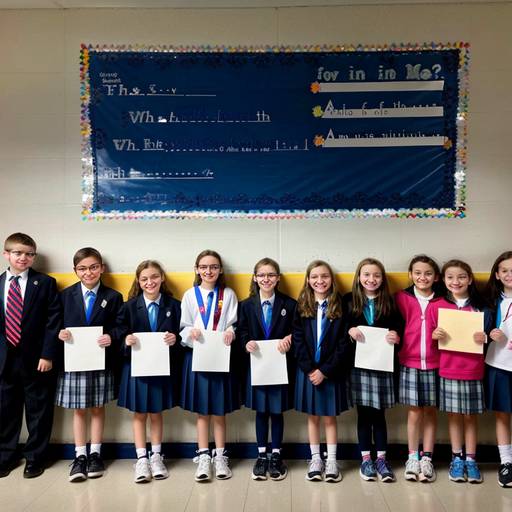
In this 5th-grade language arts lesson, students will explore key punctuation marks and their roles in writing. The lesson begins with a discussion on the importance of grammar and punctuation, followed by direct instruction on various punctuation marks such as periods, commas, question marks, exclamation points, quotation marks, and apostrophes. Students will engage in guided practice by correcting punctuation errors in a short story, working collaboratively to discuss their decisions. For independent practice, they will write a creative paragraph about a themed “parade,” incorporating at least five different punctuation marks correctly. The lesson concludes with a sharing session, allowing students to showcase their work and reflect on the necessity of punctuation in conveying clear meaning. Assessment will involve monitoring participation, evaluating corrections, and reviewing the imaginative paragraphs for proper punctuation usage. Differentiation strategies will be employed to support diverse learners.

This 5th grade language arts lesson plan focuses on grammar and punctuation, helping students understand the importance of using punctuation marks correctly in their writing. The lesson begins with a discussion on punctuation, followed by an introduction to various punctuation marks and their uses. Students engage in guided practice by correcting sentences together as a class, then work in small groups to edit additional sentences. Each group shares one corrected sentence with the class, reinforcing their learning. The lesson emphasizes collaboration and encourages students to understand how punctuation impacts the meaning of sentences. Assessment is done through observation of participation, review of completed handouts, and evaluation of group presentations. Extensions and support are provided for students with varying levels of understanding. Overall, this lesson aims to enhance students’ writing clarity through proper punctuation usage.

The lesson plan focuses on helping 5th-grade students understand the fundamental components of sentence structure, including subjects, predicates, and objects. It begins with an engaging class discussion about what constitutes a good sentence, followed by direct instruction where the teacher explains and illustrates the parts of a sentence on chart paper.
Students then work in small groups to construct sentences using provided materials, presenting their creations to the class while identifying each part of the sentence. Following the group activity, students engage in independent practice through worksheets that focus on identifying components, correcting run-on sentences, and composing their own sentences.
The lesson wraps up with a summary discussion where students share their learning experiences. Assessment occurs through observation of group participation and the evaluation of completed worksheets. The plan also includes provisions for extensions and differentiation to accommodate varying student abilities, ensuring all learners can engage with the material. Finally, the teacher reflects on the lesson's effectiveness and areas for improvement based on student engagement and understanding.

In this 5th Grade Language Arts lesson, students will focus on enhancing their grammar and punctuation skills. The lesson begins with an engaging storytelling activity where students listen to a purposely mis-punctuated story, prompting discussions about the importance of clear writing. After reviewing essential grammar rules such as subject-verb agreement and the use of proper nouns, as well as the correct application of punctuation marks like periods, commas, question marks, and exclamation points, students participate in a group activity. They work collaboratively to identify and correct sentences on cards, reinforcing their understanding through teamwork.
Following guided practice, students complete a worksheet featuring a mix of exercises focused on grammar and punctuation, allowing for independent assessment of their understanding. The lesson concludes with a review of worksheet answers and reflections on new insights gained, ensuring students recognize the relevance of the skills learned.
To accommodate diverse learning needs, advanced learners are encouraged to engage in creative writing, while struggling learners receive targeted support. For homework, students will write a descriptive paragraph about their favorite hobby, applying proper grammar and punctuation techniques. Overall, the lesson promotes active participation and collaboration, fostering a deeper understanding of grammar and punctuation in writing.