
Filters
Level
Grade
Subject
Subject Area
Subject Topic
Standard(s)
Audience
Keyword
DurationMinutes
4th Grade Matter Lesson Plans

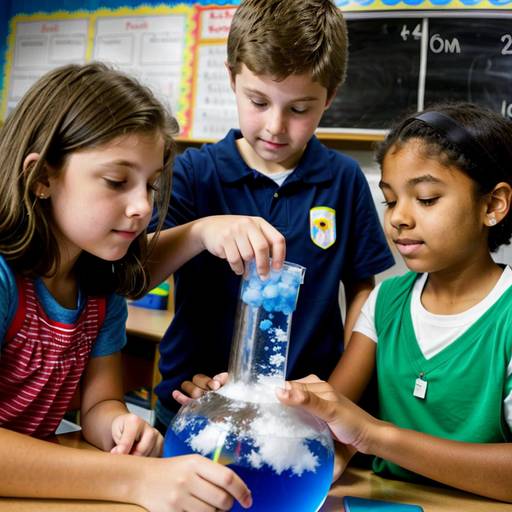
In this 4th-grade science lesson, students will explore the three states of matter: solids, liquids, and gases. The lesson begins with a class discussion on what matter is, followed by direct instruction where key properties of each state are defined and compared using a chart. Students will then engage in hands-on activities where they observe various materials and categorize them based on their state of matter. An experiment featuring the melting of ice and the boiling of water illustrates changes between states due to heat. Through group discussions and reflections, students will share their observations about these transformations. The lesson concludes with a brief assessment via exit slips to evaluate their understanding of the concepts covered, while also providing opportunities for differentiated learning and extensions. The goal is for students to develop a foundational knowledge of physical science and the characteristics of matter in an interactive and engaging manner.
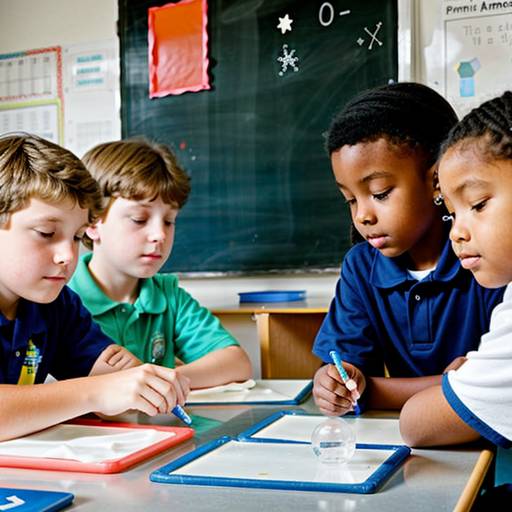
This 4th-grade science lesson focuses on the fundamental concepts of matter within the realm of physical science. Students will learn to identify and classify matter into three states: solids, liquids, and gases. Through hands-on activities, such as measuring mass and volume, and observing the properties of various objects, they will develop a deeper understanding of how matter behaves and interacts in different circumstances.
The lesson begins with an engaging introduction that prompts students to think about what matter is and how they encounter it daily. Direct instruction follows, where students will observe and discuss the characteristics of different states of matter and the processes involved in state changes, such as melting and evaporation.
In guided practice, students will work in groups to classify various objects and measure their properties. They will also engage in an independent worksheet activity to consolidate their learning. The class will conclude with a review of key concepts and an exit ticket where students reflect on their newfound knowledge and pose any remaining questions.
Overall, the lesson aims to foster curiosity and comprehension of matter while catering to diverse learning styles through interactive and collaborative elements.
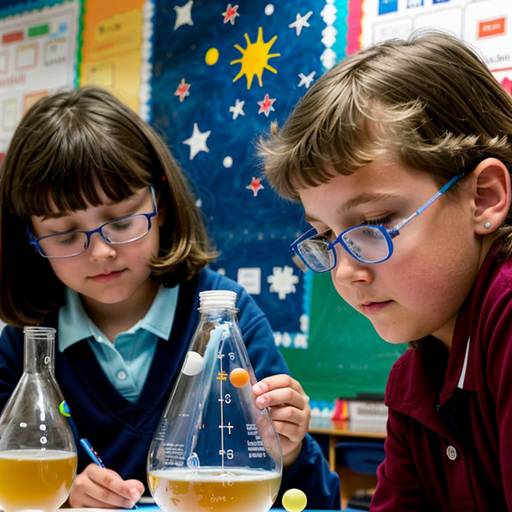
In this 4th-grade science lesson, students will explore the three states of matter: solids, liquids, and gases. They will engage in hands-on activities at various stations that allow them to observe and categorize different materials based on their properties. At the solid station, students will examine various objects to identify characteristics such as hardness and shape. At the liquid station, they will measure and pour liquids to observe how they take the shape of their containers. The gas station will include an activity with a balloon filled with air, helping students understand the concept of gas filling space.
The lesson will also include a demonstration where students observe water changing from a liquid to a gas when heated, facilitating a discussion on how states can change due to temperature. Through participation in group activities and class discussions, students will enhance their understanding of matter and its properties. They will conclude the lesson by writing an exit ticket that summarizes their learning and any remaining questions. Extensions, such as finding examples of each state of matter at home and engaging in interactive games, provide opportunities for further exploration and reinforcement of the concepts. Adaptations will be made to ensure all students can engage with the material effectively.
This lesson focuses on introducing 4th-grade students to the concept of matter and its three states: solid, liquid, and gas. Students will begin by discussing their existing knowledge of matter and learn about the characteristics that define each state. The lesson incorporates hands-on activities, where students observe a melting ice cube to witness the transition from solid to liquid, a teacher-led demonstration of boiling water to illustrate the change from liquid to gas, and an experiment with an inflated balloon to understand how gas occupies space.
Through these experiments, students will engage in active observation and reflection, encouraging them to articulate what they have learned about the properties of matter. They will complete worksheets to reinforce their understanding and share findings in group discussions. The lesson aims to help students grasp fundamental scientific concepts while promoting inquiry and critical thinking through exploration and experimentation.