
Filters
Level
Grade
Subject
Subject Area
Subject Topic
Standard(s)
Audience
Keyword
DurationMinutes
4th Grade Rhythm Lesson Plans

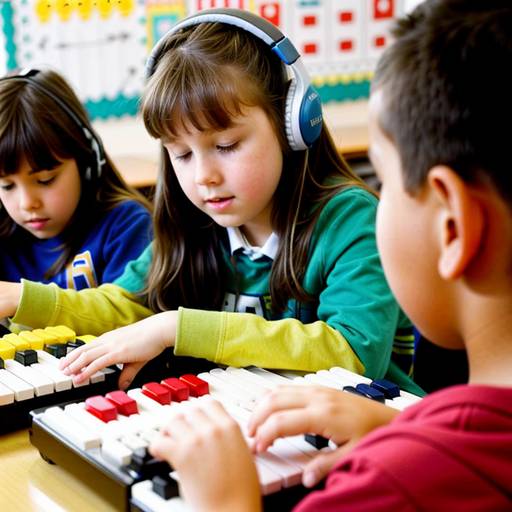
In this 4th-grade music lesson, students will explore the foundations of rhythm and music theory through engaging activities. The lesson begins with a warm-up call-and-response clapping exercise to build rhythmic awareness. Students will learn about key rhythmic notations—quarter notes, eighth notes, and half notes—while discussing their importance in music and daily life.
Following the introduction, learners will practice clapping exercises and then transition to using rhythm instruments in small groups. Each group will create an original 4-beat rhythm pattern, incorporating the learned notation. After practicing their compositions, groups will perform their rhythms for the class, showcasing their understanding of rhythm.
The lesson not only emphasizes collaboration and creativity but also encourages students to identify rhythms in their everyday lives, making the learning experience relevant and applicable. Assessment will be based on participation, rhythm accuracy, and creativity in group performances. Extension activities will provide further opportunities for exploration and complexity in rhythm.
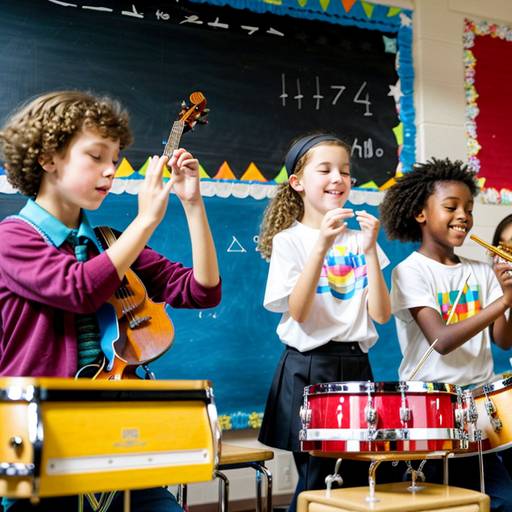
In this 4th-grade music lesson, students will explore fundamental concepts of music theory, focusing on rhythm and note values. The lesson begins with a rhythm echo exercise to engage students and introduce the importance of rhythm in music and everyday life. Students will learn about basic note values—whole notes, half notes, quarter notes, and eighth notes—through visual aids and clapping exercises.
Following this introduction, students will work in small groups with percussion instruments to create and rehearse their own rhythmic patterns, combining at least two different note values. Afterward, the class will unite to form a "Rhythm Band," performing their patterns together over a steady background beat, emphasizing collaboration and the layering of rhythms.
To conclude, students will reflect on their learning experience, discussing the significance of rhythm in music and teamwork. They will be encouraged to practice rhythm patterns at home, reinforcing their understanding of the concepts taught. Assessment will involve observing group dynamics, listening to performances, and a short worksheet on note values and rhythm creation. This interactive approach aims to enhance students' musical skills and foster creativity.
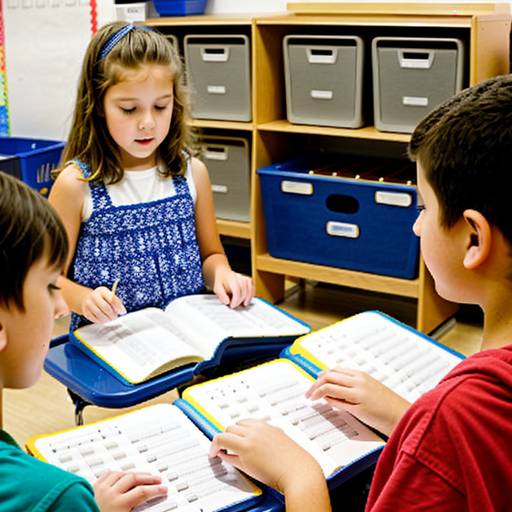
In this engaging fourth-grade music lesson, students will explore fundamental music theory concepts related to rhythm and note values. The lesson begins with a warm-up involving clapping patterns to familiarize students with rhythm. Through visual aids, students will learn about different note values, such as quarter notes, eighth notes, half notes, and whole notes, understanding how many beats each represents.
Students will then partake in body percussion activities, creating their own rhythmic patterns. Working in small groups, they will develop a 4-beat rhythmic composition that includes a mix of note values, which they will eventually present to the class. Constructive feedback will be provided to reinforce their learning.
The lesson concludes with a group reflection where students share their learnings and feelings about the activities. Lastly, they will perform a collective rhythmic piece together, solidifying their understanding of rhythm and the concept of maintaining a steady beat as a group. Assessment will focus on student participation, the quality of rhythmic patterns created, and adherence to the concepts taught throughout the lesson. Extension ideas encourage students to create their own rhythm compositions at home and explore melody in future music classes.
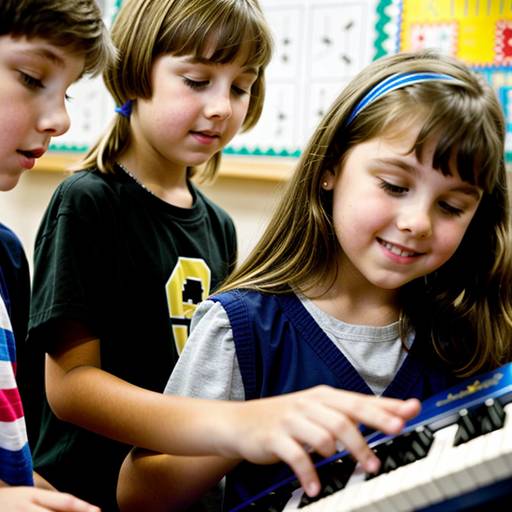
In this 4th-grade music lesson, students will explore rhythm through engaging activities that emphasize understanding and identifying basic rhythmic patterns, specifically focusing on quarter notes, eighth notes, and rests. The lesson begins with a warm-up clapping exercise to establish a foundational understanding of rhythmic notation and sound.
Following direct instruction that includes demonstrating rhythms with flashcards and writing patterns on the whiteboard, students will be divided into small groups. Each group will create their own rhythmic sequences on large sheets of paper, incorporating various note types. This collaborative effort promotes teamwork and creativity.
After the groups have developed their rhythms, they will take turns performing their compositions using claps and percussion instruments, while the rest of the class maintains a steady beat. Constructive feedback will be provided after each performance to encourage growth and confidence.
The lesson concludes with a class discussion reflecting on the challenges and successes of creating and performing rhythms. Overall, students will gain a deeper understanding of rhythm's crucial role in music, while enhancing their collaboration, performance skills, and critical thinking abilities. Assessment will be based on participation, creativity, and collaboration, with potential extension activities to further explore rhythmic concepts.