
Filters
Level
Grade
Subject
Subject Area
Subject Topic
Standard(s)
Audience
Keyword
DurationMinutes
4th Grade Musical Styles Lesson Plans

In this engaging music lesson for 4th graders, students will explore the history of music and various musical styles through listening and interactive activities. The lesson begins with a discussion about the role of music in society and personal experiences with different genres. Students will then listen to audio samples from five key musical styles—Baroque, Classical, Jazz, Rock, and Hip-Hop—while taking notes on the characteristics and emotions evoked by each style.
Afterward, students will work in small groups, each assigned a specific musical style, to create a simple composition using instruments or vocal sounds that reflect the elements of that genre. Each group will have the opportunity to present their compositions to the class, fostering collaboration and creativity.
The lesson concludes with a reflection on the significance of music throughout history and how different styles can influence each other, encouraging students to think about their own musical expressions. Assessments include participation, completed worksheets, and group presentations, with potential extensions for continued exploration of contemporary music and its roots.
In this 4th-grade music lesson, students will embark on an engaging exploration of various musical genres and their historical contexts. Over the course of 60 minutes, they will first participate in a warm-up discussion about music's significance in their lives and share their favorite styles and artists. The teacher will introduce five major genres—Classical, Jazz, Rock, Folk, and Hip-Hop—highlighting each one's defining characteristics, influential musicians, and historical backgrounds, supported by audio clips for better understanding.
Students will then break into small groups, each assigned a specific genre, to conduct a listening activity. They will analyze audio samples, noting the unique features of their genre, and share their observations with the class. Following this, students will engage in a creative project, designing posters that illustrate the essence of their assigned genre, including key characteristics and visual representations.
The lesson will conclude with a class discussion about their experiences, encouraging students to reflect on what they found most interesting. Through participation and creativity, students will gain a foundational understanding of music history and develop an appreciation for different musical styles. Optional extensions may include exploring additional genres or inviting a local musician for live demonstrations.

In this 4th-grade music lesson, students embark on an engaging exploration of various musical eras, specifically focusing on the Baroque, Classical, Romantic, and Contemporary periods. The objectives are to familiarize students with key characteristics and notable composers from each era, as well as to encourage them to create and perform rhythms inspired by these styles.
The lesson begins with a discussion on the role of music in reflecting culture and time. Students listen to selected audio clips representing each musical era, followed by a class discussion that highlights the emotions and characteristics evoked by the pieces.
Next, students are divided into small groups, where they compose simple rhythm patterns using rhythm instruments that reflect the essence of their assigned musical era. Each group then performs their rhythm for the class, encouraging participation and guessing about the era represented.
The lesson concludes with a creative expression activity, where students draw or write about their favorite musical era, reinforcing their learning through artistic means. Throughout, students are assessed on their participation, creativity, and completion of the worksheet, setting the stage for a deeper appreciation of music history and its ongoing influence on contemporary styles.
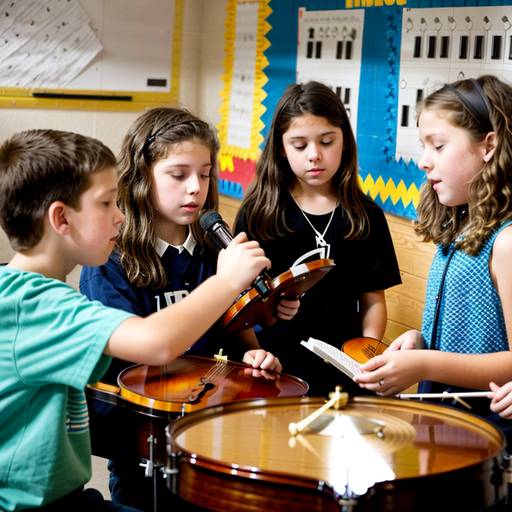
The lesson is designed for 4th-grade students to explore the evolution of music and its various styles throughout history. It begins with a warm-up discussion about students' favorite types of music, followed by a presentation detailing a timeline of music history. Students will listen to audio samples from different periods, including Baroque, Classical, Romantic, and 20th Century music, while learning about key composers and musicians associated with each style.
To deepen their understanding, students will participate in a group activity involving musical exploration stations where they will listen to audio clips, read artist biographies, and fill out worksheets to document their thoughts. If feasible, students may also experiment with percussion instruments to connect with the music physically.
The lesson concludes with a group sharing session, allowing students to present their findings and reflect on how music relates to culture and history. Assessment includes participation in discussions and completion of worksheets, ensuring that students engage thoughtfully with the material. Extensions for the lesson encourage further research and creative expression. Overall, the lesson aims to instill an appreciation for the diverse musical landscape and its historical significance.