
Filters
Level
Grade
Subject
Subject Area
Subject Topic
Standard(s)
Audience
Keyword
DurationMinutes
4th Grade Volume Lesson Plans

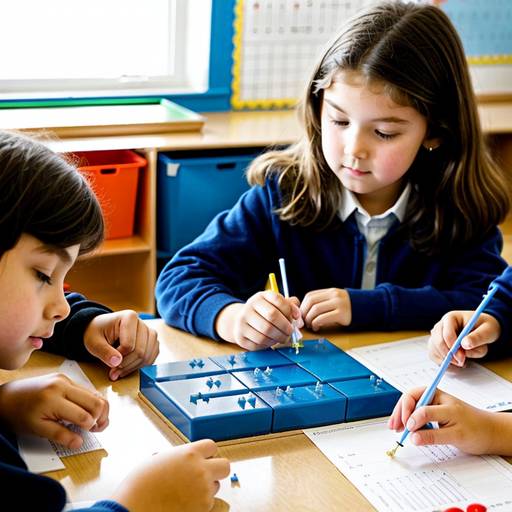
In this 4th-grade math lesson, students are introduced to the concepts of measurement and volume. The lesson begins with a discussion on real-life applications of measurement, followed by direct instruction on using standard units such as cups, pints, quarts, and liters. Students are then divided into small groups for a hands-on activity where they measure the volume of various containers using measuring cups and record their findings, while also practicing unit conversions. After the group activity, students participate in a class discussion to share their discoveries and challenges. The lesson concludes with an assessment in the form of a worksheet that includes volume-related problems and word problems. Throughout the lesson, differentiation strategies are incorporated to meet the diverse needs of students, ensuring all can engage with the material effectively. Reflection on student engagement and understanding is encouraged for future lesson adjustments.
This 4th-grade mathematics lesson focuses on teaching students about measurement and volume. The lesson begins with an introduction to the concept of volume, explaining how it differs from other types of measurements and introducing standard units such as cubic centimeters and liters.
Students receive direct instruction on calculating the volume of rectangular prisms using the formula for volume, followed by practical demonstrations on measuring volume through water displacement for irregular objects.
In a hands-on activity, students work in groups to measure and calculate the volume of various 3D objects using rulers and water, engaging them in collaborative learning. They also apply their understanding through real-life problem-solving scenarios presented on worksheets, which encourage them to think critically about volume in everyday contexts.
The lesson concludes with a review of key concepts and a discussion, allowing students to reflect on what they learned. Assessment includes evaluating students' worksheets for accuracy in calculations and observations of group dynamics during activities. This approach ensures that students comprehend the concept of volume through both theoretical knowledge and practical experience.