
Filters
Level
Grade
Subject
Subject Area
Subject Topic
Standard(s)
Audience
Keyword
DurationMinutes
4th Grade Perimeter Lesson Plans

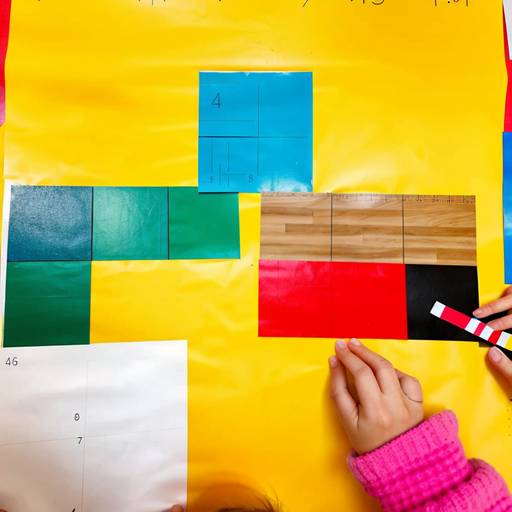
In this 4th-grade math lesson, students will explore the concepts of measurement and perimeter through engaging hands-on activities. The lesson begins with a discussion on the importance of measurement and introduces perimeter as the distance around shapes, including the relevant formula for rectangles. Students will practice measuring various classroom objects in small groups during a scavenger hunt, where they will calculate the perimeter based on their measurements. Following the scavenger hunt, each student will draw a rectangle on graph paper, measure its dimensions, and determine its perimeter. The lesson concludes with a review of key concepts, allowing students to share their findings. Assessment will be based on observation during activities and the collection of worksheets and drawings. Extensions and adaptations are included to cater to diverse learning needs, ensuring that all students can engage meaningfully in the exploration of measurement and perimeter.
In this 4th-grade mathematics lesson, students will explore the concept of perimeter by learning how to measure the sides of various geometric shapes and calculate their perimeter using appropriate formulas. The lesson begins with an engaging introduction where students discuss their prior knowledge of perimeter. It continues with direct instruction on how to calculate the perimeter of rectangles and squares, followed by guided practice with worksheets that allow students to apply their understanding in pairs.
Students will then participate in a hands-on activity in small groups, creating their own shapes using string and measuring the sides to determine the perimeter. The lesson concludes with a review of key concepts and encourages students to think about real-life applications of perimeter. Assessment will be conducted through the collection of worksheets and observations during group presentations, ensuring that students grasp the importance of measurement and perimeter in both mathematical contexts and everyday situations. Extensions for advanced learners will be provided to deepen their understanding of perimeter in more complex shapes.
In this 4th grade math lesson, students will explore the concept of perimeter, learning how to measure and calculate the distance around various geometric shapes, such as squares, rectangles, and triangles. The lesson begins with a discussion about measurement, followed by direct instruction on perimeter formulas specific to each shape. Students will engage in guided practice in small groups, using rulers and measuring tapes to accurately measure sides of shape cutouts and calculate their perimeters. Independent practice will involve worksheets with perimeter calculations and real-world application problems. The lesson concludes with a class discussion to reflect on their findings, emphasizing the importance of accurate measurement and real-life applications of perimeter. Assessments will include evaluating group participation and worksheet accuracy, with extensions available for advanced learners. Modifications will also be provided to support diverse learners in the classroom.
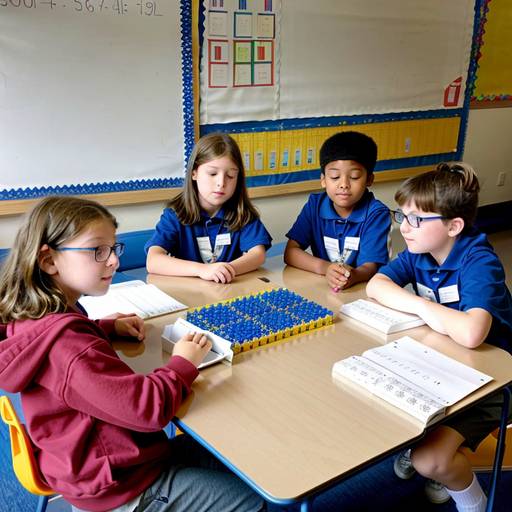
The lesson focuses on helping 4th-grade students understand concepts related to measurement and perimeter. It begins with an introduction to measurement and perimeter, engaging students in a discussion about their real-world applications. Through direct instruction, students learn how to measure shapes using rulers and apply formulas to calculate perimeter for rectangles and triangles.
In guided practice, students work in small groups to measure their assigned shape and calculate its perimeter collaboratively. Following this, they engage in independent practice with worksheets that challenge them to calculate the perimeter of various shapes and create their own shape on graph paper. The lesson concludes with a class discussion to reinforce key concepts and gather student reflections on the learning experience.
Assessment includes evaluating worksheets for accuracy and informal observations during group activities. Extensions may include introducing area and organizing a scavenger hunt to apply measurement skills in a fun, interactive manner. Overall, this lesson fosters hands-on learning, collaboration, and critical thinking skills.